For most amateur golfers, hitting a controlled draw is their ultimate goal. This is usually because they tend to slice and miss everything to the trail side, so a nice controlled draw seems highly desirable. If you've been struggling with your ball flight, using an AI swing analyzer can quickly reveal whether your release pattern is truly the culprit or if deeper mechanical issues are at play.
While it is an easy shot to learn how to hit using the one plane swing, it shouldn't be any golfer's lifelong goal to learn how to play a draw. If you hit a fade and can control it consistently, don't think you need to learn how to hit a draw to become a better golfer — it's simply not true.
Want to feel this in YOUR swing? Try a free AI-powered golf lesson → — GOATY gives you real-time voice coaching, pose tracking, and instant feedback on every rep.
Related: Golf swing consistency — how AI measures and builds it →
Android users: Download GOATY on Google Play — free AI golf coaching on your Android phone. →
A draw is the most difficult shot to control overall because you are playing with the timing of the release of the club, and playing with timing is like playing with fire — you're bound to get burned sometime.
Stop reading about it — feel it in your swing today
GOATY watches your swing live and coaches you between every rep. Free. No signup.
Start Your FREE Live Lesson →It's true, you can keep the clubface shut throughout the swing and close your stance and learn to hit a draw that way, but you will struggle a great deal just to hit the ball straight consistently and will have a very difficult time fading the ball.
The best way to play golf is to go with whatever your natural ball flight is and try to make it as neutral as possible. If you tend to hit a draw already, try to keep it under 5 yards of movement from trail to lead side in general. The more the ball is moving from trail to lead, the more you are releasing the club or keeping it shut and closing your stance, and the more difficult it will be to hit the ball straight or fade it.
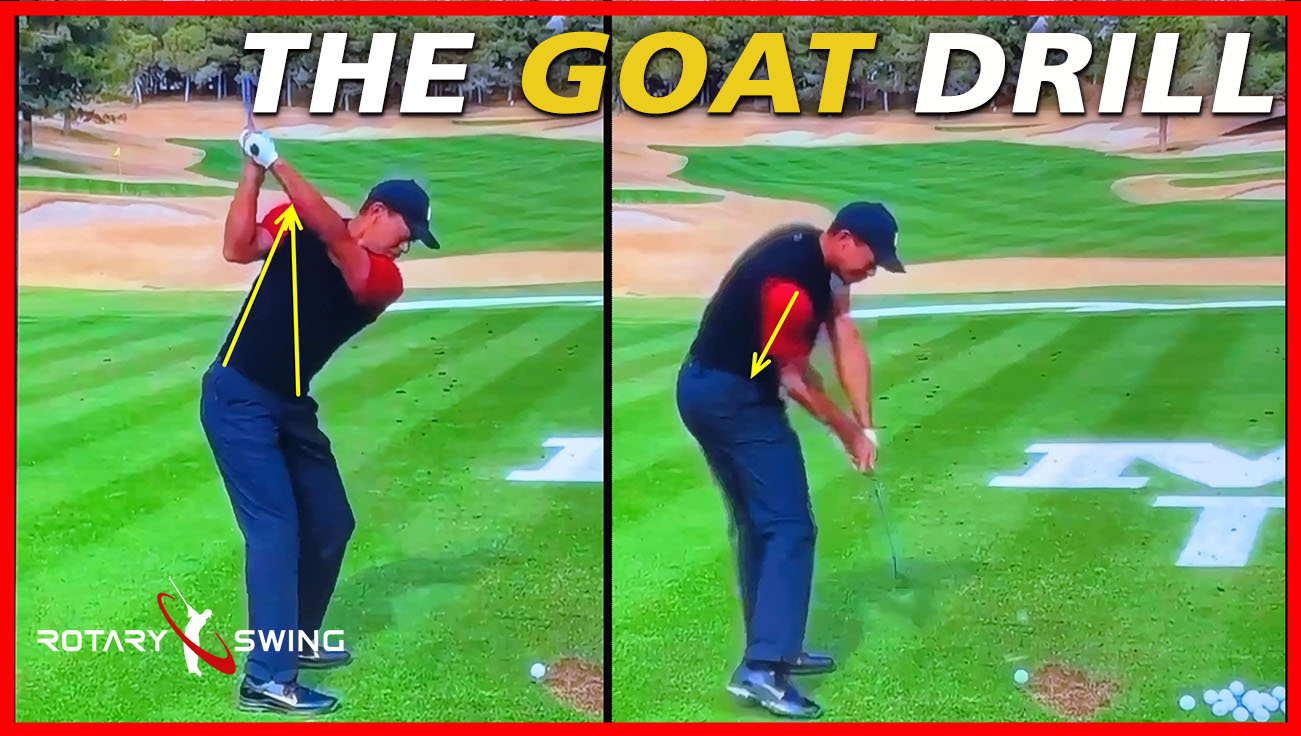
If you can keep your swing fairly neutral, working the ball in either direction becomes a very simple matter and very few modifications are necessary in order to shape shots. Combining this neutrality with the GOAT Drill system gives you a structured way to ingrain that swing neutrality through measurable repetition.
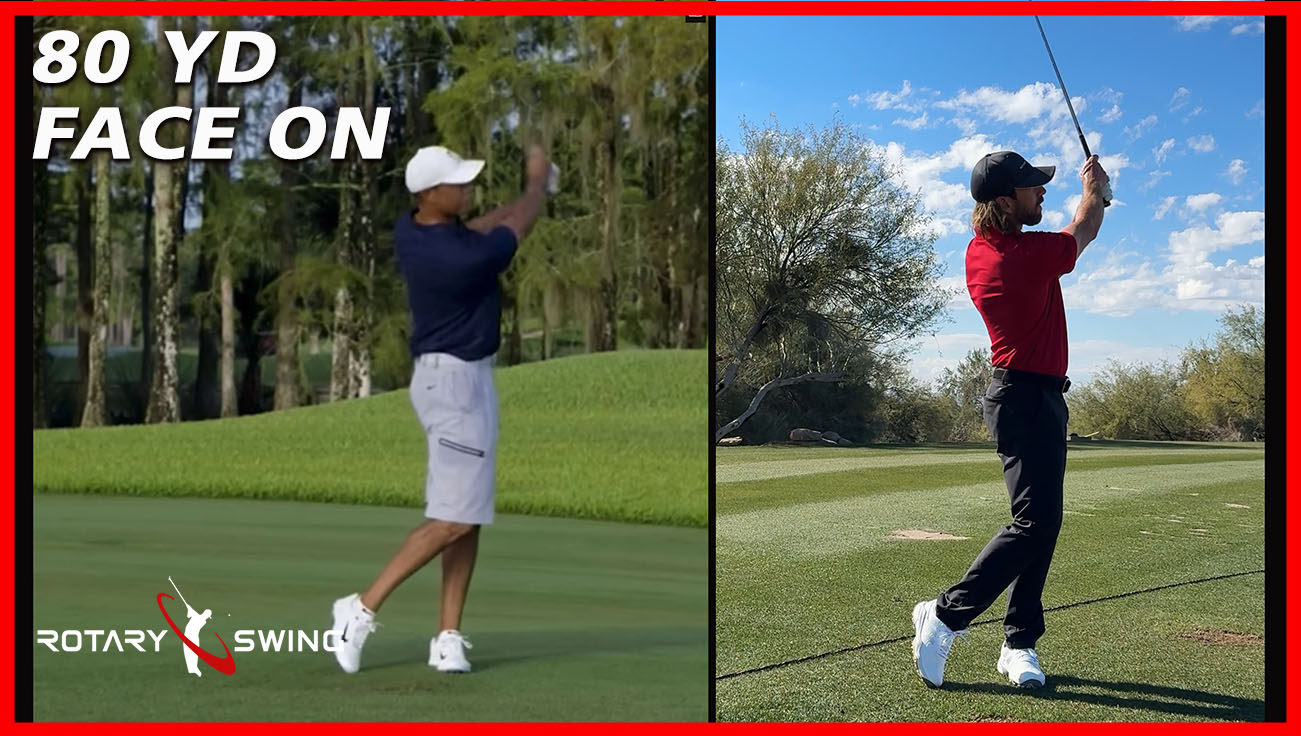
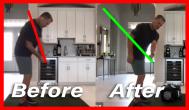
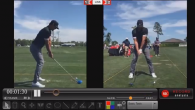
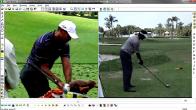
Observe the picture below. In the picture on the lead side I am hitting a 3 yard fade and the picture on the trail side I'm hitting a 3 yard draw.
Note that my swing has remained exactly the same — nothing changed other than the angle of the clubface. I've clearly held on to the release in the picture on the lead side and this has not only imparted a cut spin on the ball but launched it on a higher trajectory as well when compared to the shot where I hit a draw.
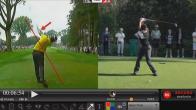
As I come into the finish, you can clearly see the angle in the clubface is significantly different.
The lead-side picture shows the face much more open as I have worked to keep the clubface open through the shot, while the trail-side picture shows it more square or slightly closed.
You can also see again the difference in trajectory here — the ball in the trail-side picture is still significantly lower than the one in the lead-side picture. When comparing these two swings (as I've done in this swing comparison), you can see that very few changes are necessary for me to work the ball in either direction, and that gives me the most flexibility in my overall shotmaking ability.
Video Transcription: How to Hit a Draw

Hitting from inside (above) and outside (below)
When working the ball from trail to lead side there are two things that we have to understand that cause this ball to spin or work in that direction.
The first thing is the angle of the clubface as it comes into impact. If we look at the angle of the clubface going straight down the target line, and my clubface is square and the path of the club is traveling in square, then of course the ball will go straight.
If I bring it dramatically from the inside with a square clubface to my target line, then of course it's going to impart hook spin — or this trail-to-lead spin — and if I swing it in dramatically from the outside in with a square clubface to my target line, then the ball will work lead to trail.
In a one plane swing we don't want to manipulate the path of the club because that's part of what gives us our consistency in the golf swing — the path of the club is always very square to in, so we never have to manipulate the path of the clubhead.
When we want to work the ball, what we have to change is how the clubhead releases through impact. As we make impact in a one plane swing, as we come into impact and our clubhead is traveling very square — it's square to the target line and the clubface is square — our lead arm is more into our chest.

Baseball swings: Slightly away from body (above), release slightly through impact (below}
We don't want a dramatic release with the arms and hands and everything releasing away because we're controlling and squaring the clubface with our body rotation.
When we get to the point where we're actually wanting the ball to work from trail to lead, what we need to do is let this clubhead start to release slightly through impact. It's a very small change that we're trying to make.
If we make our normal baseball swings at the ground, we swing everything back and we rotate into impact — the clubface is square here but my lead arm is still into my chest. That's kept the clubhead from releasing.
If I start to rotate and I let my arms slightly start to rotate or swing slightly away from my body and let this clubhead start to release very gently, you notice that as I come into impact the clubhead is going to be slightly closed.
It's a very, very slight change. I'm just letting my lead arm work slightly away from my body a tiny amount and letting the face of my watch rotate slightly. That's what's going to allow the clubhead to rotate slightly closed through impact.
When we go into making this golf swing, nothing else changes in our swing. Everything is working back on the same plane. We're working back everything through, rotating our body through impact, but we are starting to let this clubhead release slightly through impact.
Rather than squaring everything and keeping the arms back a little bit more through impact, we're letting them start to release just a tiny bit. It's such a small increment it's hardly even noticeable on film, but it's a feel thing that you're developing.

Release through impact
You're learning to let this clubhead release through impact and letting the lead arm start to work slightly away from the body and release through the shot.
What that looks like — as I come into impact, instead of being here with my arms much more back, I want to let my arms start to slightly release, let this clubhead, the toe of the club, start to release over the shot.
I'll hit about a three yard draw here.
All I did there was I made my normal swing but I let the clubhead start to release through the shot. It's such a small amount, but it allows the ball to work from trail to lead.
Now when we go to hitting a big hook, or we need to hook it around a tree or into a fairway that's working significantly from trail to lead and you have to work it dramatically, all we do is slightly increase that release. You can verify the result of these adjustments quickly with an AI swing analyzer that shows you exactly how your clubface angle and release pattern change between shots.

Finish
We're simply going to allow the lead arm to slightly release a bit more. Rather than keeping the headcover firmly under that arm, the clubhead is going to start to release to the point where it would almost fall out. It's not quite that dramatic — you're not releasing everything to the full extent — but I am letting this clubhead start to rotate through and release through a bit more significantly. This time I'll set up a little bit more closed because I'm going to work the ball a little bit more, and I'm going to let the clubhead release even more this time.
That was about a 10 yard draw. I started that out about 10 yards trail of my target, and I ended up right at my target. All I did there was just simply let my wrist and everything release.
Again, I'm not letting the lead arm swing way out away from my body. It's simply letting this clubhead start to release just a tiny bit, letting the face rotate slightly shut through impact, and that will naturally create a trail-to-lead shot. Pair this release drill work with the GOAT Drill system to build the body movement foundation that makes controlled ball flight shaping sustainable over hundreds of rounds.
Watch part 2 now to see how you're moving your body in the opposite direction of the pros!