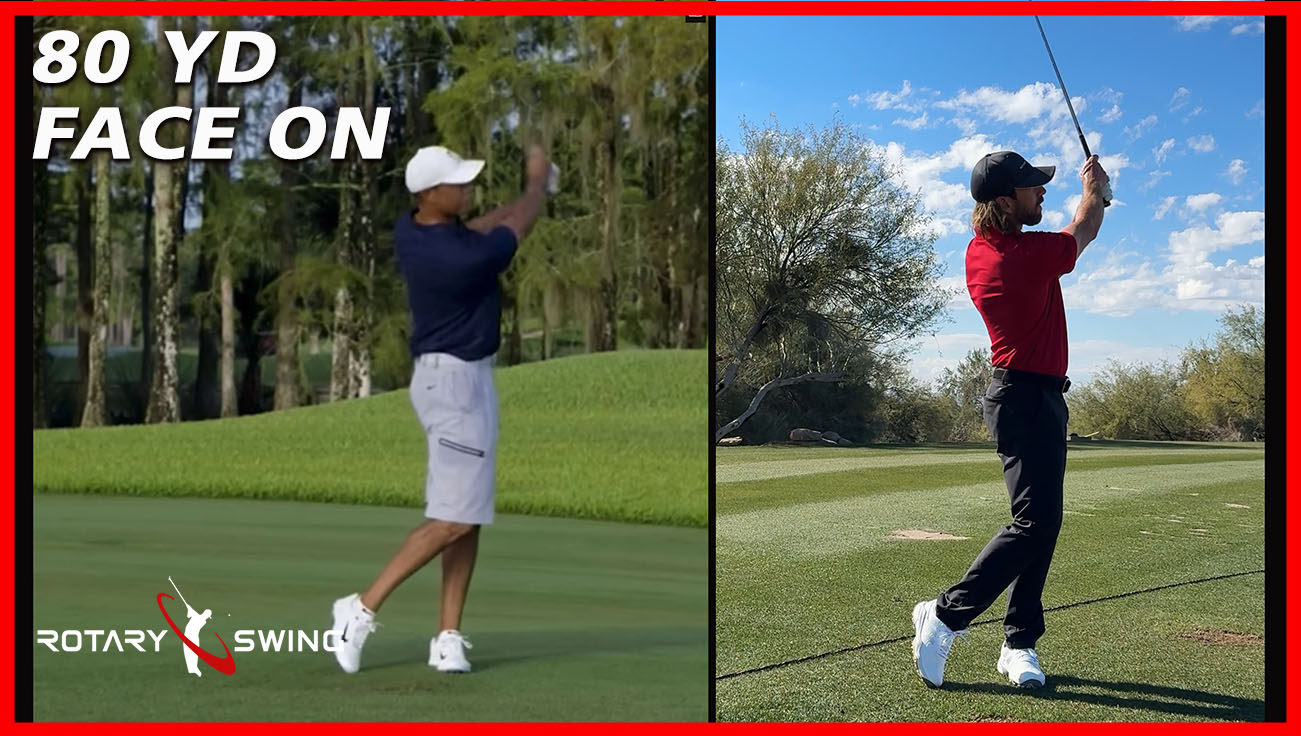
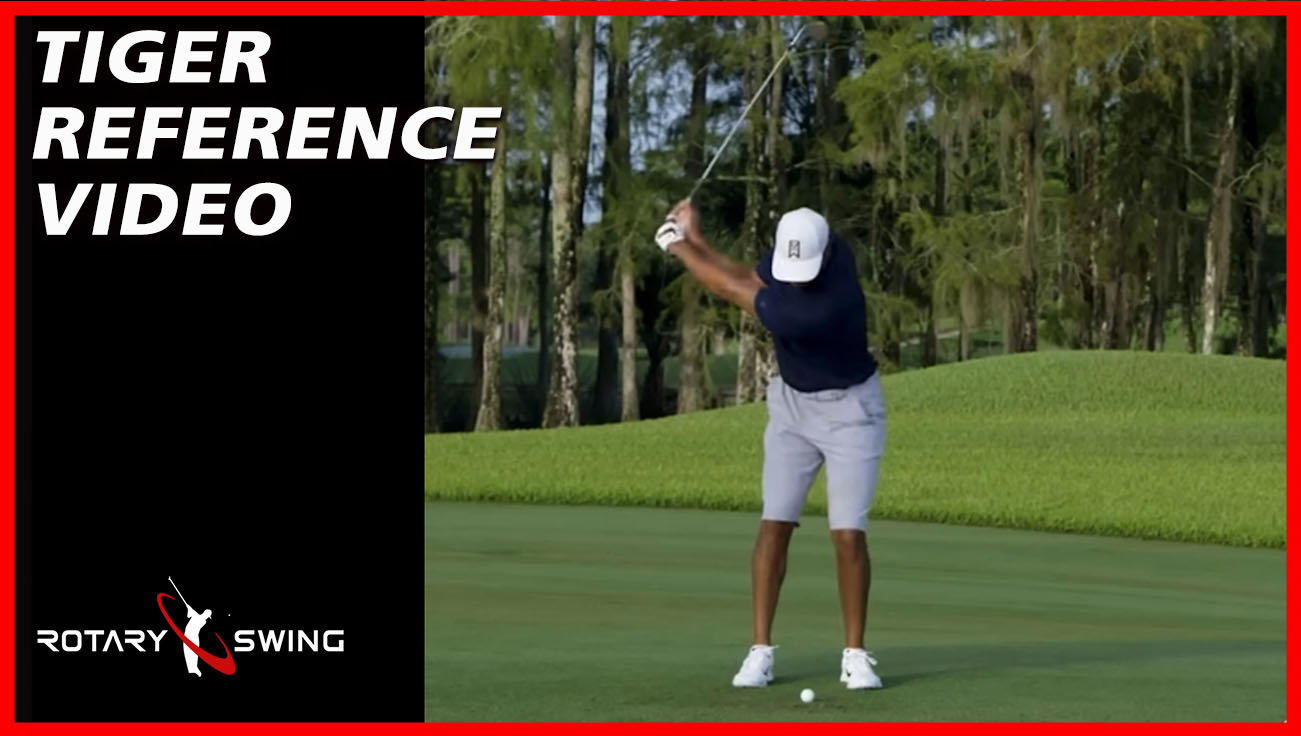
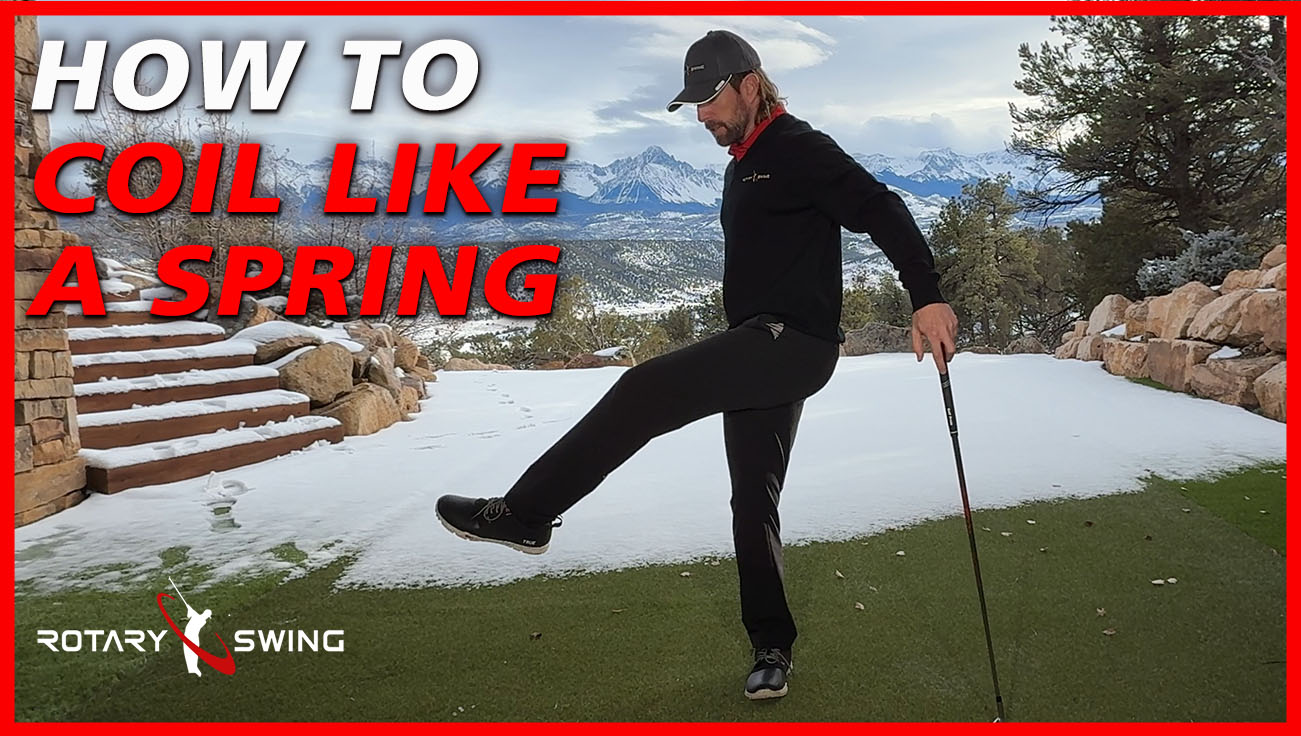
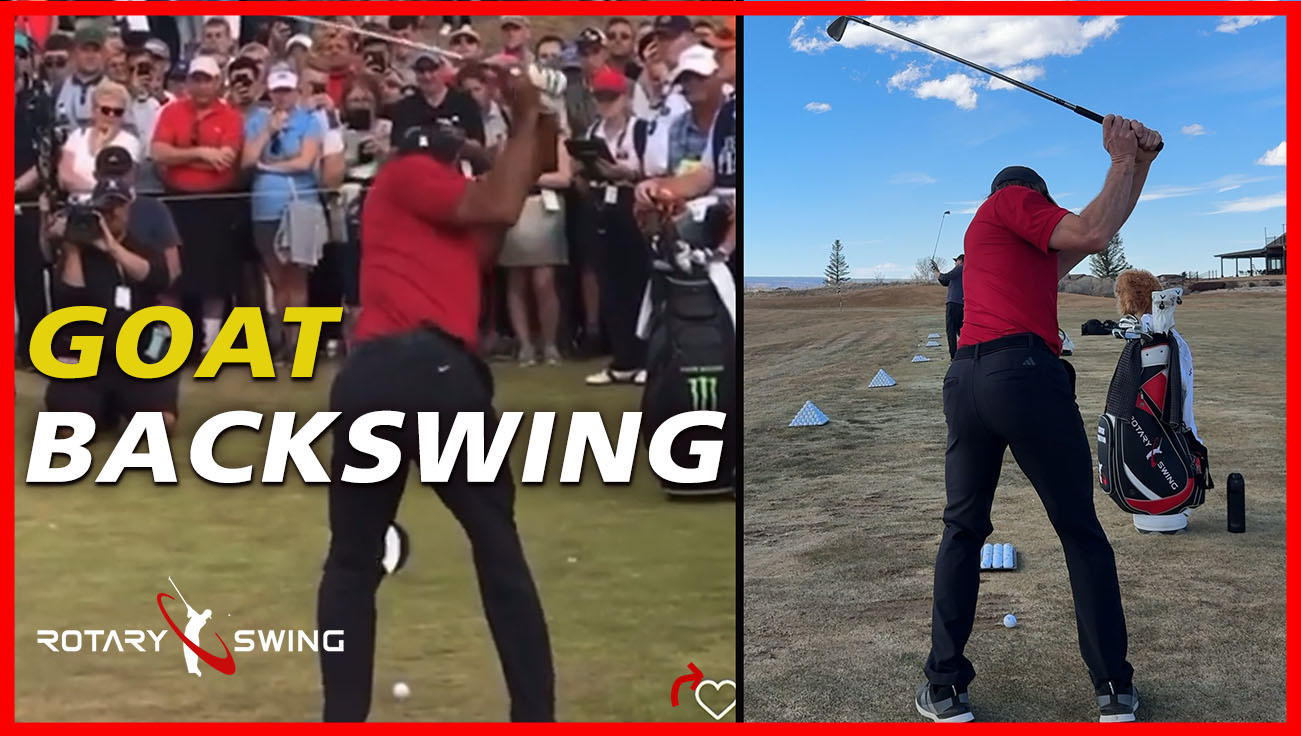
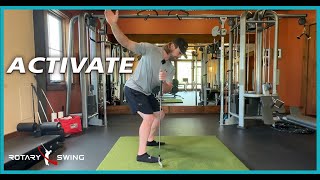
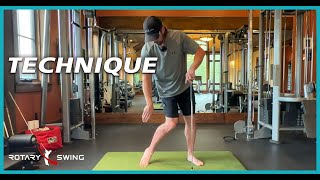
Footwork in the golf swing has been brought up countless times as being "good" or "bad" by our comical "golf analysts" on TV, yet they rarely say what is good or bad about it. The reality is that in a good golf swing, the feet are, for the most part, simply responding to the movements of the body rather than moving on their own behalf.
So, in truth, good footwork is really "no footwork". The feet do move, but typically when someone has bad footwork, they're over using their feet as a compensation for other poor swing mechanics.
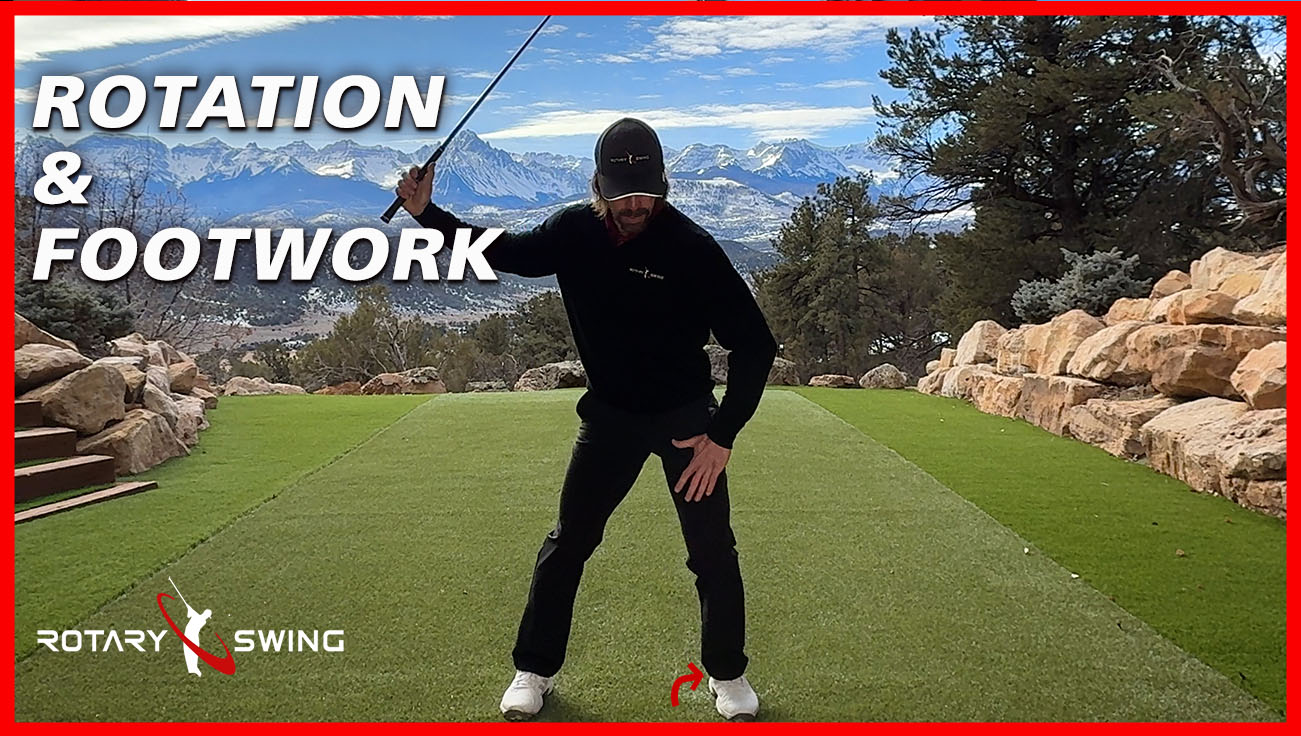
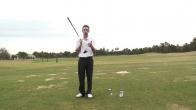
In this video I'm discussing the ever important movement, or lack thereof, of the right foot for right handed golfers in the downswing. As I mentioned earlier, the foot isn't really moving on it's own accord, but rather being moved by the body.
However, it is very easy to detect some common swing flaws by focusing on the right foot and training it what to do will often correct other swing flaws such as spinning hips and a lack of weight shift when a golfer learns what the movement of the right foot should look like throughout the downswing. Let's take a look at a swing of mine and look at the right foot closely.
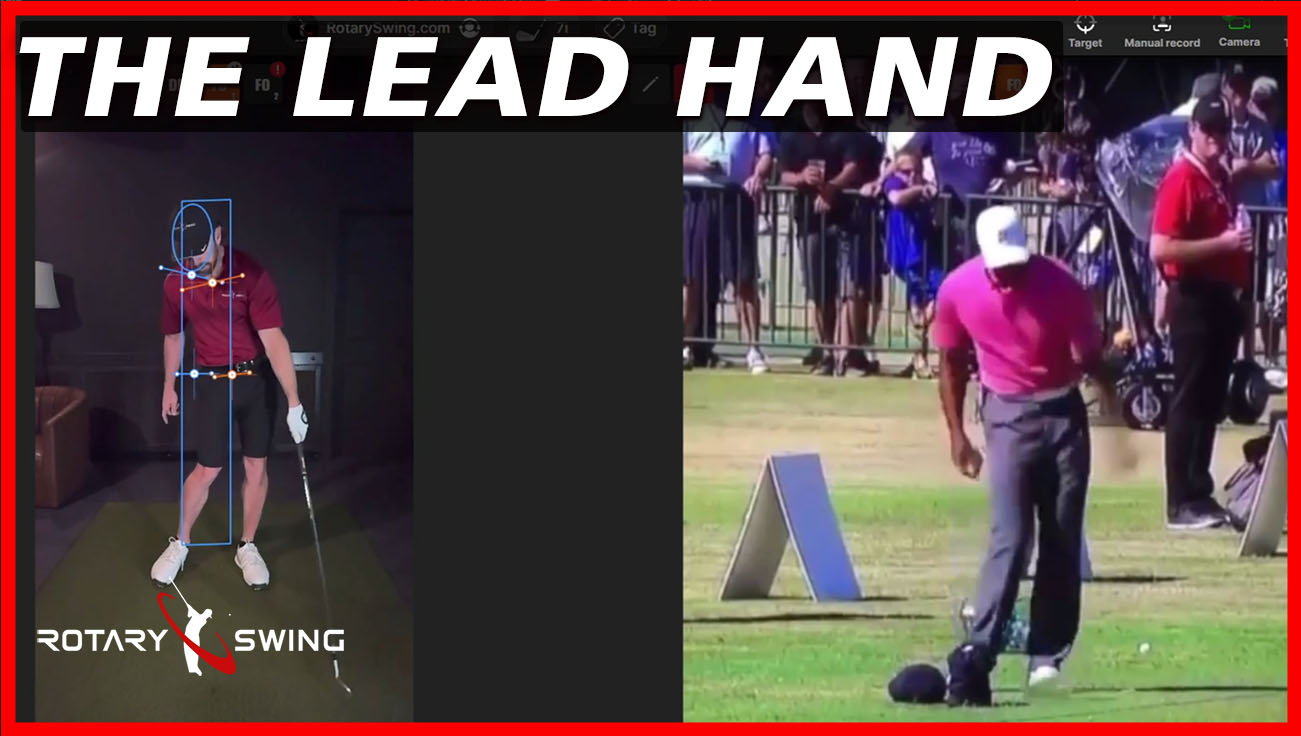
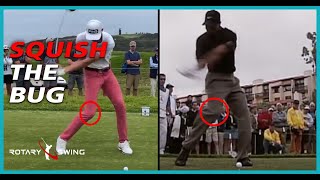
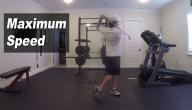
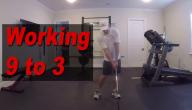
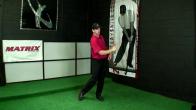
In this first image we can see that from the top of the golf swing to the initial phases of the downswing, my right heel has barely moved. From a face on view, you would see that my weight has shifted to the left.
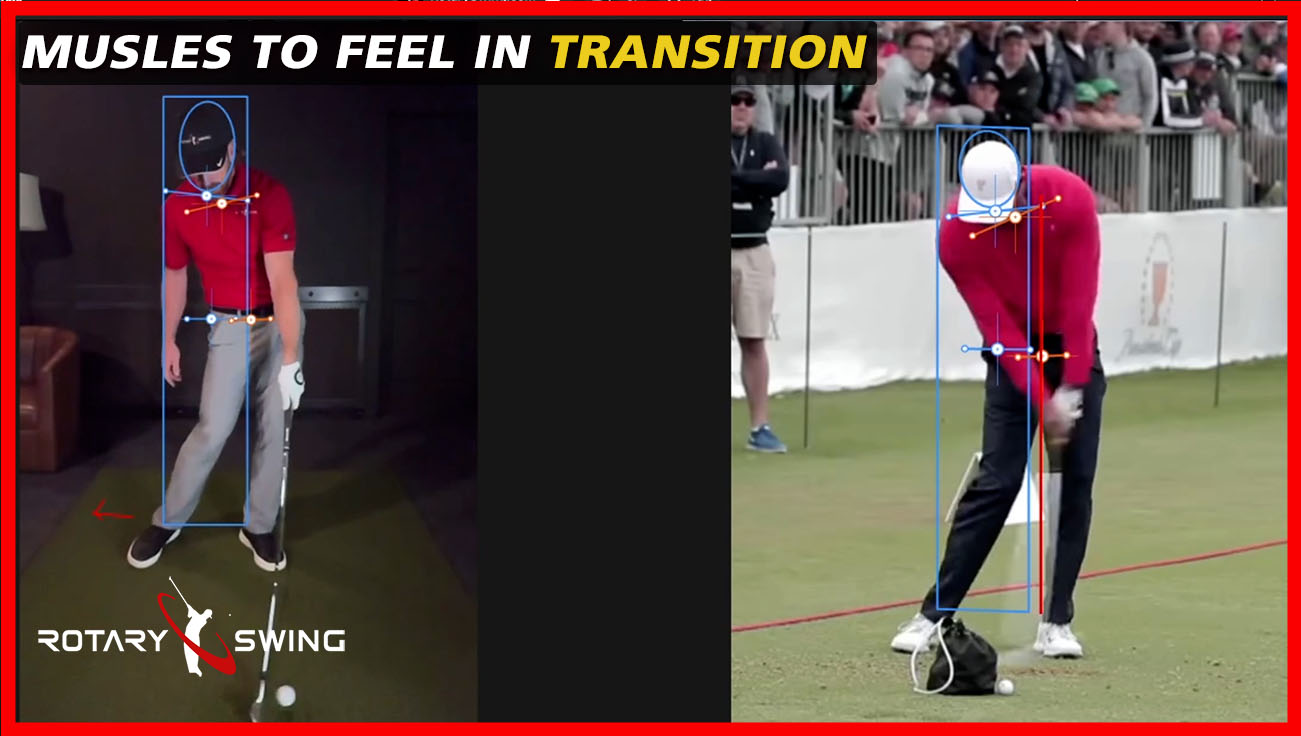
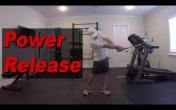
In the next sequence, it is clear to see that my right heel is still very low to the ground, but the entire foot has rolled up off the rope and in toward the left foot.
If you're a "hip spinner" as I discussed in the Hip Spinners video, doing this will create a sense of being "anchored" to the ground and provide a refreshing sense of stability at impact.
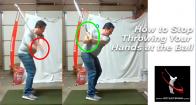
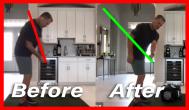
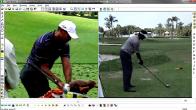
To more easily understand the problems associated with what happens when the right heel is high off the ground, let's take a look at the image above. As we will see in this case, the right heel being off the ground is actually being caused by other improper mechanics, not the golfer pushing off the right foot itself.
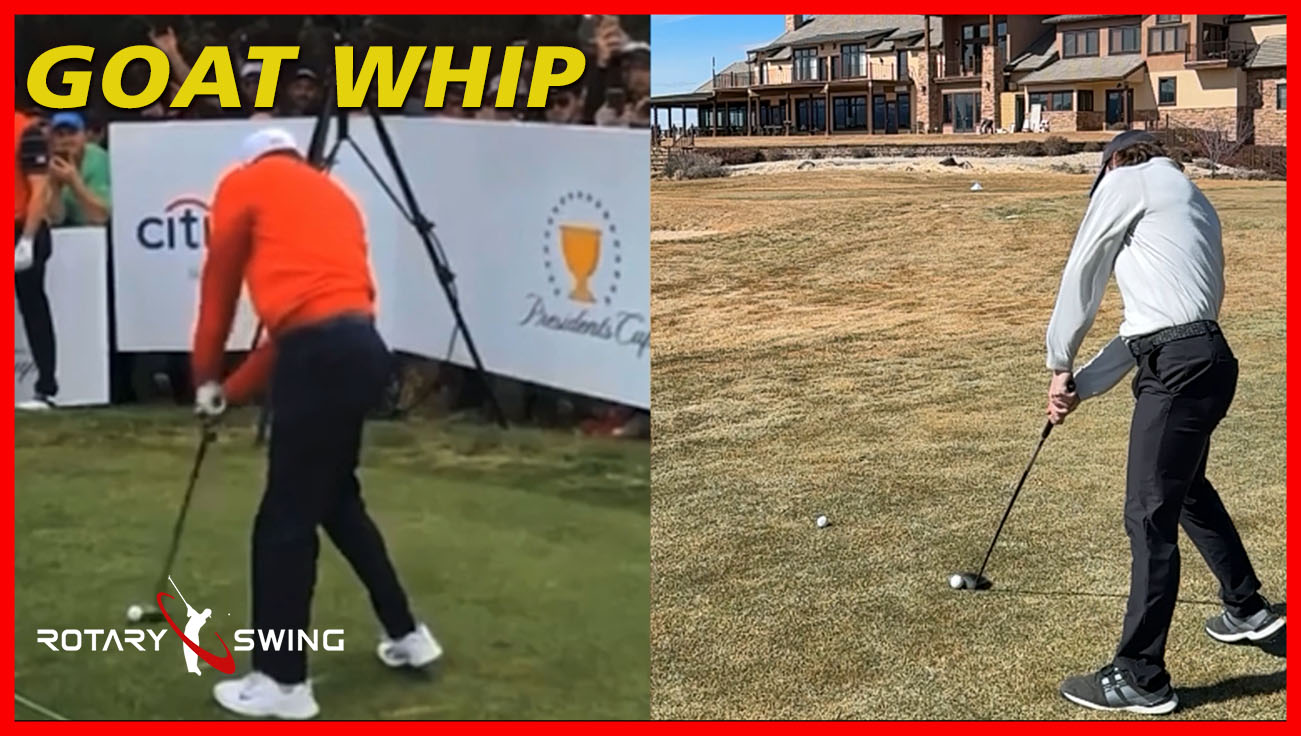
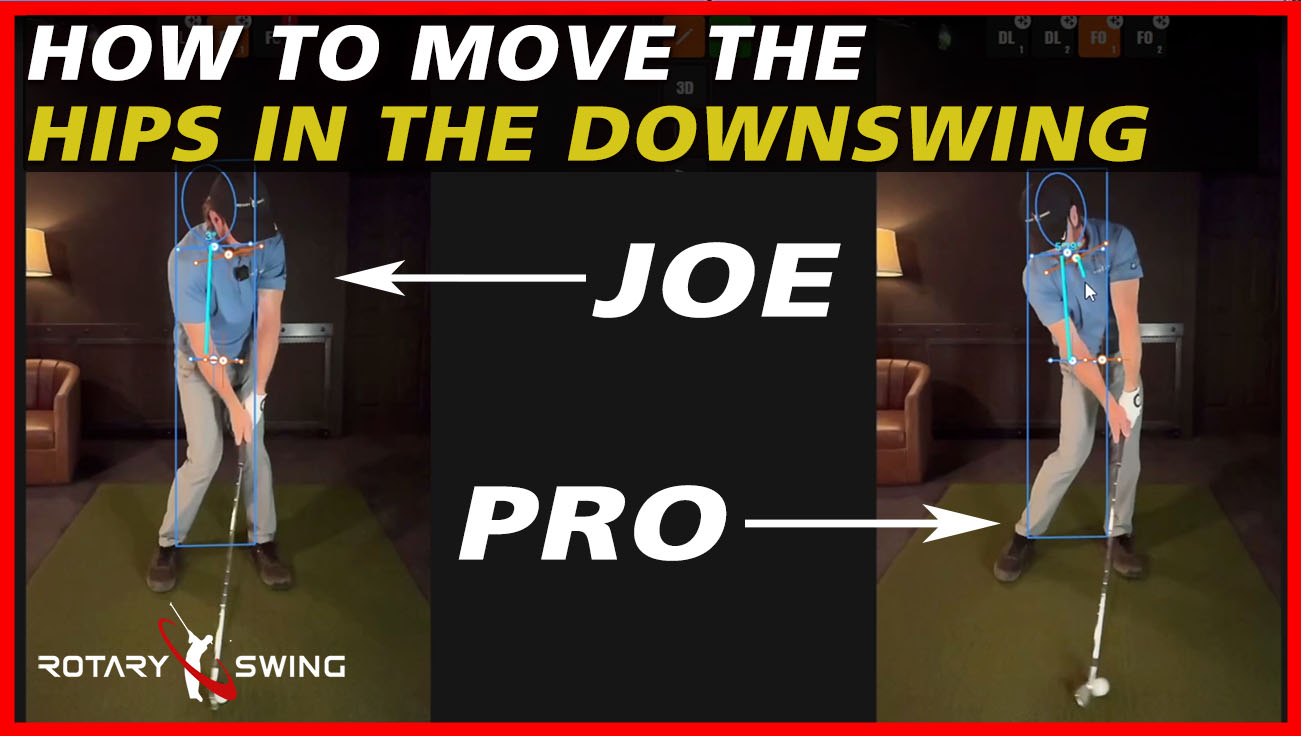
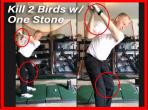
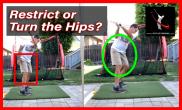
On the left is a student who exemplifies the classic hip spinner move and ends up with his arms stuck behind his body. Note how his right elbow is actually still behind his body and the arm is bent at the elbow at impact.
Contrast that with my elbow being in front of my body and the arm at near full extension delivering maximum speed at impact. Also, note how much more his hips have rotated open, which in this case is what is actually pulling his right heel well off the ground. This is where the right foot is not the cause of the problem, but simply a symptom.
This set of circumstances leads to many faults such as a path that is too in to out, especially with the longer clubs and often fat shots, but thin shots can be a common result as well. Apart from the ball flight issues, of supreme importance to the Rotary Swing Tour golf swing pattern is injury prevention.

In the photo below you can see how much more stress the golfer on the left is putting on his lumbar spine (low back) due to the significant side bend created by his thrusting the right hip toward the target and around. You can easily see this by the curvature of the lower spine and how high the right heel is off the ground.
Contrast that with my hips which appear much more stable with far less side bend, my spine is in a much more stable and supported position, significantly lowering the probability of injury. Having less hip rotation creates less side bend and makes the golf swing easier both on the lead hip as well as the low back - two of the most common injuries in all of golf and this is one of the most common causes! So, pay close attention to this video!
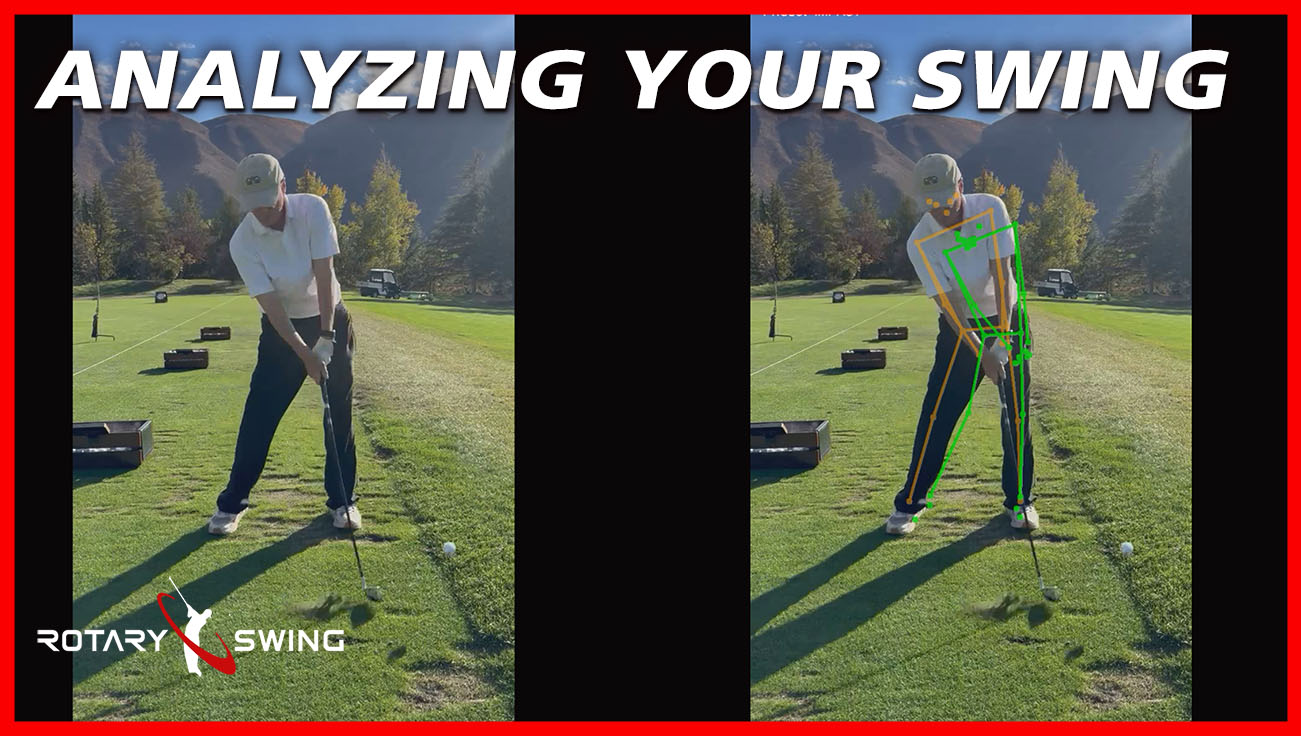
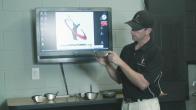
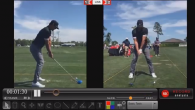
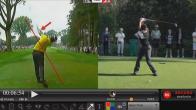
In this screen capture from the video below, we can see one of the simple checks I use when looking at a student's swing on video. I call this the Right Foot Plane or Right Foot Line.
In the video you will learn how to check that your body is moving correctly simply by using this simple check as well as a drill to help ingrain the proper movements of the right foot.
Video Transcription: Right Foot in the Downswing
Now we've talked about that sitting into the left side in the downswing, keeping the hips a little bit more square and releasing everything, getting the club to come back down, using our arms to help facilitate that process.

Right heel up
We need to add the right foot movement. Some of you, if you do this correctly already, great. A lot of you don't, because what I see as you come into the downswing this right heel is up off the ground real early, and it's moving in this way and it's getting your hips spinning really fast. You're losing the stability and being able to use the ground for leverage, so you're trying to drive too hard with your hips.
What we want to do at first when we have that problem - when the right foot is coming up real early and we're spinning the hips - we want to work on keeping that right heel on the ground and rolled slightly in while hitting shots.

Ideal impact posture
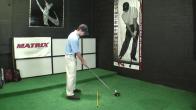
Basically, what you're looking for is as you come down into impact, this would be an ideal impact here, with my right foot. Not up off the ground, not moving my knee in.
It's going to roll slightly in as I shift my weight and my right leg is relatively passive here, as I shift into it. Now that right heel is rolling in. As the club releases it continues to roll, and then I can come up to a full finish. It's not getting it up off the ground as early as I can.
When you're hitting balls, for those of you who spin the body really hard and leave the arms trapped back behind the body, this is an excellent drill to start learning how your arms have to release and swing what is going to feel like past the body. If you keep the right heel on the ground it makes it possible.
In other words, if you get really stuck with your arms and club coming down, and the body's way out in front, this drill is going to help you start to reverse that, where your arms are going to feel more out in front and the body's going to feel a lot more quiet.

Right heel stays down until pulled up in follow through
This is going to be a lot more efficient way for you to swing the club because you don't need to move your body that much. Your body absolutely has an important job to do, but you don't need to be spinning your hips as fast as you can. It doesn't add anything for you unless you've got your arms and hands moving just as fast.
What we want to feel is going to the top of the swing and work on sitting into the left, firing the right arm. Notice how I keep my right foot down until it's pulled up.
You want to exaggerate keeping the inside of the right foot down the whole time, until your arms are about 9:00. Then you're going to have to come up at that point, but that's a great feeling, to get here and then let that right heel come up.
I'm not saying to keep your right foot flat. We're getting to the inside of it. Notice, if I kept it flat then I'm going to be hitting balls off my back foot like this. Now I've got a lot of weight back here.
The weight is moved to the left, which gets us rolled to the inside of the right foot. The outside of it is coming up off the ground just a little bit. Then as I release the club, it rotates on in.

Right heel should stay on the line (above), not break the plane (below)
If you're not doing this correctly and you look at your swing on video, here's a simple check for you. I call this the right foot line. It's a simple way to check this. Basically, if you imagined a vertical plane on the outside of your right foot, your right foot should never break that plane in this direction.
Let me show you exactly what I mean by that. I'm going to put it out in front of my foot so I can move it. From your perspective, if my right heel ever does this, that's breaking the plane. If you imagine, Mike Hogan used an example of a pane of glass. If my right foot does this, that's breaking the plane.
That's showing that I didn't shift far enough, and I spun out with my hips and that kicked my right foot out like this.
What we want to see is shift, that foot's going to roll, and now notice once I'm stacked over this side and it gets pulled up instead of me actively pushing it up, now it's going to roll up to here, and you'll notice that it never breaks that plane. It didn't go this way. It's here.

Correct foot movement
A lot of people refer to that as footwork. I call it a lack of footwork because we're not doing anything with this foot. For those of you who have learned to spin your hips, you're going to feel pretty awkward at first, keeping that foot down and learning to let the club release, but that's exactly what we need. We need that speed.
That's free speed, letting the club release. If you get your body out in front, though, the club's not releasing until out here, and that happens when you spin the hips and get the right foot spinning like that.
Again, practice shifting into the left. Use the last video that we did, on the sitting into the left side. Bring the arms down, start to fire the right arm. Keep that foot rolling to the inside, and then let it come up and never break that plane, and you're going to have a lot more control of your body and be able to get your club to release in the downswing.
Watch part 2 now to see how you're moving your body in the opposite direction of the pros!