After you have completed every video in the downswing section, the final milestone in the RST program is mastering the golf club release. Everything we build in the golf swing points toward this single split second in time that determines whether you stripe a perfect shot or send one sailing out of bounds. The release point is where stored energy finally transfers into the ball, and getting it right is what separates consistent ball-strikers from golfers who struggle with distance and accuracy.
A proper golf swing release is something that should be learned in a very precise, progressive sequence so you build each layer of skill correctly and quickly. This video walks you through that exact sequence, drill by drill, so you develop a repeatable release that delivers clubhead speed and a square face at impact every single time.
Is this the fault costing you strokes?
Film one swing on your phone. In about a minute GOATY measures it and names the single biggest thing costing you strokes — free, no card.
Analyze My Swing Free
Related: Greens in regulation vs short game: where to practice first →
Related: Golf impact position — how AI scores yours →
Android users: Download GOATY on Google Play — free AI golf coaching on your Android phone. →
"Another day of release drills and I've found more control and coordination. Amazed how far the ball goes and the clean contact with a perfect release. For years I thought release just meant rolling the wrists and forearms, but my left wrist cupped and my left arm bent. The Rotary Swing progressive release drills really helped me understand the process."
-Mike M. | May 3, 2012

The look of the perfect golf swing release with both hands.
A properly executed golf club release is a beautiful thing to observe. It is this perfectly timed, fluid motion that makes the tour professionals' swings look so effortless and powerful, even in slow motion. When every piece of the kinetic chain fires in the correct order, the club appears to accelerate on its own.
Stop reading about it — feel it in your swing today
GOATY watches your swing live and coaches you between every rep. Free. No signup.
Start Your FREE Live Lesson →In reality, it is this release of the club that allows the clubhead to not only accelerate to tremendous clubhead speed with minimal physical effort, but also delofts and squares the club face through impact. That combination of speed, compression, and face control is the foundation of every solid ball flight you see on the PGA Tour.
In this video, I walk you through a very specific progressive sequence that enables you to learn the perfect golf swing release in a step-by-step fashion:
- First, I teach you how to release the lead hand correctly so you build the foundation of rotational speed, then
- I show you how to FINALLY get your hands ahead of the ball at impact for proper shaft lean and compression, and lastly
- I work you through the process of slowly reintroducing the trail hand so it can play its supporting role in the release without overpowering the motion.

RST student Rick S. made an incredible improvement here. In fact, his hands are now a little too far ahead of the ball!
Once you master the release by working through this progressive sequence, you will hit the ball farther than you ever have before with far less effort than you imagined possible. If you want to see exactly how your current release compares to tour-level mechanics, try a free AI swing analysis and let GOATY pinpoint your biggest opportunity.
This should start to give you a picture of the improvement you can expect when you commit to this process...
"I have played golf since I was 6 years old and have deeply ingrained flaws, especially flipping the the club before impact.
The drills we did yesterday were awesome to correct a 50 year old swing flaw!
I am sure all club casters like me will benefit greatly from your new video on the Perfect Release."
-Rick S. | 11/8/2011
As you work through this video, you can achieve results like Rick, but there is a very specific sequence in which these release drills must be performed...
Video Transcription: 5 Minutes to the Perfect Release
In the Lose the Trail Hand Drill, I started explaining how you generate a speedy golf club release without having to put any conscious effort into it whatsoever. The secret is understanding that speed comes from letting the club release rather than forcing it.
For a large number of golfers, releasing the club is a completely foreign concept because they have never actually allowed the club to release naturally. Instead, they use their body to drag the club through impact. The problem with that approach is that your body just keeps turning through the hitting zone, and the clubhead and your body have to move at a more relative constant speed together. Compare that to letting the body decelerate so the club can move very fast while the body does virtually nothing.
In fact, the club can actually release faster as the body slows down, because you transmit energy up the kinetic chain into the club. This is the principle behind lag and power transfer in the downswing. Learning how to and let that trail hand come off is really important, but obviously we do not play golf lead-hand only. I do have a lot of students who ask me if they can, though, after they work through these drills that you are about to learn now.

Keep the left wrist flat
What I am going to do is walk you through the complete sequence of how to learn to release the club, very slowly and methodically, until you start building the proper movements and motor patterns into your golf swing.
Here is what I do with every one of my students. The first thing, when they are learning how to release the lead hand, is we take the trail hand completely out of the equation. If you are someone who pushes really hard from the trail side or flips that trail hand at the ball, this step is absolutely critical. Do not skip it.
You want to start learning how to release the club properly and get into a proper impact position. So at first, what I do is simply make sure they can achieve a perfect impact position with their lead hand only. We typically take some variables out of the swing to simplify the learning process.
I will let them go ahead and preset themselves into their lead-side impact position, because these are going to be really short swings. There is not going to be enough time to shift over fully, so we preset ourselves on our lead side from the start.

A common but incorrect release
Then what I have them do is swing back and start coming down, stopping right at impact. Obviously this is a hard floor so the club cannot stick in the ground, but I generally have them stick the club into the turf and try to stop right at the impact position.
These shots are obviously going to be five-yard shots. They are not going anywhere. What I am checking is whether they can keep that lead wrist flat and get into a proper impact alignment with the lead side. This is the foundation that every other piece of the release is built upon.
Once they can do that consistently, we start working on the actual release rotation.
Now what I am doing is training the lead hand to rotate through the ball. This is how you truly release the golf club. You do not release the club by flipping it with cupped wrists. That is what most golfers do. Technically that is a release of sorts, but it is not going to produce the result you want because it adds loft to the club through impact, and now you are trying to time a flip rather than making a repeatable move.

Turning the whole body is also incorrect
You want to think of the release as pure rotation. There is a tremendous amount of force, speed, and momentum stored in that club. You have to release that energy somehow, somewhere, and you basically have three options. You can flip it, you can turn your body, or you can simply let it release with the lead hand through natural forearm rotation.
One method is vastly more efficient than the others, and it is the one that allows us to trap the ball and hit it on a proper trajectory with maximum distance. The flip sends the ball high and weak into the sky. The body-driven method requires a tremendous amount of physical effort, puts significant stress on your spine and hip, and is completely unnecessary. It is also not nearly as fast as simply letting the club release naturally through lead-hand rotation.
Why would you not go for the most efficient way of learning how to release the lead hand? Once you can get into a proper impact position, we start working on that rotation. From the face-on angle, what you will see is that my lead wrist is still in that arched position I had at impact, and I am just turning it over naturally. This is the kind of detail that free AI swing analysis technology can now measure frame by frame.
This is important: you need to learn where this release happens, or where it feels like it happens, in the downswing. The target for your lead hand during this release is the back of your lead thigh. At that point, it feels like the hand simply starts turning over with speed.

The left hand feels like it turns over at the left thigh
Obviously, your wrist is actually rotating gradually throughout the entire downswing, but during the release where we want that snap of clubhead speed, it is going to feel like your hand stops at your thigh and turns over explosively.
That is not literally what happens, but for most golfers they need that specific feel-image because they will otherwise either A, move their hand too far forward so the logo of the glove faces down the target line and the club has not released, which adds loft, or B, they flip it. I want to take loft off the club the entire way through the downswing, so I have to feel that my hand stops at my thigh and just turns over aggressively.
In reality, because the club is moving and pulling my hands with significant centrifugal force, my hands are actually going to release out in front of my body. But my feeling is that I am releasing it more at my thigh in order to get the club to release properly and on time.
Also, when you are hitting short shots, it has to feel like it releases at the thigh, because your hands are not going to travel way out in front of you. You do not want to be performing this drill with hands far forward. That misses the entire point. The goal is to arrive at the release point, turn over, and rotate that club face through the ball with authority.
Now what I check is that the lead wrist is still flat through the release. To many golfers it will feel as though the wrist has exaggeratedly flipped over. You will not over-rotate like that when you keep your trail hand on the club. That is perfectly fine if you are accustomed to scooping; allow yourself to feel as though the logo of your glove faces the ground.

Ideal position - wrist flat, toe up
In an ideal world, the back of the lead hand is basically going to face straight behind you. The toe of the club is going to be in a toe-up position, or slightly shut, which is perfectly acceptable. We simply do not want it cupped, because a cupped lead wrist at this stage means you have added loft instead of compressing the ball.
Once you can perform that release correctly, we are going to start adding the trail hand back onto the club, but we are going to let it come off through impact. So we have two drills established so far. Start out lead hand only, stick the club into the ground, hit these little tiny dribblers, and simply verify your impact alignments are correct. Next piece, rotate and release. The ball will travel a little farther as you work on the release motion.
Now we bring the trail hand in there to add some speed. Same movement pattern: swing back, but I want you to let the trail hand come off through impact. This teaches you that the trail hand is there for power, not control.
Now the trail hand is going to contribute a little more clubhead speed. Notice that each time I add a piece to the drill, the club moves a little faster. It becomes a little more challenging to maintain these positions if they are not something you are comfortable with or used to performing.
At first the drill was really slow. Then as we added the release component it got a little faster. Now with the trail hand back in, I can add more speed. The key is that I still want you to let go of the club at impact. If you are used to being very trail-hand dominant, this will actually be a genuine challenge for you to execute.

Right hand comes off at impact
Even though this sequence looks really simple when demonstrated, that is because I have performed it millions of times over the years. What you are going to find is that many golfers will not want to let go of the club when they are actually hitting real golf balls. That is perfectly normal; you just have to work through this drill slowly and deliberately. That is the third step in the progression.
The fourth step is to work on releasing the club, but once you let the lead hand complete its release, I want you to bring your trail hand up into position on the grip. Do not move your body while doing this. My lead hand has fully released. Notice that my body, my hips, and everything are still square to the target. During this drill, my body is not rotating independently.
Everything we have worked on in the other drills, keeping your belt buckle and the buttons on your shirt square at impact, remains exactly the same here. Now, even though my lead hand has released, my body is still square. I am going to bring my trail hand up slowly into position on the club.
Now you can see that my body has actually been forced to turn because, as my trail hand comes across to grab the club, my shoulders have to rotate slightly. What this drill teaches you is exactly what you should feel in your follow-through once the trail hand is back on the club for a full golf swing.
Now we are starting to put the entire sequence together and maintain our positions throughout. What is going to be difficult for you is when you start doing this in your real swing, the temptation to reach across and grab the club. When that happens, you lose your , your shoulders move too far across, and you compromise the release mechanics you just built. If you want real-time coaching feedback while you practice, try a free AI golf lesson that guides you through every rep.

Bring right hand into position
It should feel as though the lead arm stays wide, and you are simply reaching across and under to grab the club with the trail hand. That puts you into a solid follow-through position with proper extension. That is the fourth step: release, then bring the trail hand up just barely touching the club.
Once you can get through all four of those pieces cleanly, we are ready to keep the trail hand on the club for the entire motion. Just as I discussed in the Lose the Trail Hand Drill, you want to feel like the trail hand is just a passenger along for the ride. Your trail hand, viewed from down the line, is going to look like it is almost coming off the club at first, and that is exactly right.
You want that club to be able to release freely, with the trail hand just barely touching the grip, while you are controlling and releasing the club with the lead hand. That is the critical piece of the entire golf swing release sequence.
Then you stack this final piece on top: a full release, but your trail hand is just barely maintaining contact with the club. That is what your regular golf swing should feel like. You do not have to completely let go of the club the way Vijay does, although you would release it faster if you did. You simply want your trail hand to be light on the club, adding power without interfering with the rotational speed of the release.
Work through this entire progression, five minutes a day. Just come through: get into an impact position, then a release position, trail hand adding speed, trail hand releasing and coming back into the follow-through, and then put all the pieces together into one fluid motion.

Right hand feels like a passenger
You can work through them in that exact sequence, building layer upon layer. If you can do this correctly, once you master each piece individually, the results will come quickly. The first time you practice this for five minutes a day, you might only do the lead-hand-only drill until it is perfect. If the lead wrist starts cupping and your hands fall behind the clubhead, there is no point in working on the release until you get impact correct first.
Work through each piece individually, and then as you get comfortable start stacking everything into one continuous drill, just like you see demonstrated here, until your full golf swing starts to feel exactly like the drill feels.
Commit to this 5 Minutes to the Perfect Release Drill, and you will develop serious clubhead speed. You will gain the ability to control the club face, you will put almost no effort into your golf swing, and you will start to enjoy the game far more as you learn to compress the ball and hit it farther than you ever have before. For a data-driven look at where your release stands right now, get a free AI swing analysis and see exactly what to work on first.
Watch part 2 now to see how you're moving your body in the opposite direction of the pros!






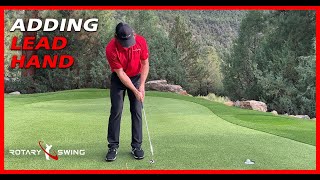


















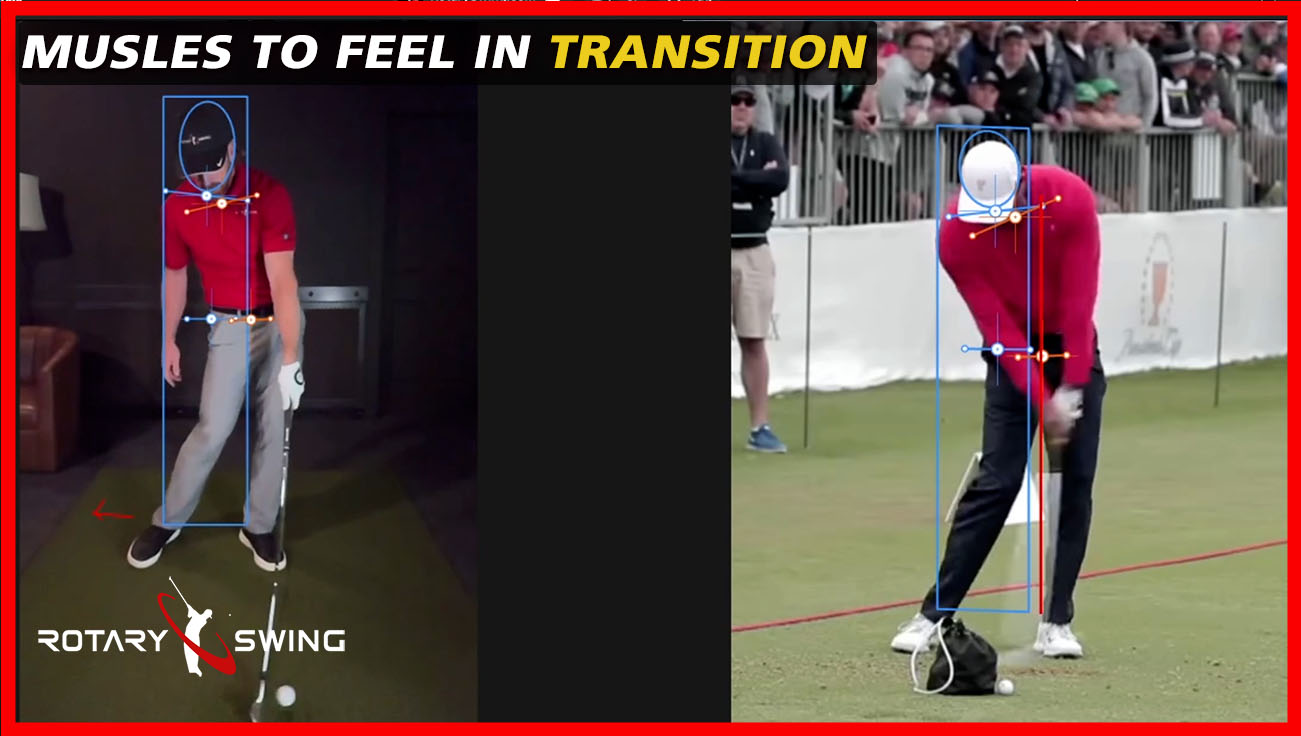

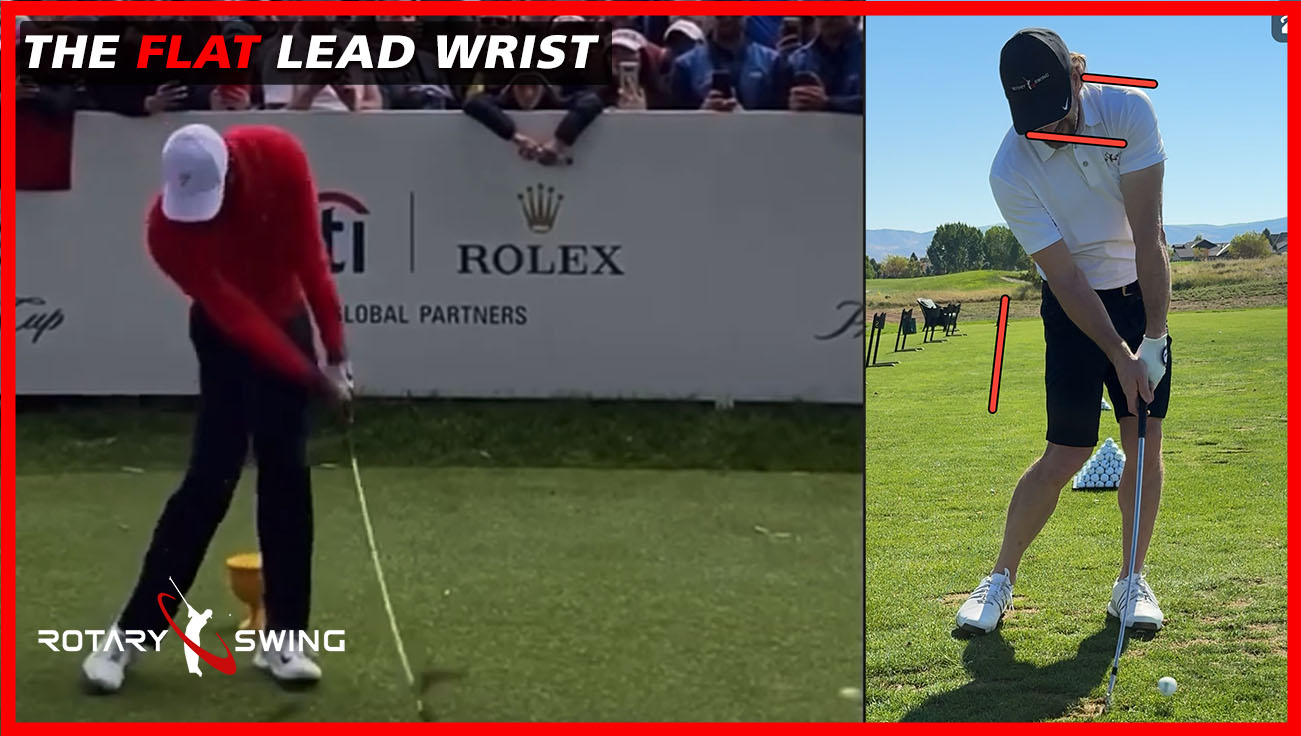

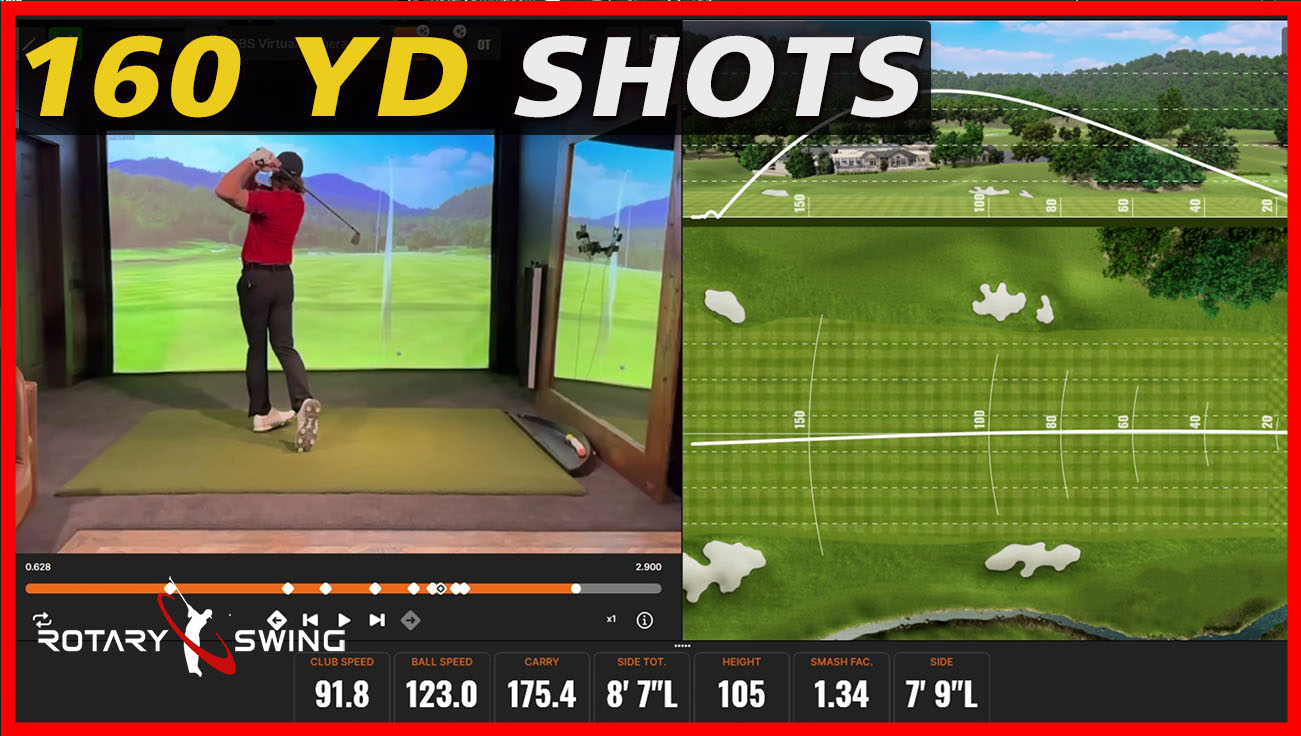
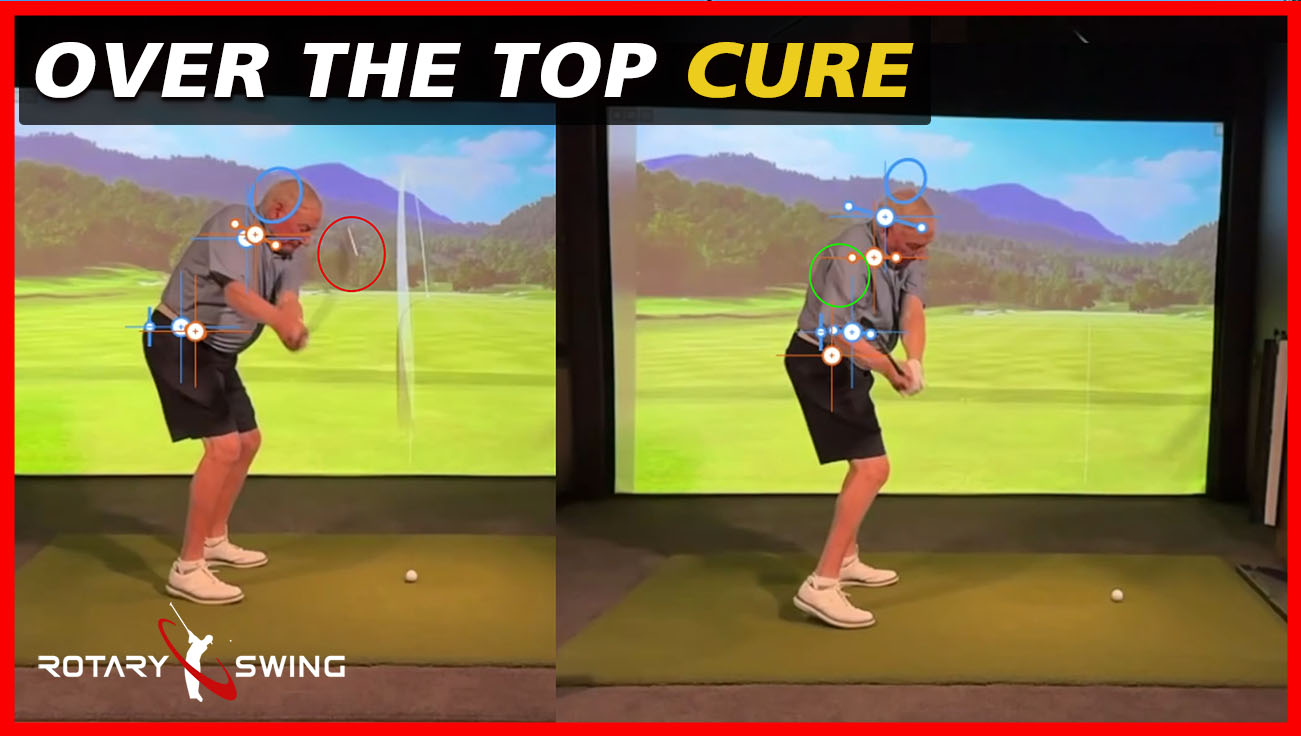








































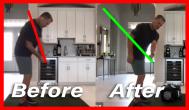







































































 Because you are learning how to rotate the left forearm independent of the body, the goal is to get you to over rotate the club face so it may appear shut at this point, as shown in the picture above.
 Preset on the left side