Why You Are Losing Lag
Before working on the mechanics behind increasing your lag, it's important to understand the main causes for losing it.
1. Spinning the Shoulders in the Downswing
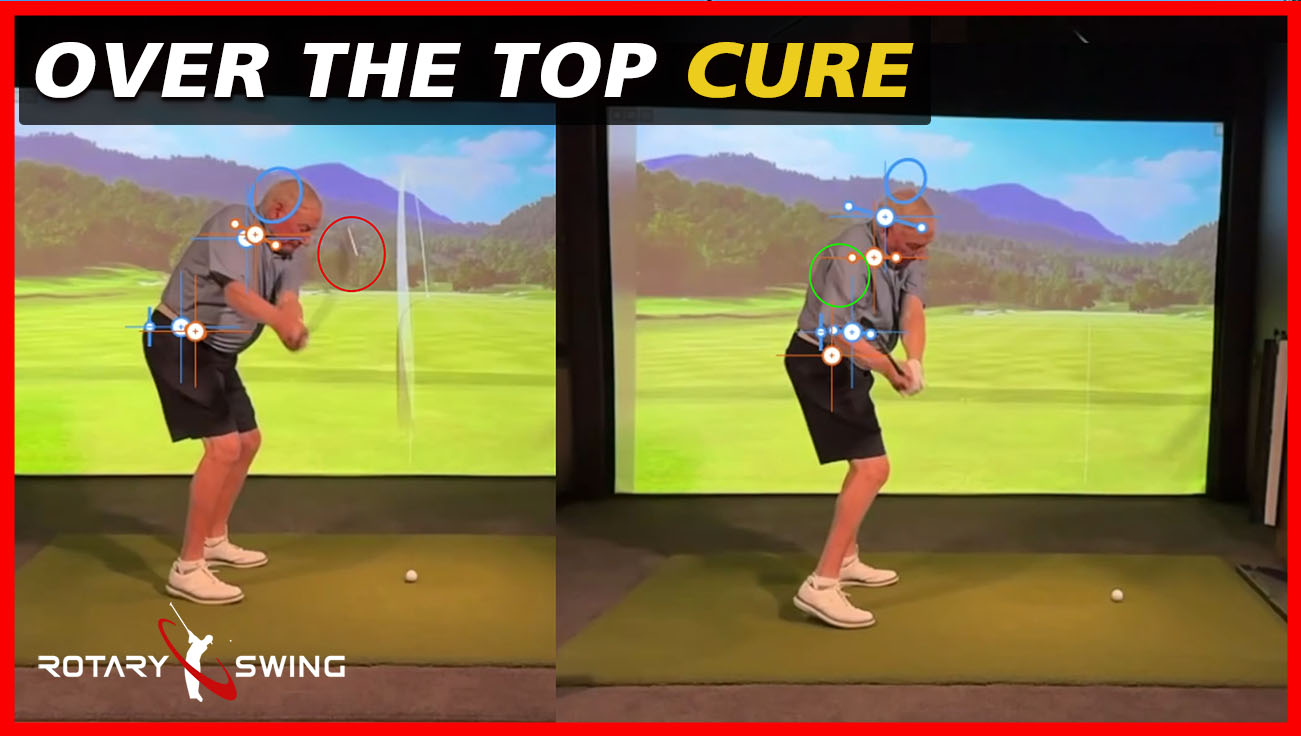
This is perhaps the most common swing fault I see. Spinning the shoulders means starting the downswing by aggressively unwinding the shoulders from the top of the backswing.
This rotary motion creates a great deal of centripetal force, which in turn produces centrifugal force acting on the club.
This centrifugal force causes the club head to release away from you and is powerful enough to overpower the wrists — creating club head throwaway, or a casting motion.
"Just watched this video today. Did this drill for about 5-10 mins. All I can say is 'Wow, I actually have a golf swing again and no more shoulder spinning or getting stuck.'...I looked at a video from yesterday then took one today. It's a huge step in the right direction."
-Michael I. | Sept 30, 2012 | Arkansas
2. Oversetting the Wrists
The second common cause is setting the wrists fully too early in the backswing.
When this happens, the forearm muscles responsible for creating lag are fully contracted and have nowhere else to go during the downswing.

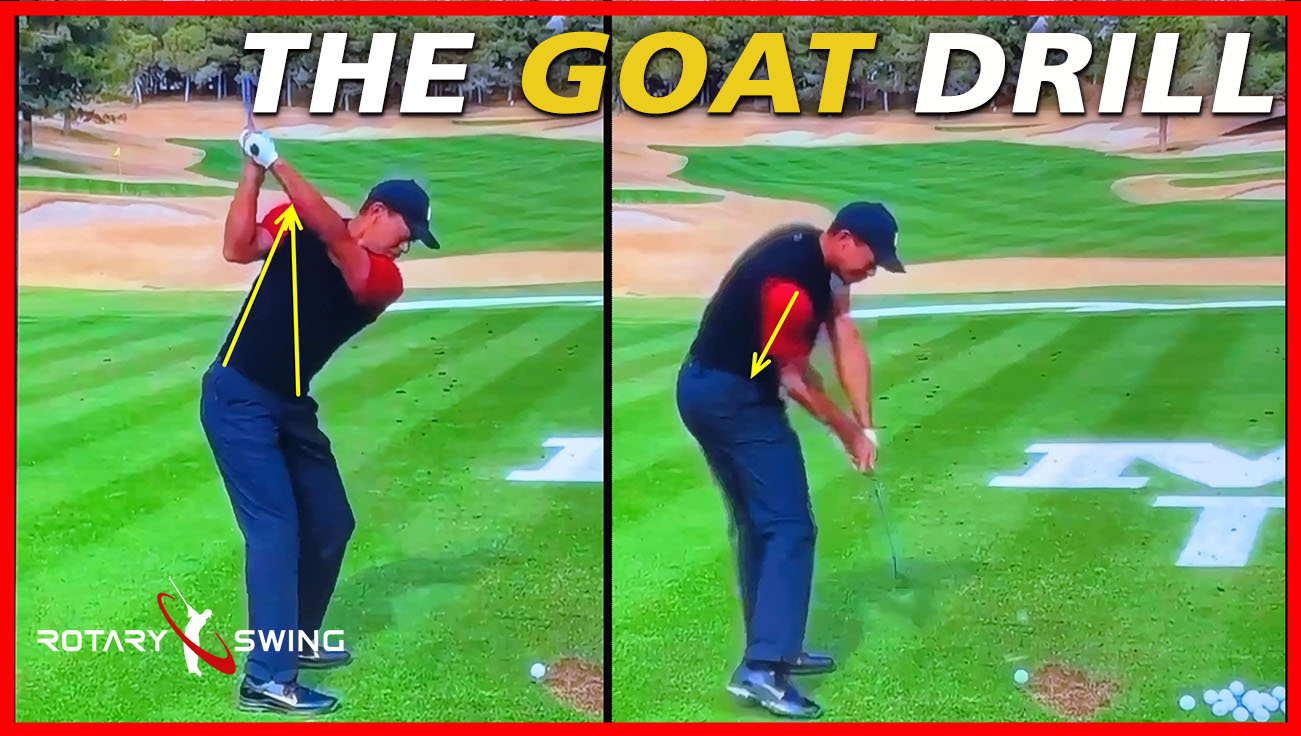
You can see downcock when comparing the first image to the second one in this complete, powerful sequence that happens when following the drills in this video.
A muscle under tension wants to do one thing — release that tension! So as the golfer starts down, the club is cast.
3. Too Much Tension
This shows up in golfers at every level — from PGA Tour pros I've worked with to the 30 handicapper.
Excessive tension in the forearms locks up the wrists and prevents something critical in all great golf swings — a downcocking motion.
A downcock is simply the act of setting your wrists MORE during the downswing when it's needed most (see below).
(Note: this is NOT a comprehensive list of faults, but it covers the common ones that most golfers don't realize are killing their lag.)
How to Attack Your Lag Destroyers
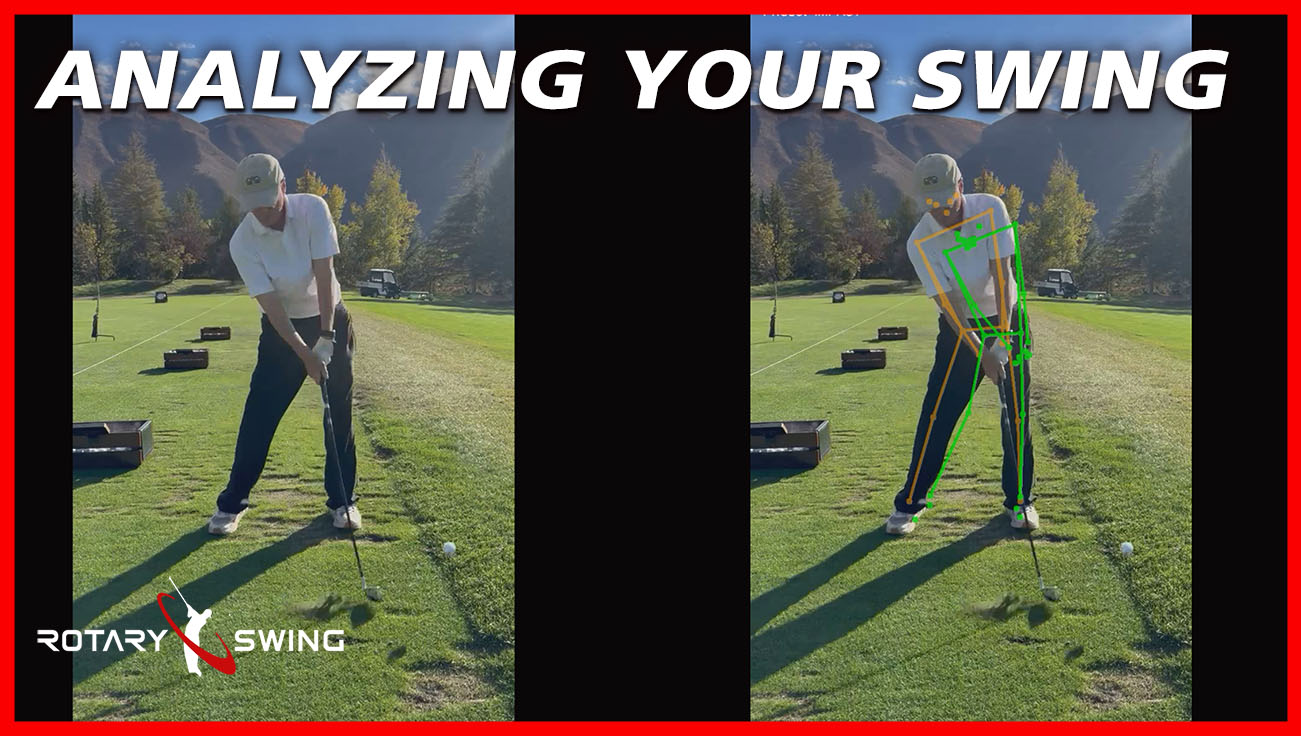
As with everything in the RST System, you will go through a very specific sequence of drills that must be followed IN ORDER to overcome these flaws. For a data-driven snapshot of how your swing mechanics currently score, try a free AI swing analysis.
The order of this sequence is as follows...
Train the Lead Arm First:
- Lead arm swing into the impact bag
- Lead arm swinging freely
- Lead arm into the bag with the ball in front of the bag
- Lead arm hitting a ball with no impact bag
Each step is progressively more challenging than the previous one.
Step 1 is something most golfers will breeze through quickly, as is Step 2.
You'll want to focus on keeping the wrist and arm soft to allow for the downcock, then focus on getting into the impact position laid out in the Impact Alignments Face On video.
Once you feel comfortable with that, Step 3 will make the transition to hitting balls much smoother.
The goal with Step 4 is to put all these pieces together into a smooth, effortless swing that creates the same feeling as when you hit the impact bag.

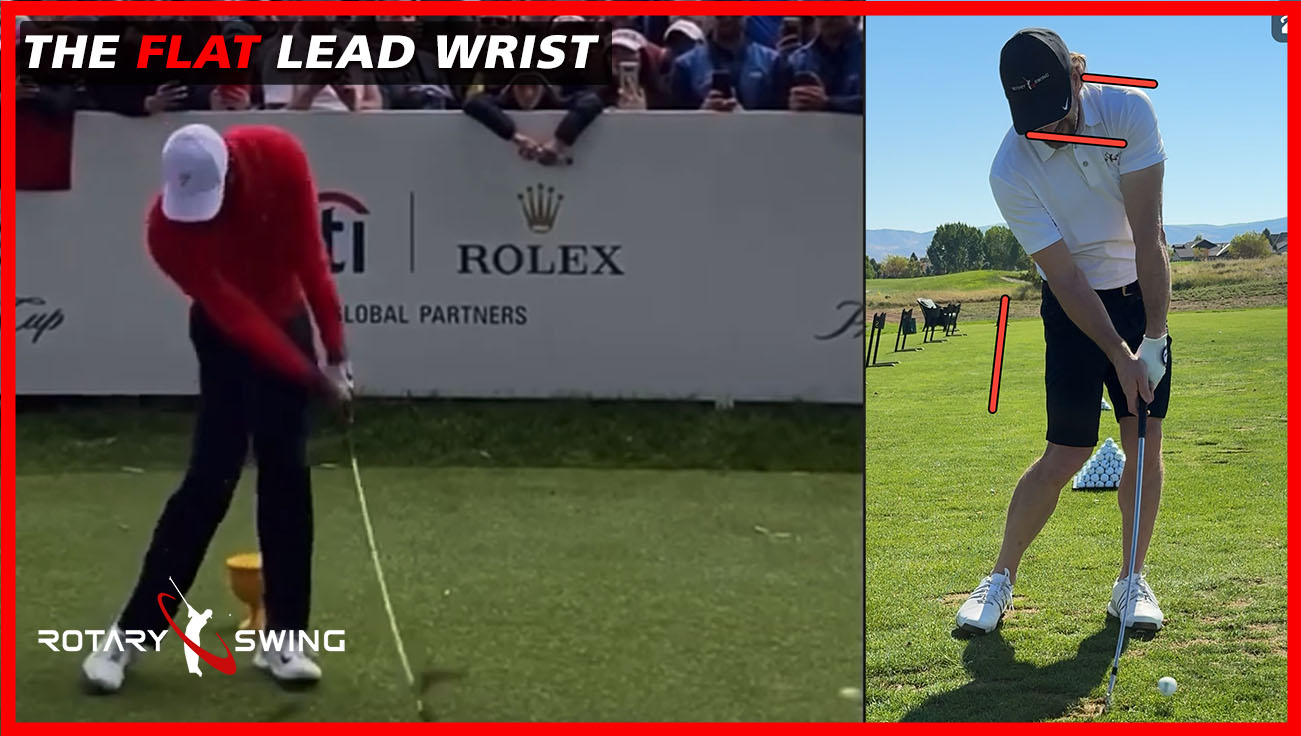
Here is the impact position as you let the right hand come off at impact.
Then Add the Trail Hand:
Once you have progressed through these steps, as I demonstrate in the video, you will then add the trail hand back onto the club.
This will be a significant challenge for those who are very trail-side dominant, so be patient with this process and work through it.
It is critical that the lead hand be trained properly, and that takes time. Just imagine if you had to brush your teeth with your lead hand — you'd probably end up with toothpaste in your eye!
As you begin introducing the trail hand, it will be very beneficial to learn to let go of the club with the trail hand during the downswing.
You want the club to rip through impact with effortless speed, and you will find that holding on with the trail hand will actually SLOW DOWN the release of the club.
Watch golfers like Vijay Singh, Fred Couples, and Phil Mickelson — their trailing hands all nearly come completely off the club after impact.

Here I am doing the right hand drill while keeping the left hand as a "passenger," and you can see that a lot of lag is maintained late in the downswing.
This is a great free-wheeling feeling that demonstrates how fast the club can move independent of the body.
Where the Speed Comes from in Your Swing
Once you have properly trained the lead hand and can perform the drills proficiently, you want to begin a very similar process for the trail hand.
This is where the majority of your clubhead speed comes from.
In fact, the release of the wrists is responsible for approximately 60% of your overall clubhead speed, so take great care in getting this part right!
As you work through the drills with the trail arm, you'll be able to produce more lag and maintain it later in the swing — that is the trail hand's primary role in the swing.
"Holy Crap what a feeling!!! I started this drill on Monday, and today, for the first time, I think I hit the golf ball the correct way. I've never felt that feeling that I had from the right arm...Really cool feeling, and I also love when I do the divot one handed, I'm amazed at the consistency."
-Robert H. | Oct 3, 2012 | 16 HDCP
Exaggerate Soft Arms and Wrists
One key point that I cannot stress enough is to keep your body out of it and your arms and wrists soft.
Exaggerate that softness — especially when hitting the impact bag — so you can begin creating tremendous lag in your swing and get comfortable with the downcocking process.
As you train each arm individually, you'll see just how simple the golf swing really can be and start down the road to becoming a "Lag Monster"! To practice with real-time AI coaching, check out a free AI golf lesson.
Now let's watch this video!
"Great Video, Chuck! You may be the best golf teacher on the planet!"
-Neil S. | Sept 26, 2012 | 8 HDCP
"Chuck, at 9:38 you give one of the best instruction tips I have ever heard...Perfect. Looking forward to more vids on how to make gravity work in your favour. Thanks again!"
-Paolo R. | Sept 27, 2012 | London
"Hi Chuck, Love this video. This is like the lid for the jigsaw puzzle :0)"
-Sam J. | Sept 28, 2012 | England
Important Notes
As a general guideline, I recommend working on the lead hand drills for at least 10 practice sessions before moving on to the trail hand.

Left arm drill - Backswing
Submit your swing for a free review (if you are a Premium Member) when you feel you have it down, and one of our Certified RST Instructors will tell you when you're ready to move on or what needs attention first.
Note: if you don't have an impact bag — which you'll need for these drills — you can pick one up here: Buy Impact Bag (opens in new window).
Video Transcription: Re-Shaping Your Swing for Lag - Lessons 1-3
A lot of times when you're working on your golf swing, you get into the website and there are a lot of videos, and you're working on little tiny details and getting into the nuts and bolts of things.
A lot of times what you really need to focus on is just building the shape of your swing.
I call what we're going to work on today, "reshaping your golf swing."
What I mean by that is training yourself to learn how the golf club works, how the wrist works, and how the arms work.
Rather than worrying about getting my takeaway perfect and my setup perfect and all those things — which are extremely important — a lot of times you just need to reshape the swing because you have so many moving parts going on that you don't have the basic concept of how the fundamental motion works.
That's what this video is all about. This video is ideal for a couple different groups of golfers.
First, it's winter time and you're wanting to reshape and start from scratch because what you have isn't working for you.
This video is perfect for that.
You have the winter to work on it. You're not going to hit many balls, although I'm going to show you how to use this drill to hit balls. But primarily it's about learning to build the shape of a world-class golf swing without getting into the nuts and bolts of perfecting every single detail along the way.

Left arm drill - Follow through
Once you have the basic shape of the swing, that's when we can go back and start refining — making a change in the takeaway makes a huge difference, but if you have no idea how to swing the golf club, having a perfect takeaway is going to take a long time to translate into good ball striking.
The second group: those of you who don't understand how to train the lead and trail arm independently.
That's how I always work on the golf swing when I'm making changes.
I train the lead hand by itself, then the trail hand by itself.
I usually start with the lead hand first — it depends on the golfer — but the reason is the lead hand, lead arm, and lead side control the position and impact alignments of the golf club, which is everything.
If the club is in the right position at impact, we've got a great chance at hitting good shots.
The trail hand is primarily there for speed, so we focus on the lead arm first and then train the trail arm.
This is going to be critical for learning how to build the shape of a golf swing.
Then you can go back and watch the other videos for the details.
This video is going to be really critical for just about everybody, but especially those two groups: golfers reshaping their swing for the off-season, and those who need to learn how to train the arms independently.
Let's get started.
When we start shaping the swing, we focus on the lead arm first.
As I mentioned, that's what controls the overall shape, width, and most importantly the impact positions of the swing.
We're going to focus on the lead arm first. I'm going to teach you the basic swinging motion.
This is going to look a lot like what you perceive as a golf swing. It's very simple at first.
Before we get into the progression of drills, we're just getting the basic shape. There are a couple of key points to focus on.
First, grip the club with your lead hand only.
Then turn back and get your arm to a position at the top that resembles a backswing. Don't worry about perfecting it just yet.
We're building the overall construct of the swing.
I want to keep my lead arm straight. I want to see this, but I don't want to see this collapsed position.
As I turn back to the top — weight on the trail side, all the basic fundamentals. Any piece you're currently working on — whether it's the downcock or — you can incorporate it into this drill.
To the top and turn, and now I simply shift laterally just a little bit to get my weight back to the lead side, then let my lead hand swing down.
Notice that I'm NOT doing this aggressive rotation. That's what most people perceive as a golf swing.
The only reason you rotate in the downswing is because both hands are on the golf club. That forces the rotation. But because I only have one hand on the club, I only need to shift and let my arms swing — and you'll see I barely turn at all.
The only reason I turned even slightly is because the momentum of the club swinging pulled me around. I'm not trying to turn.

Left arm drill - Release into the impact bag
That's critical. Most golfers — especially those who get stuck — add too much rotation. The club can never catch up, and that's what causes the problem.
This drill is essential for two groups. First, if you come over the top — because when you're going down you're not going to rotate — that eliminates the most common cause of coming over the top.
They turn back and then rotate aggressively coming down — and that's how they learn to come over the top.
Second, for those who spin out and get stuck, this drill is incredibly effective. It addresses both faults simultaneously.
Going back, shift, release. You'll notice a natural downcock if your wrist stays supple.
You don't need to exaggerate excessively, but you can — if you need to counteract a casting motion from the top. With the trail arm out of play, getting a significant downcock where the shaft touches your shoulder is surprisingly easy.
The third group this helps are those without any lag or downcock in their swing.
It's remarkably easy when you have just your lead hand on the club. Keep your wrist soft, and as you start down and shift, you can see I have tons of lag. I can really exaggerate it.
That's more lag than I'd actually want — it's a little excessive.
Now I'm going to build this into a drill progression. First, we use the impact bag.
You need one of these impact bags — they're essential for this drill.
The drill is the same, but now I'm focusing on getting into the impact bag. It serves two purposes.
First, you won't be tempted to keep turning through, because the bag stops your forward motion.
Second, it allows you to focus on releasing the club into the bag and generating speed into the bag, rather than trying to rip yourself around into a follow through.
I'm focusing all my energy into releasing here. I don't need to worry about squaring the face or hitting the ball solid — we'll get to that next. I'm just going to release it.

Left arm drill - Put a ball in front of the bag
You'll see that as I come through, my body stays squared up. I've gotten into a good impact position.
This is phenomenal for golfers who have been flipping the club. It prevents flipping into the bag and teaches you the basic shape and motion of what a golf swing really is.
Once you have that motion, remove the impact bag and go back to what I was doing earlier.
Focus on where your divots bottom out. On the grass you'll see it clearly.
As I do this drill, my divot bottoms out and starts in the exact same spot every single time. That's not coordination or hand-eye skill. I'm just letting physics and the motion do the work. I'm letting my arm swing very soft. My wrist is soft for the downcock, and gravity and physics force the release of the club.
I'm not doing anything actively.
I can even get a little sloppy with it and it still bottoms out in the same spot. Start getting that consistent divot pattern without a ball, so you're not focused on hitting the ball correctly.
Now the third step. Once your divots are bottoming out in the same spot, we add a ball in front of the bag.
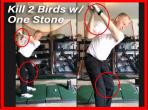
Now we're killing two birds with one stone.
We're getting past that nervous system hurdle where people say, "I do the drill perfectly, but I put a ball in there and it doesn't work." It's not the drill that fails.
It's that your brain starts making compensations to hit this little white demon.
With the impact bag there, you'll build confidence quickly. You'll reach the point where you can swing, downcock, shift your weight, and not spin out — all very rapidly.
When you remove the bag it'll be slightly more challenging, but you'll get it.
The reason for Step 3 is simply to get past the hurdle of having to strike the ball cleanly with nothing else around it.

Right arm drill - Backswing
It can be intimidating at first, so this step lets you focus on hitting the bag while the ball is simply collected along the way. You're going to hit it whether you intend to or not.
Same drill — back... and I hit the bag and the ball, just fine. The ball doesn't go far. I'm using a 7 iron — it'll fly into the bag and stop.
Start trying to replicate the free-flowing shape and swinging motion that you have without a ball — just the impact bag or nothing at all — with the ball in front of you.
Then Step 4: remove all the crutches and start really easy.
Just like our "Five Minutes to the Perfect Release" video — little shots at first, eventually working up to near-full swings.
That's the final step.
These four steps are critical for building the shape of your golf swing. Once you have the basic shape, then worry about the details — positions, takeaway precision, wrist angles, and impact alignments.
If you don't understand what the shape of the swing should feel like — this nice, free-flowing, gravity-driven motion, how the arms come down...
One last important point: as I'm coming down, I'm NOT trying to pull my arm hard. I'm letting gravity take over.
That's how I achieve smooth acceleration and get my divot to bottom out in the same spot consistently.
It's because I'm not putting muscular effort into it. I literally go to the top, turn, and then simply turn the muscle off. My arm moves really fast even though I'm not trying to move it at all.
I'm letting gravity carry me from the top to the release point. My initial research — which I'll publish in detail later — shows that about 85 percent of a tour player's normal max hand speed can be achieved solely through gravity.
We'll explore that another day.
Here, relax, let the club work through. That's the basic swinging motion. Train this lead arm first. Get into the impact alignments discussed on the site.

Right arm drill - Swing through
Once you have that down, it will take some time — but make sure you're proficient.
You don't need to hit the ball perfectly with your lead arm only, and you don't need to hit it hard — that's where the trail arm will add speed.
That's what we'll talk about next.
Now we've got the lead arm basic motion established. How does the trail arm work in conjunction with the lead arm?
The drill is slightly different. It has two basic steps. First, just swing the arm back by itself.
Notice I didn't mention rotating back.
We'll add rotation later, but it complicates this drill significantly. For now, just swing back, shift forward, swing through. The same principle applies here — I'm just letting my arm drop and release.
With just the trail arm, I'm turning slightly, but the big key is I'm NOT turning coming down. I'm keeping my body very quiet and teaching this arm how it swings and releases.
Now watch — even though I'm trying to keep my body square, what happens? It looks like a golf swing. I turned through, but I didn't actively turn my body. The momentum of the club releasing pulled me around.

Right arm drill - Add in the impact bag
That's the feeling you want.
The whole goal of this drill is teaching the trail arm how it works in the swing.
Same as with the lead arm — I want it soft, relaxed, with the wrist downcocking slightly to get a snap. That wrist snap is where 60 percent of your clubhead speed comes from.
You'll notice as I go back I get a little downcock because my wrist is soft, and then I get speed into the release.
Same progression as before.
Impact bag first, then divot consistency without a ball, then add a ball, and finally hit balls without the bag.
Same deal — put a ball in the way, swing back and through, then eventually learn to hit balls without the bag in place.
Once you get through the complete sequence, eventually you'll learn to put both hands together. That's the final piece.

Right arm drill - Put a ball in front of the bag
One last note on the trail arm: you can eventually start learning to rotate back and then release through, but it IS harder — once you rotate back with the trail arm, the urge to rotate through is very strong.
That's why I don't worry too much about keeping the body square going back. We're just training the trail arm by itself, independent of the body, breaking it down into smaller pieces.
Now we have the trail arm and lead arm trained independently. It takes time, but this process teaches you the basic shape and swinging motion of the golf swing.
How do we get these two to play nicely together? That's the real trick.
Going back to the lead arm drill — as you become proficient, you'll go through the same four-step progression but slowly introduce the trail hand.
How? First, put the trail hand on the club, but it's barely touching — I call it a "passenger." You still want to feel 100 percent lead-arm dominant.
With the trail hand barely touching the golf club, you can still feel 100 percent left-handed control, but the trail hand starts getting involved. It adds support, stability, and some speed to the club.
If the trail hand immediately tries to take over — if you notice tension against the shaft and you're pushing against it — then let the trail hand come off during the downswing.
It's on the shaft going back, but you release it so you can still focus on getting into that proper impact position.
Once you've reintroduced the trail hand, things will feel different. Keep working through it and keep letting the hand come off the club.
You can hit balls this way — come down, let the trail hand release off, and let the lead hand continue through just like your normal drills.

Reintroduce the right hand
The key is to not let the trail hand change the feeling of what you established with the lead hand. We trained the lead hand for a reason.
It has a critical job, and you don't want the trail hand to interfere with it.
Now we train the trail hand, going through the exact same process we did with the lead.
The difference: when doing the trail-hand-only drill while reintroducing the lead hand, you want the lead hand barely touching the club.
What you'll notice is that having the lead hand on the club forces you to turn. Before, you could do trail arm only without rotation. Can't do that now with both hands on the club — so it'll change the feel of the drill slightly.
Then the key: once you go back, let the trail hand still do all the work. Focus on really releasing and slinging the club head into the impact bag with the trail hand.
Notice I didn't try to shove it through with my shoulders or push against my arm. I released it.
I always use the analogy of swinging a hammer — you don't keep your wrist rigid when swinging a hammer — or playing ping pong where you use the trail hand to get a snap on the forehand topspin. That speed comes from the wrist, not from your body driving through.
Obviously it doesn't make sense to hit a ping pong ball with your whole body. It doesn't make any more sense to hit a golf ball that way — it barely weighs an ounce and a half.

Right hand as the passenger - Let it come off the club
Now with the lead hand back on the club, it provides stability and control. I can be more aggressive with my downcock and get more snap into the release.
Turn back... and now I can start generating real speed, really releasing the club head into the bag.
Same progression. Do it without a ball, divots bottoming out consistently. Add a ball, then work up to hitting balls without the bag.

Left hand as the passenger - Swing feels 100 percent right-handed
That's the complete progression for reshaping your golf swing. Train the lead arm first, slowly reintroduce the trail hand. Train the trail arm by itself, then slowly reintroduce the lead hand.
You want everything to gradually learn to work together.
Once you have that, you have the basic construct and shape for a golf swing. Then worry about takeaway position, top of the swing, wrist angles, impact, and all those details.
Get the basic motion down first. Once you have that, you're well on your way to building a world-class golf swing.
[demonstrates]
Watch part 2 now to see how you're moving your body in the opposite direction of the pros!
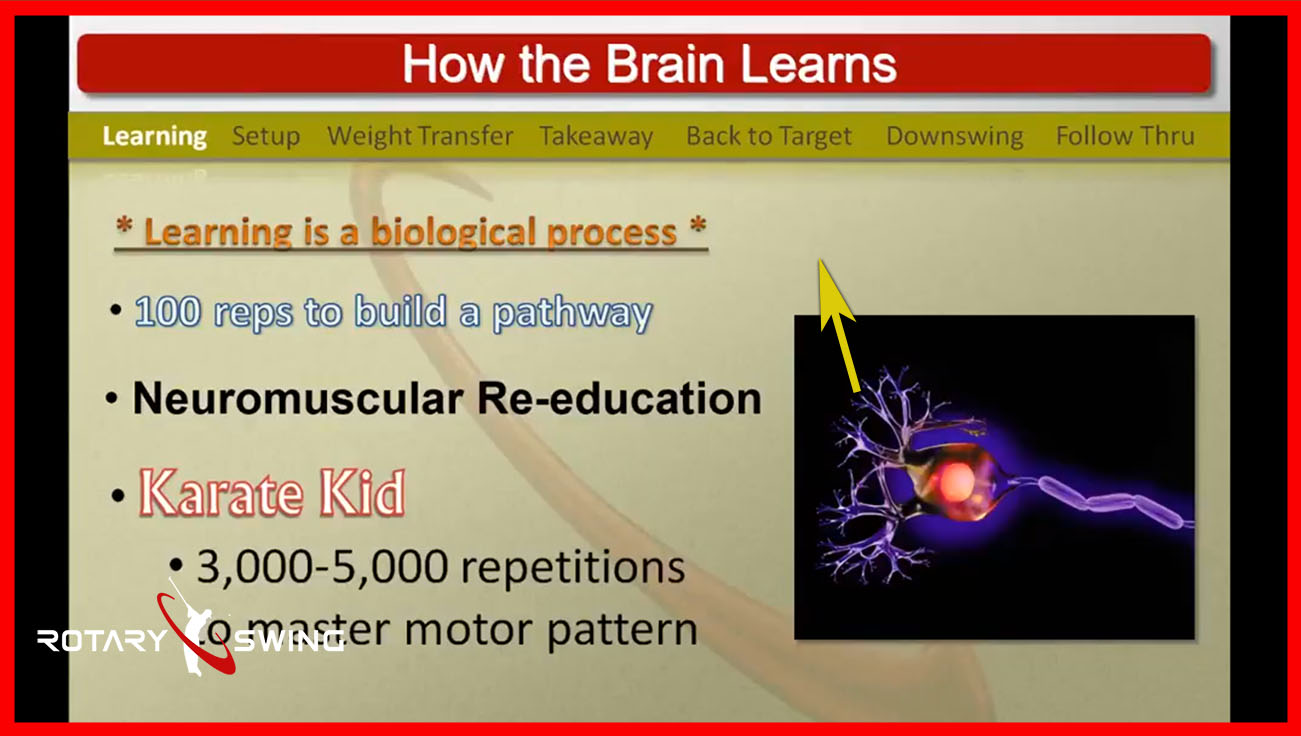

























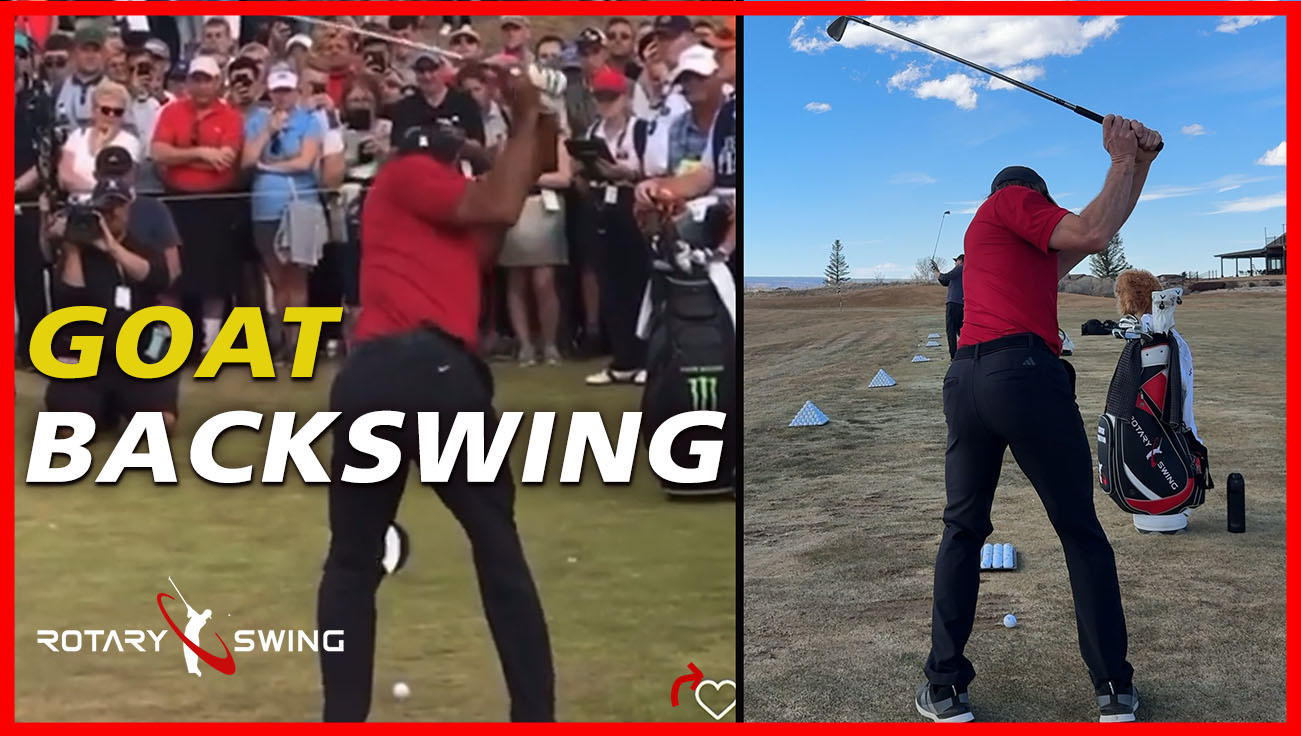
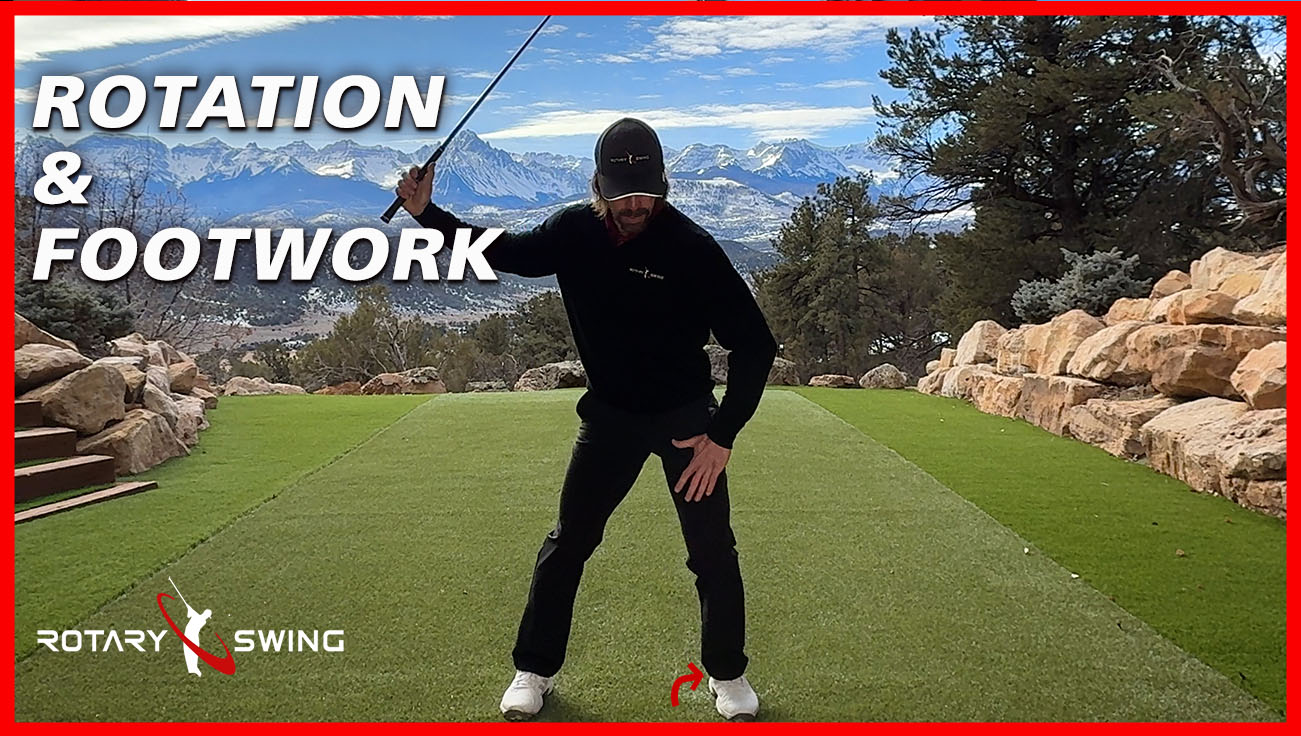
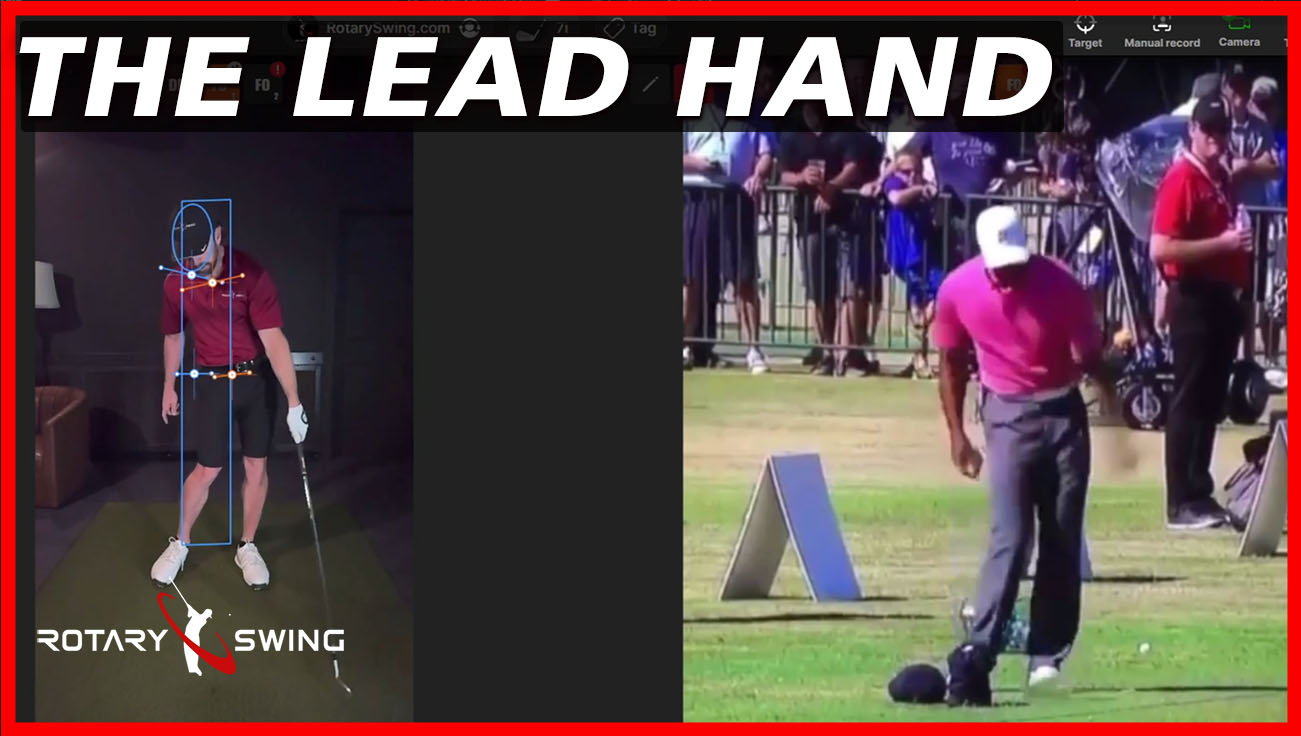
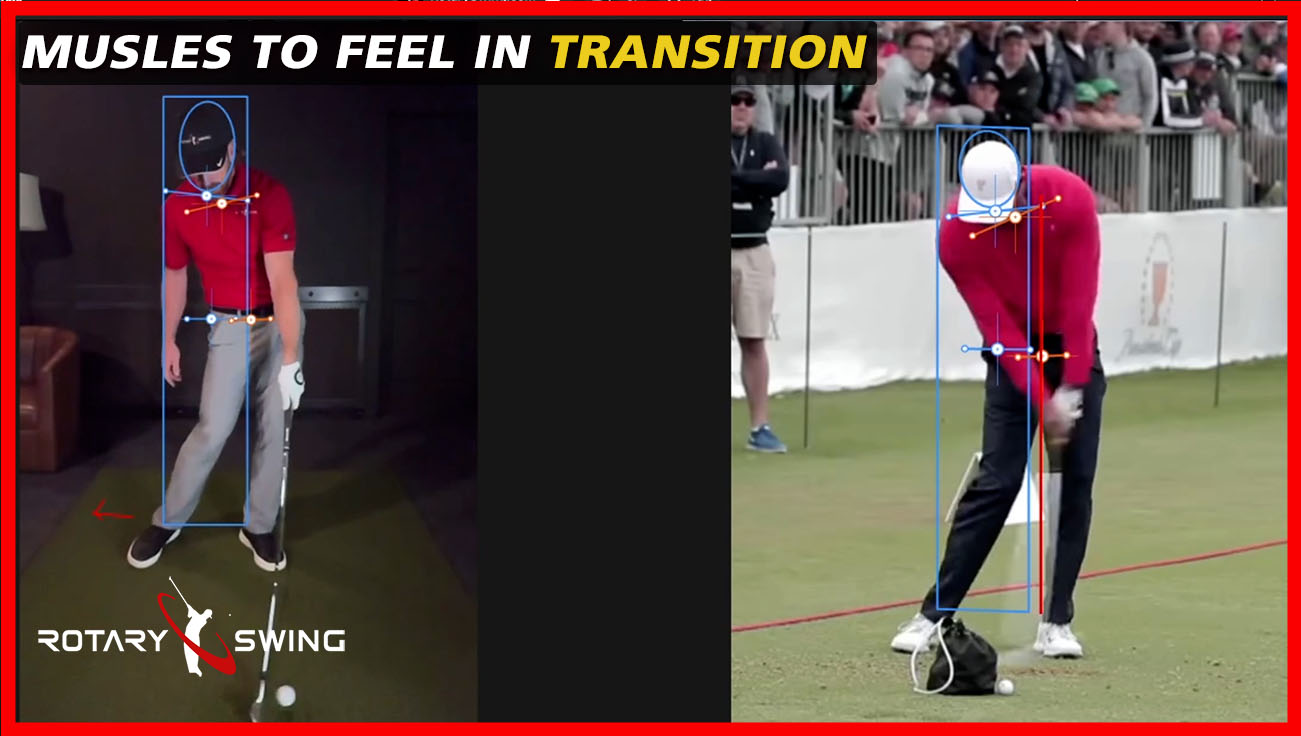









































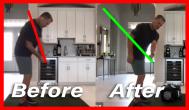
































































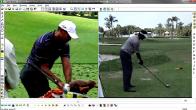



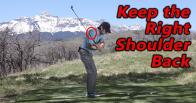


 Do you want this kind of lag in your golf swing? This video shows you how!