Over my 15 years of teaching, I've come to many definitive conclusions. One of those is what I consider the NUMBER 1 PROBLEM in most amateur golf swings: poor in the downswing.
The weight shift back to the lead side is so critical in allowing the downswing sequence to unfold in the proper order. This sequencing lets you take advantage of the stored energy created during the backswing.
Is this the fault costing you strokes?
Film one swing on your phone. In about a minute GOATY measures it and names the single biggest thing costing you strokes — free, no card.
Analyze My Swing Free
Related: Golf hip rotation — what AI coaching reveals →
Android users: Download GOATY on Google Play — free AI golf coaching on your Android phone. →
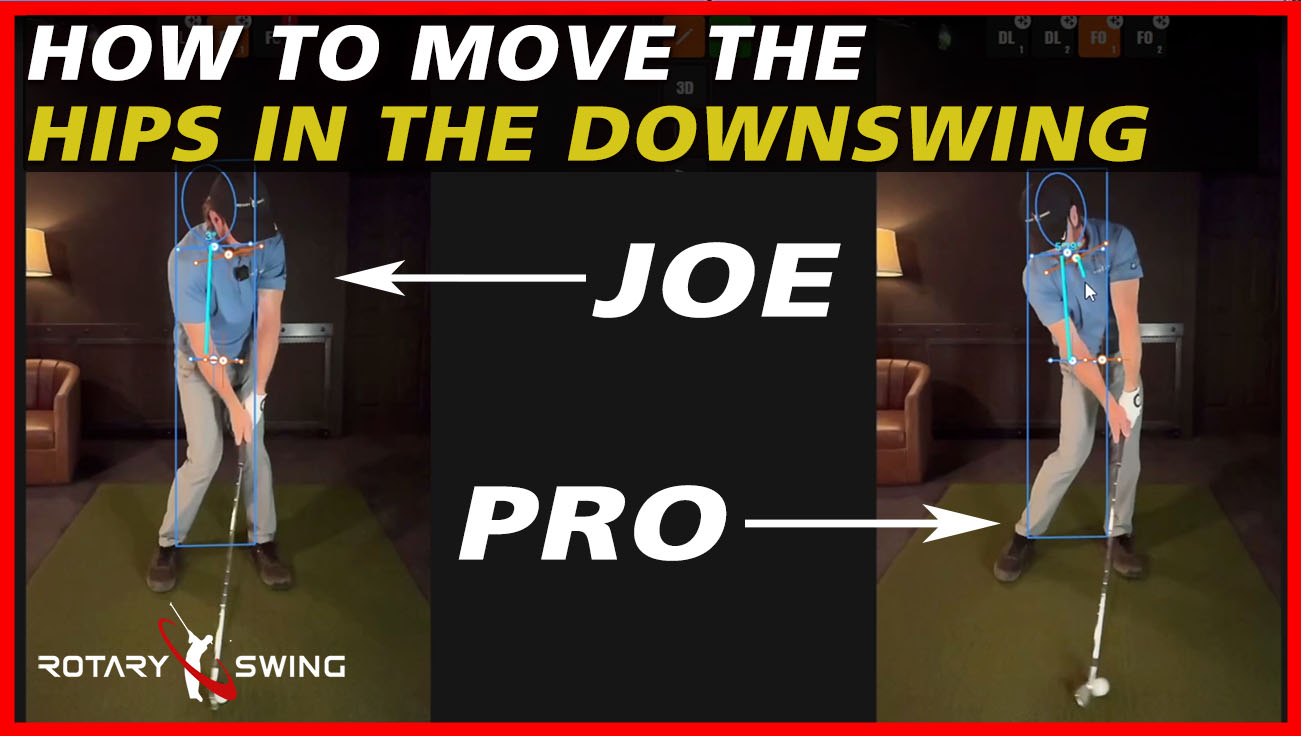
Unfortunately, most amateurs don't have a clue how much to shift or exactly HOW to shift, and in this video and article, I show you exactly how to do it like the best in the world.
Stop reading about it — feel it in your swing today
GOATY watches your swing live and coaches you between every rep. Free. No signup.
Start Your FREE Live Lesson →A Great Checkpoint for Weight Shift
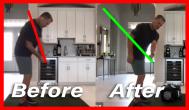
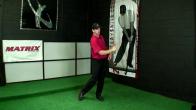
Greg, RST Professional Golfer from Ireland.
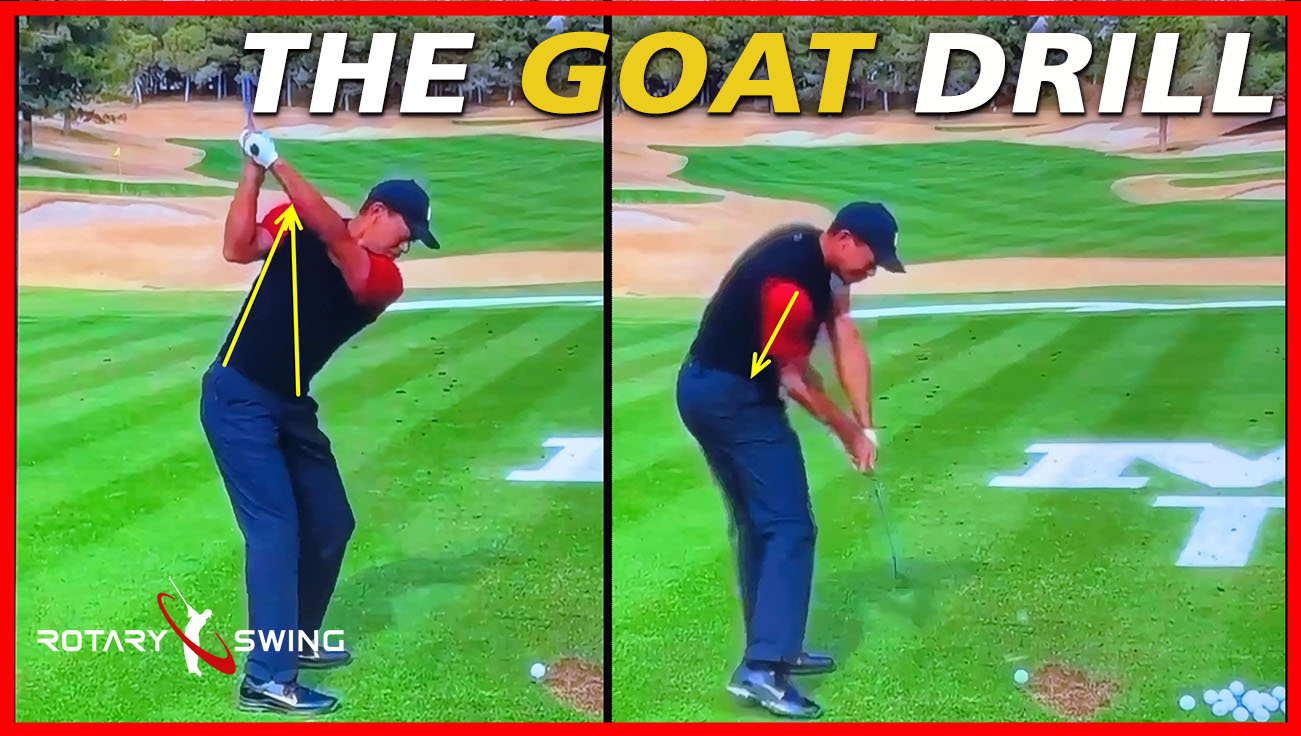
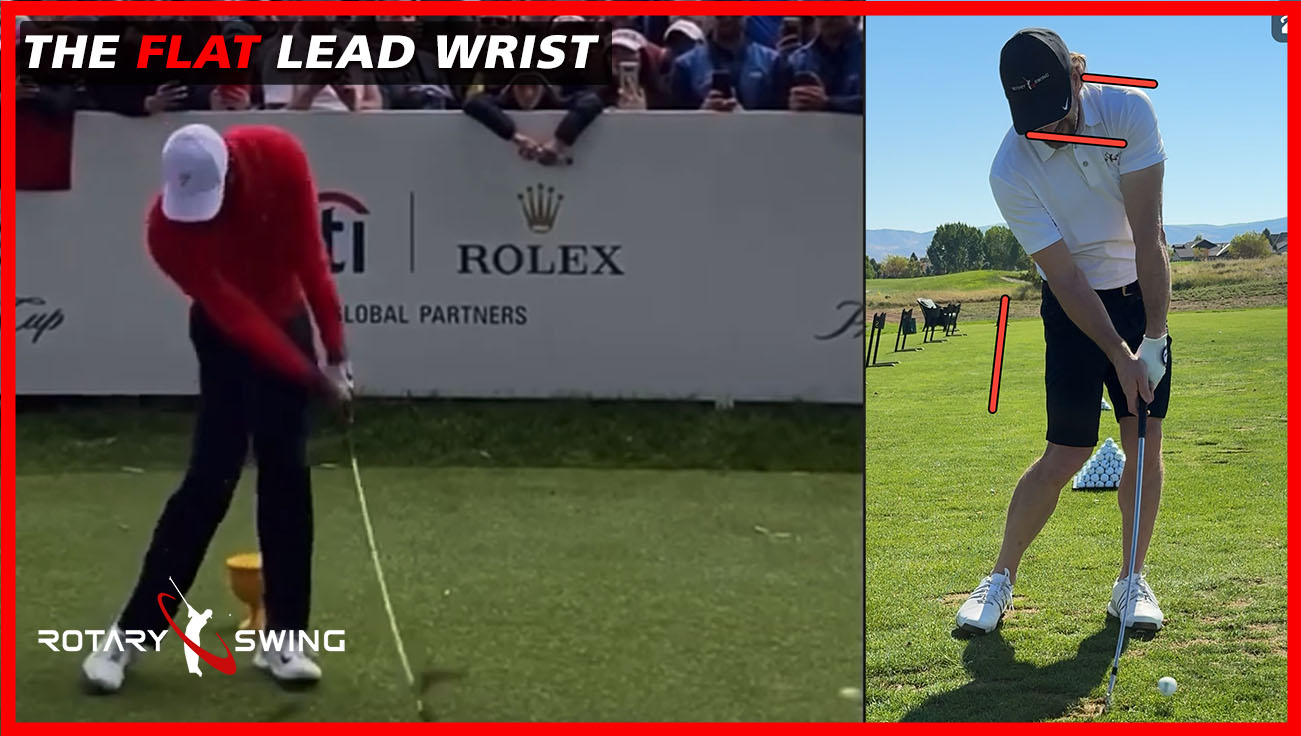
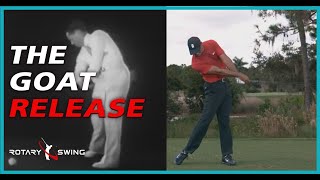
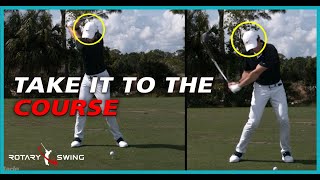
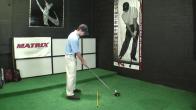
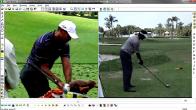
In the image above on the left, I've drawn two lines that represent the center of Greg's hip sockets (roughly) at the top of his backswing.
At impact, you can see that his trail hip has replaced where his lead hip was at the top of the backswing almost exactly. In other words, Greg has shifted laterally toward the target an amount equivalent to the entire width of his pelvis. This is the kind of lateral hip shift that separates powerful ball-strikers from amateurs.
Most amateurs get nowhere near this amount of shift because they focus on bringing the club down first from the top instead of initiating the move with the lower body.
Let's take a look at another elite player's shift, and how the same weight transfer pattern repeats at the highest levels of the game:

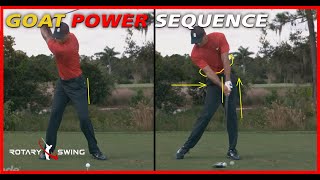
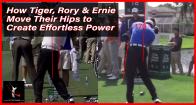
In this sequence of an elite player's swing, you can see the exact same shift — the trail hip driving to where the lead hip was at the top.
How to Shift Without Sliding
Watching videos of these two golfers, you would never accuse either one of them of "sliding" in their downswings. However, if you do not have a proper lateral weight shift in your downswing right now and you move this much, you will likely feel exactly that.
When I teach my students how much lateral movement is necessary to get into a proper impact position, they almost always say they feel like they're sliding. But, if you make this lateral move and then engage the lead glute by driving the lead ankle into the ground, your lateral move will stop before impact, and you will be stacked and braced over the lead side to deliver a solid strike to the ball. The GOAT Drill system trains exactly this pattern — loading the trail side, then shifting and bracing through the lead side for maximum swing power.
The "Squat Move" Helps
I had Greg feel the moves I describe in the downswing squat concept used by elite players. This led to Greg significantly lowering his ball flight to a much more penetrating one with better compression — a direct result of improved ground force leverage at impact.
Video Transcription: The Downswing Squat Move
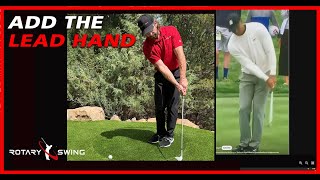
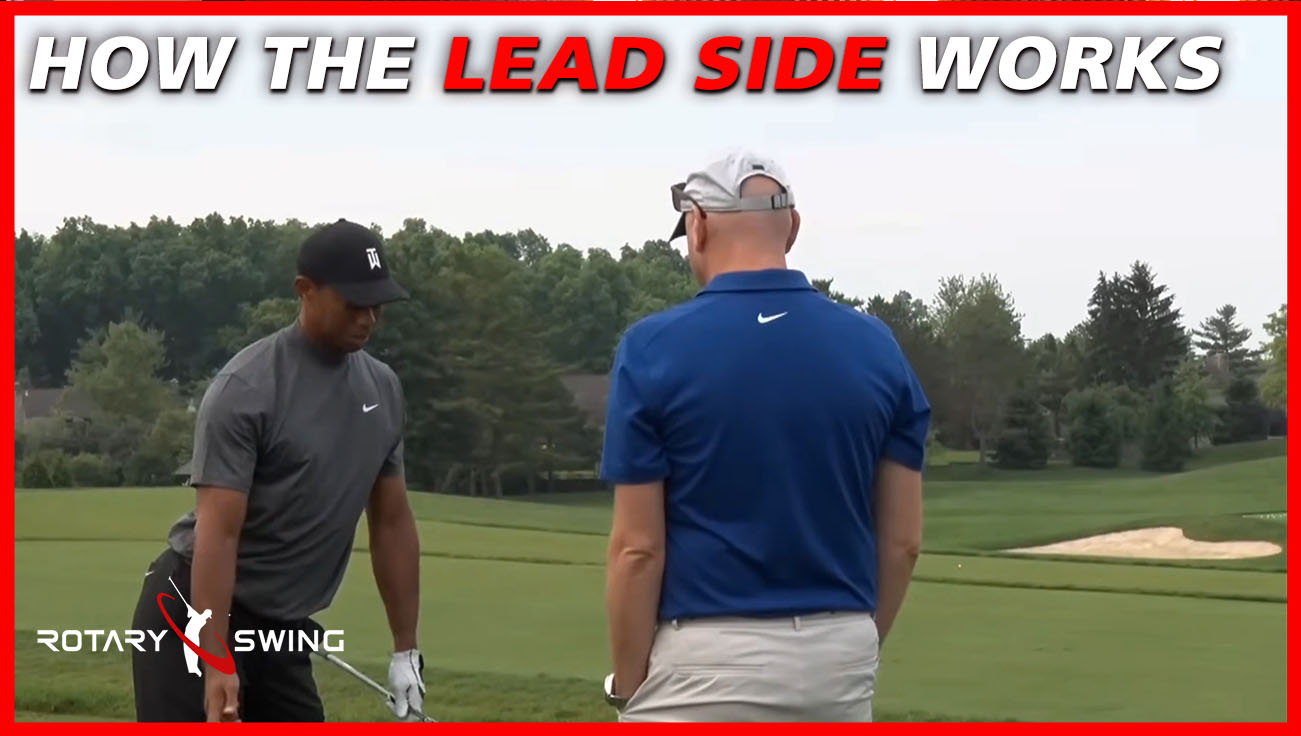
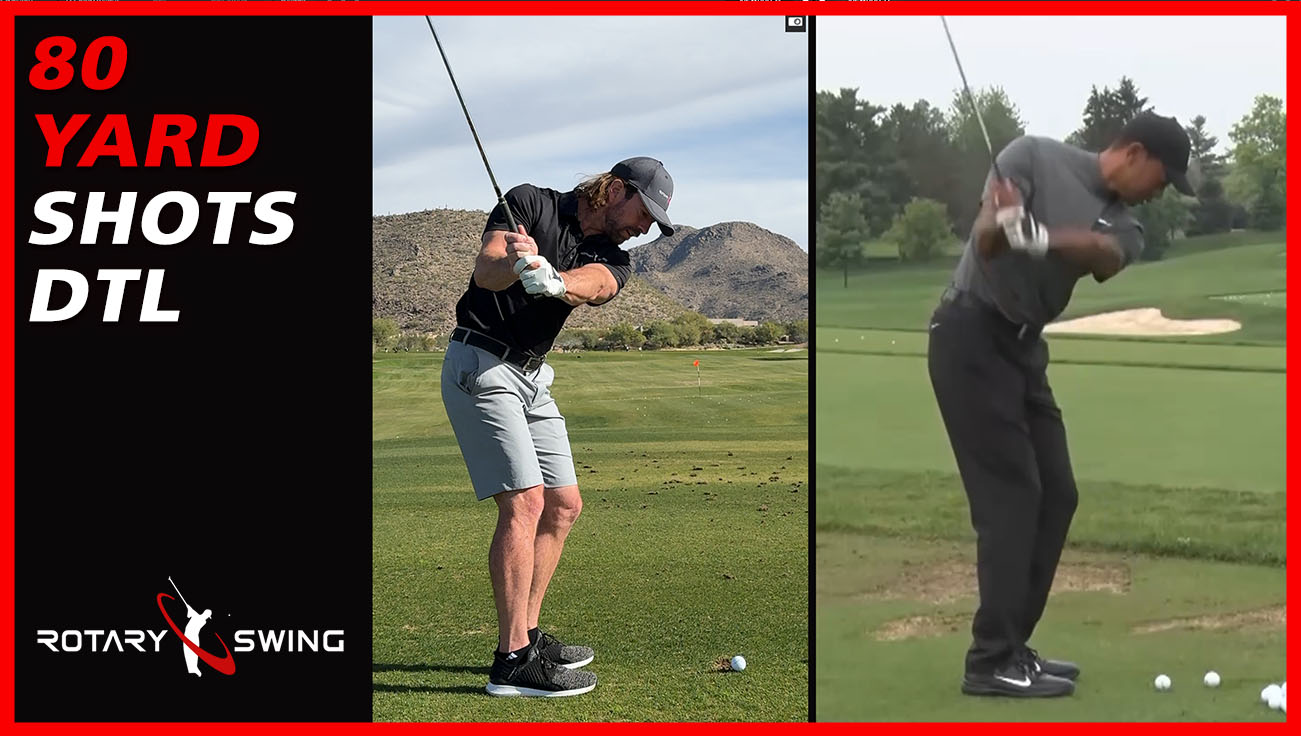
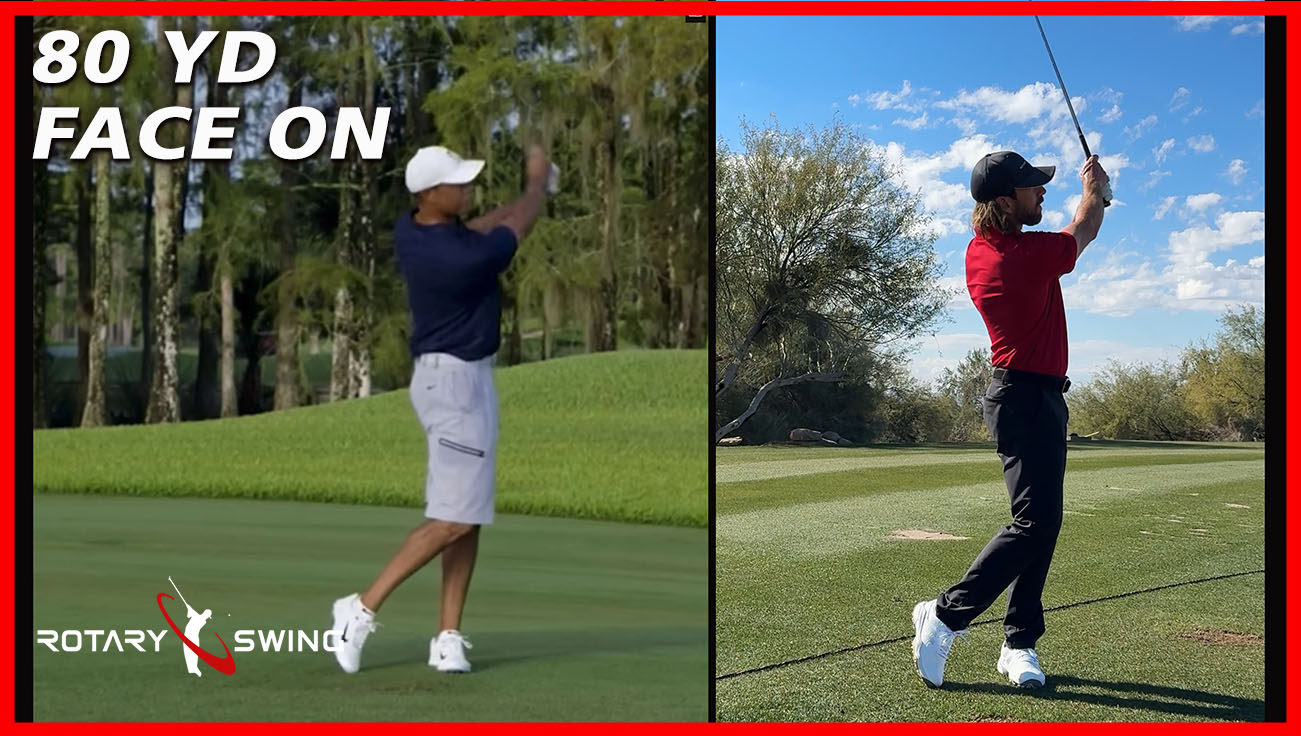
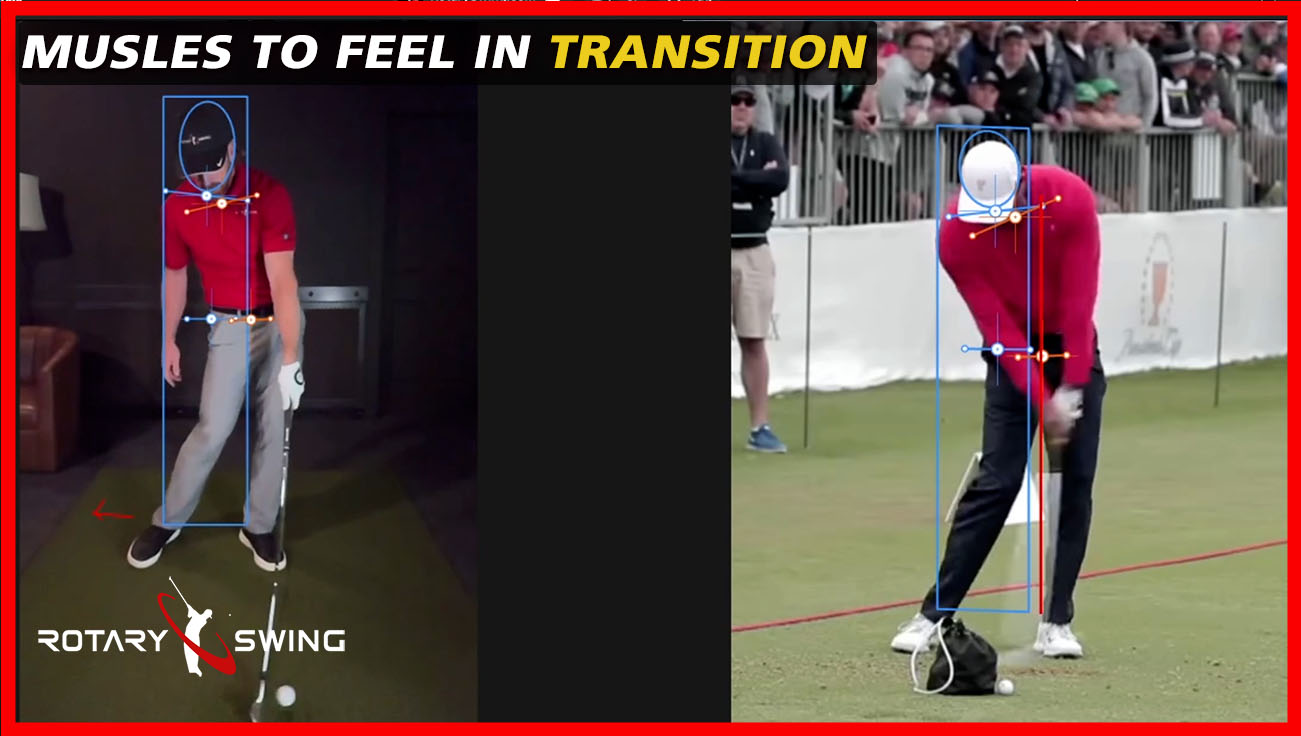
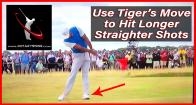
One of the most criticized motions in an elite player's golf swing from the TV pundits has always been the squat move, where the head lowers during the downswing.
What that looks like is that the player gets to the top of the swing and starts to get leverage. It looks like a squat and the head lowers a little bit, then comes back up a little bit. had a similar move. Lots of golfers who have built a lot of swing power without a lot of effort have done a very similar move.
I've always argued that it's the most powerful move in any elite ball-striker's game, and I'm going to show you why.
That squat move allows a couple of things to happen. The first thing is it allows you to use the ground for leverage and build a stable base. That's critical because really, as we've learned, we're just wanting to maintain lag to here and then we release it at the bottom. You need a stable base in order to have a solid impact position.

Feet planted for stability
If your legs are just spinning out from under you all the time and you're always just flipping at the ball with the club, you don't have any stability at impact. You need to have a stable base so that when you fire that arm and you have control at impact. An AI swing analyzer can reveal exactly how stable your base is at impact and whether your weight transfer is matching elite patterns.
Squatting allows you to use the leverage of the ground to push against it and activate your glute muscles. All these hip stabilizer muscles and glutes allow you to anchor the hips and feel stable, rather than just lazily spinning through impact.
You want to feel powerful and stable at impact and be able to leverage the ground. If you don't squat, you can't do that. If you're just here, and then you just spin, it doesn't look like you leveraged anything.

Hip spinners' hands end up here
You need to feel like you're loading your glutes and anchoring yourself to the ground and pushing your feet into the ground so that as you come through in the next move, you're able to perform it correctly.
The next thing is, for most better golfers, they're all hip spinners. Almost all the professionals I work with struggle with getting a little bit stuck underneath coming in, and then spin through and they end up hitting a higher ball flight than what they want. That puts too much spin on the ball, and also leads to blocks and hooks.
When I teach them this move, it helps slow down their hip rotation. That's a critical piece because you don't need fast-spinning hips in the downswing. All that does is get your arms stuck. Your hips don't have to move very far in the downswing to get back to where they need to be at impact, but your hands have a very long ways to go.
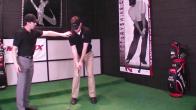
If you go to the top and just spin your hips, your hands are always going to be in this position. They don't have time to catch up. They simply can't move that fast, but your hips can snap really quick and leave you in this stuck position all the time.

Squatting slows rotation, improving stability
We spend a lot of time working with these golfers to slow their hips down so that they have time to sequence everything and get their arms back in front of their body at impact.
This is one of those critical moves that, as they squat into the ground, it slows the initial rotation down so that what they're able to do is build a stable base, start pulling their arms down, and then at impact they're able to leverage the ground with both legs, and push up off of it.
That might sound like a strange concept, but it's critical. What's happening is, as you do this squat move, then as you're coming up out of it, you're pushing against the ground. Quite literally, you're pushing your lead leg — both legs, but primarily the lead — and straightening it.
What that's doing is moving your body this way, back up, and forcing the club to release down that way. You get an "equal and opposite" effect. As your body is moving one way, you're forcing the club to release even faster at the bottom. That's a pretty advanced thing in terms of generating clubhead speed.
If you're a typical amateur, higher-handicap golfer, you're not ready for this stuff yet, but for pros or better amateur players who are looking to build speed and power in their swing, this is a critical move to stabilize and then get that last bit of release at the bottom.

Squatting leverages the glutes
If you just went to the top and spun your hips, all you've got is a really weak club head coming through impact. If you go to the top and you squat and leverage your glutes, push into the ground, as you set into this lead side and start to fire those glutes pushed against the ground, now you've got a big snap at the bottom and a ton of release. It also helps slow your hips down, which gives you time to get your arms back in front.
If you're a hip spinner, learning to squat into the ground and feel like you push your feet into the ground, then fire everything through, it's going to help you build a lot more speed with a lot less effort.
It will finally teach you what it feels like to leverage the ground and activate the hip stabilizer muscles, the glutes, and all these big, powerful muscles in your torso and your trunk, and finally build power in your golf swing without a lot of muscular effort.
Frequently Asked Questions
What is the importance of weight shift in the golf swing?
Weight shift is crucial in the golf swing as it allows the downswing sequence to unfold correctly, utilizing the stored energy from the backswing. A proper lateral shift back to the lead side enables golfers to achieve a powerful impact position, which is essential for maximizing distance and accuracy.
How can I practice proper weight shift in my downswing?
To practice proper weight shift, focus on engaging your lower body first during the downswing. Use drills such as the GOAT Drill system, which emphasizes loading the trail side and then shifting and bracing through the lead side. Incorporating aids like the RotaryConnect can also help maintain the correct knee spacing and prevent excess hip rotation.
Why do amateurs struggle with weight shift in their swings?
Many amateurs struggle with weight shift because they often prioritize bringing the club down from the top instead of initiating the move with their lower body. This can lead to inadequate lateral movement, resulting in a lack of power and improper impact positions. Understanding and practicing the correct sequence is key to overcoming this common issue.
What role does the squat move play in the downswing?
The squat move is a powerful technique used by elite players to anchor themselves to the ground and engage their glute muscles effectively. This slight squat helps control hip rotation and enhances ground force leverage, resulting in improved ball compression and a more penetrating ball flight. Mastering this move can significantly elevate your swing performance.
Watch part 2 now to see how you're moving your body in the opposite direction of the pros!





































































 Tiger's squat