A crucial and frequently overlooked mistake at golf setup that dramatically impacts the top of the backswing position is failing to establish the proper at address.
While we have previously covered how to set up with the correct axis tilt and how to determine the right amount for your body, many golfers still arrive at poor positions at the top by ignoring this simple yet essential setup fundamental.
Is this the fault costing you strokes?
Film one swing on your phone. In about a minute GOATY measures it and names the single biggest thing costing you strokes — free, no card.
Analyze My Swing Free
Related: Golf backswing — the 3 AI-measured gates →
Android users: Download GOATY on Google Play — free AI golf coaching on your Android phone. →
In this video, I demonstrate what commonly happens at the top of the golf swing when you do not have the proper amount of tilt at address.
Stop reading about it — feel it in your swing today
GOATY watches your swing live and coaches you between every rep. Free. No signup.
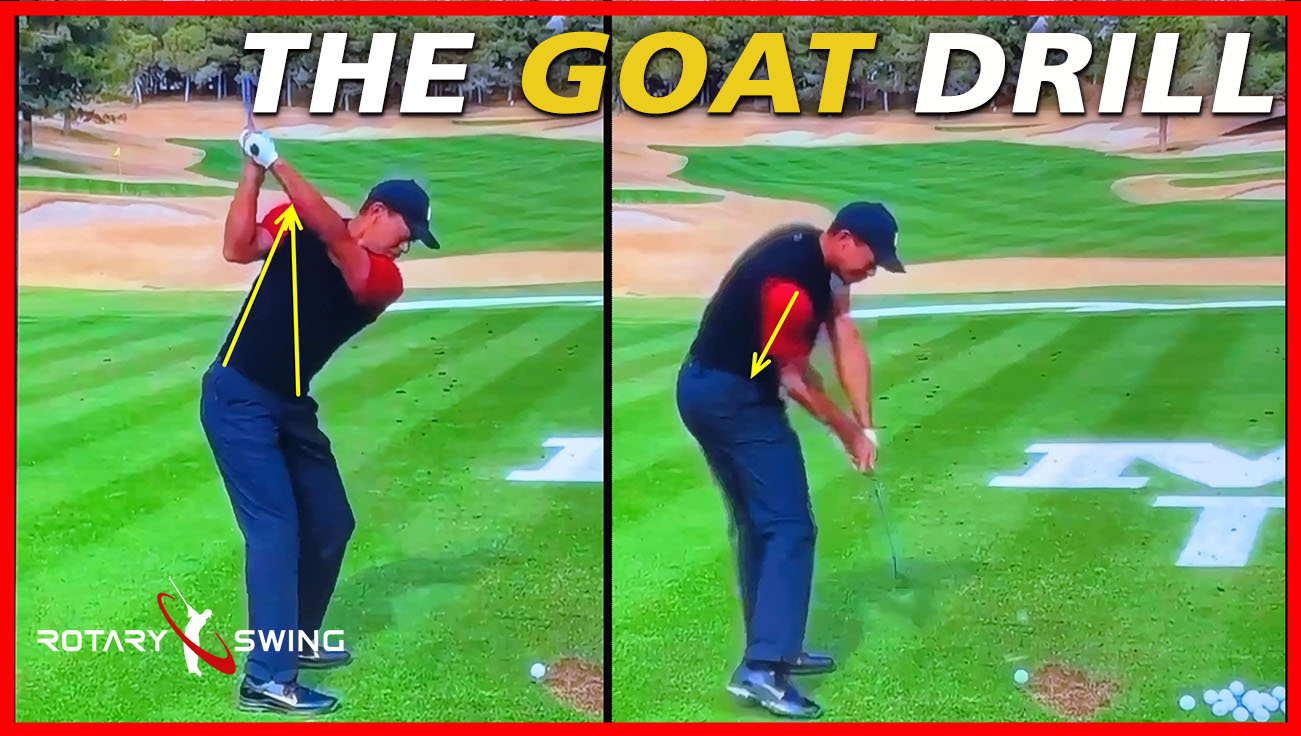
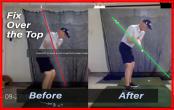
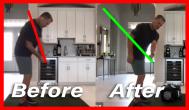
Start Your FREE Live Lesson →In the image above, you can see what happens to a golfer when they lack proper axis tilt at address on the left.
On the right side, you can see that you can almost draw a straight line up the lead leg and back at a diagonal angle. That demonstrates that the golfer had sufficient tilt at address (slightly exaggerated here to illustrate the difference between the two positions). This is critical for two essential reasons:
- to get properly loaded up onto the trail side and behind the ball for maximum power, and
- to shallow out the coming into impact.
Below, we can compare the look of from approximately the year 2005 with Aaron Baddeley when he was using the method.
You can clearly see that Baddeley does not have any axis tilt at address, whereas Tiger has approximately 6 to 8 degrees — which is the range we recommend for RST.
Though this difference does not appear dramatic at address, as you reach the top of the swing you can see below what insufficient axis tilt tends to produce.
Baddeley clearly is not in a very powerful or balanced-looking position at the top. He appears unstable, as if you could easily tip him over.
Comparing that with Tiger, it is easy to see how much more of a stable base Tiger has because his hips have not slid further from the target, and his upper spine has not drifted toward the target as it has in Baddeley's case.
If you notice yourself not loading up properly behind the ball at the top of the swing, check your axis tilt at setup first. To see how your own setup and backswing positions compare to elite standards, try a free AI swing analysis.
Video Transcription: Importance of Axis Tilt at Setup

Axis tilt
RST is based on nothing but pure logic, biomechanics, physics, anatomy — raw science — so every element has a clear justification for why it is a fundamental of your swing pattern. One of the things I believe is significantly overlooked is axis tilt at address. There is a specific reason why it is included as a setup fundamental.
You need to pay close attention to it because many golfers struggle with two very common problems that I am going to demonstrate — both of which are caused by not having enough axis tilt at address.
First, to understand what axis tilt is, if you are not familiar: take your club, place it against the sternum or the buttons on your shirt, and run it through your belly button. As you set up, the more your spine tilts away from the target, that is axis tilt.
Right now I have none. As I get into my setup posture, I am going to establish a few degrees of axis tilt. Let us see what happens when you do not have any axis tilt and attempt to make a backswing.
I am going to set up with my spine perfectly vertical. Now I am going to try to rotate back, and here is what happens. The golfer tends to fall back because as you rotate, you begin twisting your spine. Because your spine did not have any tilt away from the target, it kinks laterally.
The other consequence is that the trail hip starts sliding outward. These two problems go hand-in-hand: no axis tilt, lateral hip slide, poor position at the top. Now, if I establish proper axis tilt and rotate back, look at the position at the top. I am significantly more balanced, with a much more stable foundation...

With no axis tilt, the hips slide out
I do not want to have axis tilt toward the target — my spine leaning in that direction. With proper tilt, as I go to the top, it appears as though there is almost a straight line at an angle up the lead side of my body. I have axis tilt at address, and now let me take it out... without axis tilt.
I am either going to slide my hips laterally or stay on the lead side in a compromised position that is going to put excessive stress on my back.
Make sure that as you set up, you do not ignore getting a little bump toward the target to establish that axis tilt. It is essential for getting into a powerful, stable, and safe position at the top of the backswing. For a data-driven look at how your axis tilt and setup affect your swing, try a free AI golf lesson that evaluates your form in real time.
How to Establish Proper Axis Tilt at Address
Learn to set up with the correct axis tilt for a powerful golf swing.
-
1
Understand Axis Tilt
Axis tilt refers to the angle at which your spine leans away from the target at address. It's crucial for a stable swing.
-
2
Set Up with Tilt
To establish proper axis tilt, position your spine a few degrees away from the target. This helps with balance and power.
-
3
Check Your Position
Ensure your hips are slightly bumped toward the target at setup. This adjustment promotes the necessary tilt for your swing.
-
4
Practice the Backswing
With the correct axis tilt, practice your backswing. Notice how it prevents lateral hip slide and maintains a strong position.
-
5
Compare with Elite Golfers
Observe the setups of professional golfers like Tiger Woods. Notice their axis tilt and how it contributes to their swing stability.
Frequently Asked Questions
What is axis tilt and why is it important at address?
Axis tilt refers to the angle at which your spine leans away from the target at address, typically between 6 to 8 degrees. This tilt is crucial because it helps you load properly onto your trail side, which maximizes power in your swing. Without sufficient axis tilt, golfers often struggle with balance and positioning at the top of their swing, leading to inconsistent shots.
How does insufficient axis tilt affect my swing?
When you fail to establish proper axis tilt at address, it can cause hip slide and an unstable position at the top of your swing. This instability can lead to poor shot execution and a lack of power. Observing elite golfers like Tiger Woods, who maintain proper tilt, can help you understand the importance of this setup fundamental in achieving a balanced and effective swing.
What are the common mistakes golfers make regarding axis tilt?
Many golfers overlook the importance of axis tilt, often setting up without any lean away from the target. This mistake can lead to a poor position at the top of the swing, resulting in a lack of power and balance. To avoid this, focus on bumping your hips slightly toward the target during setup to establish the appropriate tilt and improve your overall swing mechanics.
How can I practice establishing proper axis tilt at address?
To practice axis tilt, begin by taking your club and placing it against your sternum while running it through your belly button. As you set up, consciously lean your spine away from the target by a few degrees. Regularly checking your setup against this guideline will help you develop a more consistent and powerful swing, as it encourages proper loading and balance throughout your motion.
Watch part 2 now to see how you're moving your body in the opposite direction of the pros!