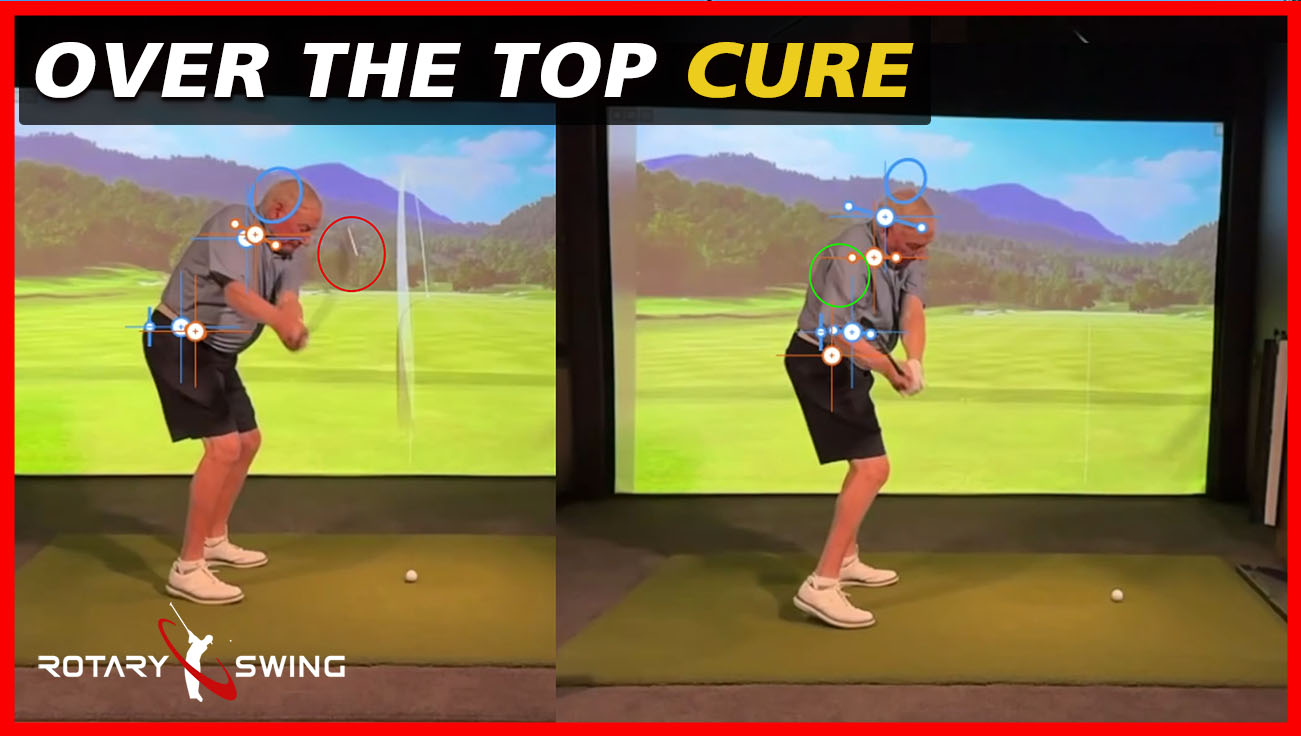
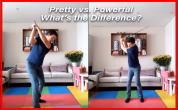
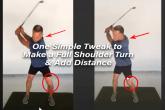
One common problem we encounter in golf instruction is over-rotating on the backswing.

Is this you? Read on!
Now, not everybody has this problem. If you have the opposite issue — you are not making enough turn and your swing is too arms-dominant — then ignore this lesson entirely.
Is this the fault costing you strokes?
Film one swing on your phone. In about a minute GOATY measures it and names the single biggest thing costing you strokes — free, no card.
Analyze My Swing Free
Related: Golf swing shoulder turn — the AI-coached trail hip approach →
Android users: Download GOATY on Google Play — free AI golf coaching on your Android phone. →
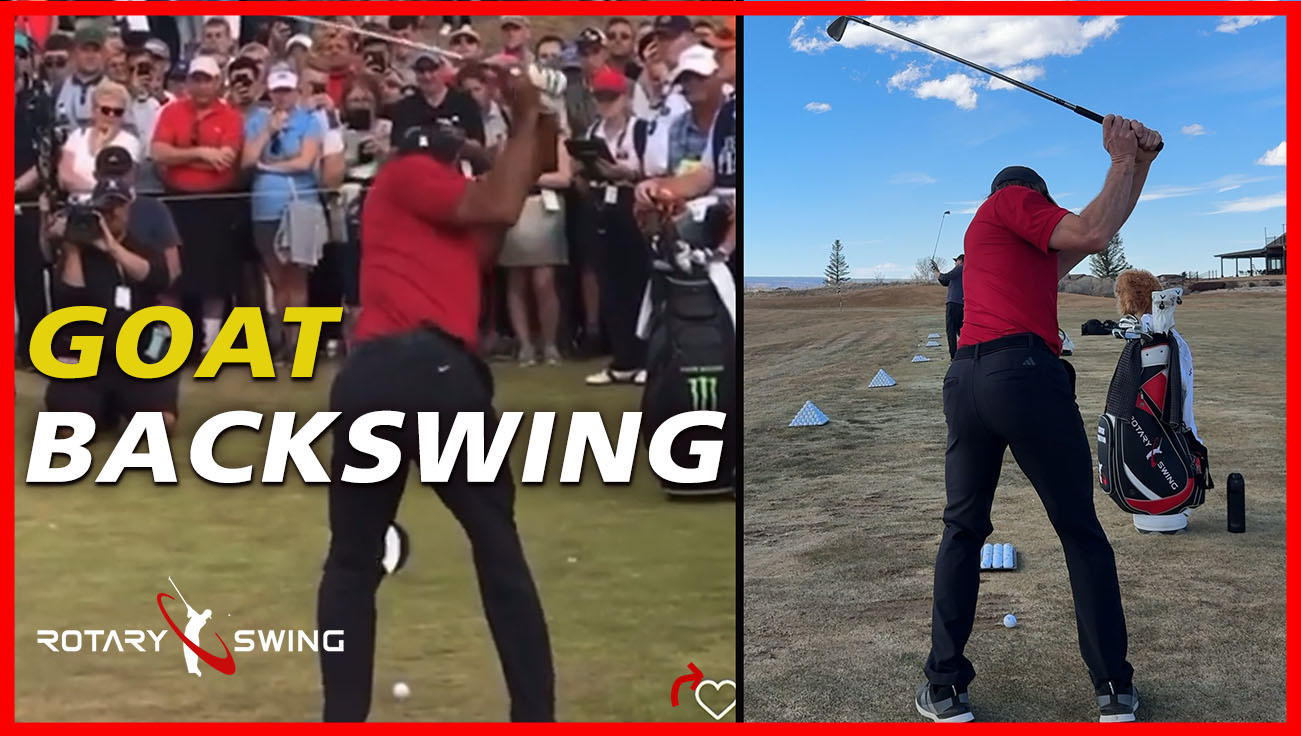
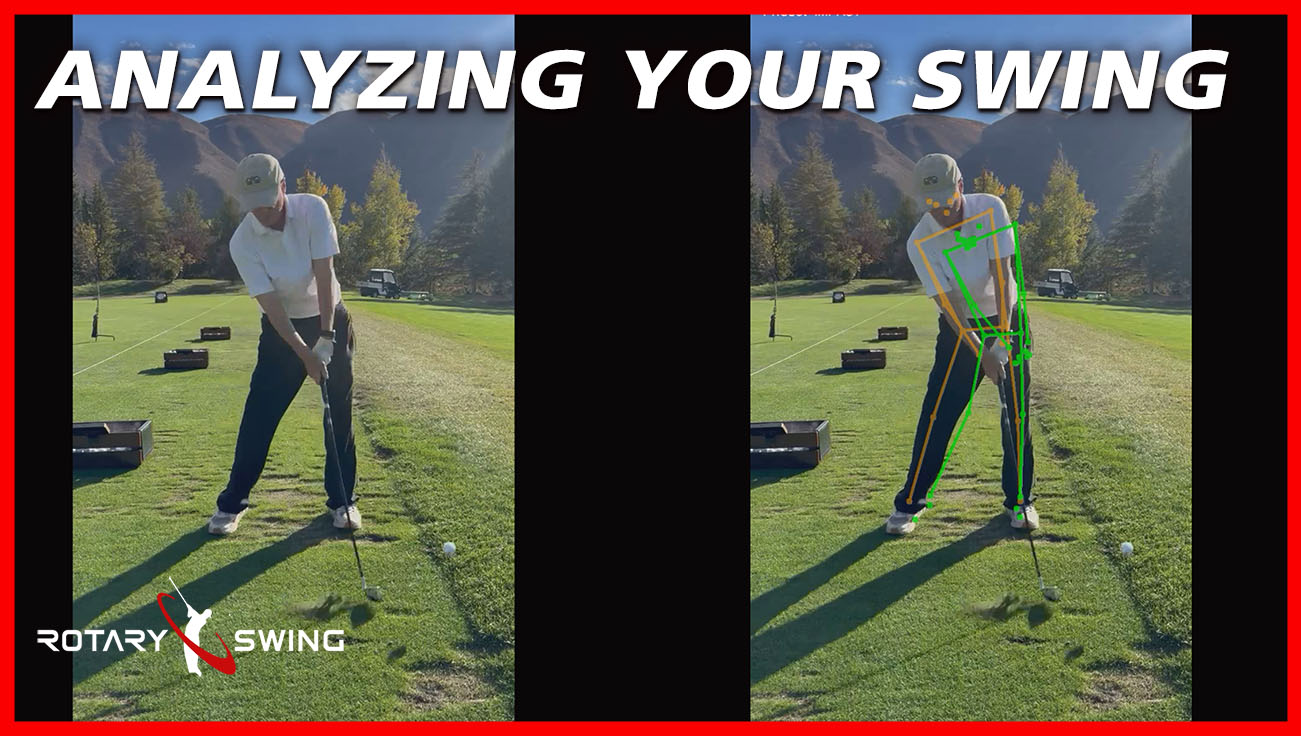
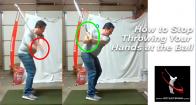
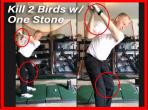
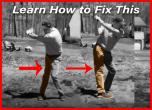
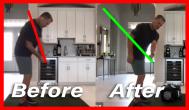
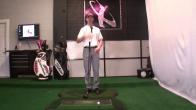
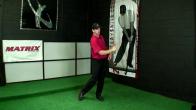
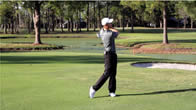
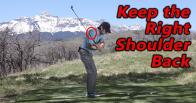
But if you review your swing on video and you look like the photo at right, or you go back to the Necktie Drill and you are saying, "Yes, I really struggle with that — the necktie is draping across my belly," what you are doing is taking a good principle and misinterpreting it. You are misunderstanding how rotation actually occurs, and this lesson is specifically for you.
Stop reading about it — feel it in your swing today
GOATY watches your swing live and coaches you between every rep. Free. No signup.
Start Your FREE Live Lesson →First, let us examine some misconceptions that relate to how the golf industry measures shoulder rotation.
How Do They Do It?
We all look at players like Jamie Sadlowski, Sergio Garcia, and , and we see them making a tremendous amount of turn. If you have ever seen their data quantified and measured, their numbers seem astronomical.
There is a reason for that — measuring processes differ, and they are not all evaluating the same movement.
Someone recently did a 3D motion capture with Jamie Sadlowski to measure his shoulder rotation, and the number was extraordinary. We typically talk about making a 90-degree , and Sadlowski's figure was approximately 150.
However, if you measured him again with a K-VEST, that number might drop to around 100 degrees. Why the enormous difference? Which tool is correct?
Neither is necessarily better or "right." The TaylorMade motion capture system is excellent and the K-VEST system is excellent — they are simply measuring different things.
What's the Difference?

Rib cage rotation is not the same as shoulder rotation
Some golfers or instructors see data like that and start declaring that in order to hit the ball farther you need to turn your torso 150 degrees. Let us think that through logically.
It is not physically possible to turn your torso 150 degrees without your hips getting ripped around with you, and that constitutes poor form. Let us examine what is being measured, what it means, and what kind of rotation will actually improve your swing.
The 3D motion capture system measures points on the shoulders, not just the actual rotation of the rib cage. They are measuring how far a specific point on the shoulder moves from Point A to Point B.
The K-VEST, meanwhile, is a sensor pack that sits on the golfer's back. It does not detect shoulder blade movement — there are no sensors on the shoulders at all — so it has no information about what the shoulders are doing independently. The K-VEST simply measures the rotation of the rib cage using an accelerometer.
See For Yourself
Let us examine how the two systems arrive at such different numbers. It is very straightforward.

45° shoulder rotation
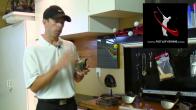
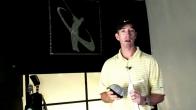
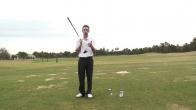
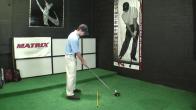
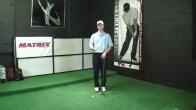
The golfer at right has made a 45-degree shoulder turn. He is holding a club to make it easier for us to visualize.
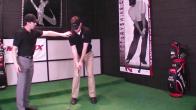
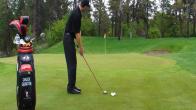
In the second photo, he has kept his torso in that 45-degree position — the buttons on his shirt have not moved — but he is reaching across with his lead arm. This is called shoulder protraction, and it gives the appearance of significantly more rotation.
Viewed from this angle, he now appears to have achieved a 90-degree shoulder turn. You can start to see the writing on the back of his shirt, even though his rib cage has remained in the initial 45-degree position. To see how your own rotation and shoulder mechanics compare to elite standards, try a free AI swing analysis.

Shoulder protraction gives the appearance of more rotation
Since the K-VEST measures actual torso rotation, it would read 45 degrees for both of these photos. TaylorMade, meanwhile, is measuring the angle achieved by the shoulder points, and would read nearly twice as much in the second photo.
But shoulder protraction is not actual rotation. The rib cage stays stationary while the additional angle is a result of extending the arm — the same motion you would make to reach out and shake someone's hand. That is all it is.
Rotation vs. Protraction
Does shoulder protraction occur in the golf swing? Yes, absolutely — it has to.
If you see Sadlowski's TaylorMade numbers and declare, "I want to hit the ball farther. I want to be like Sadlowski," and you start trying to rotate your rib cage 140 or 150 degrees, your hips are going to get pulled all the way around with you.
Nobody has that kind of separation unless you are wildly flexible, and if that were the case, you are probably not playing golf — you are probably in the circus!
If you are rotating your rib cage as far as you physically can, you only need approximately 80 to 90 degrees of actual rotation. Shoulder protraction facilitates the rest. You cannot keep your arms locked in the box the entire time and just rotate — you would look like a robot, and you would never achieve the free-swinging movement necessary for the arms to generate club head speed.
Shoulder protraction provides width
It Takes Both
As you rotate back, the lead shoulder is also moving out and forward. This facilitates width and helps keep the club and your hands in front of you. It accomplishes this by allowing the shoulder to protract.
If you eliminate the shoulder protraction, that is where we see golfers reaching the top and then trying to force an enormous turn. They become completely bound up and wonder why their hips are turning so much.
They know all the long-hitting Tour professionals only turn their hips 35-45 degrees, but they cannot stop their own hips from turning 70 degrees.
Shoulder protraction is the answer. You need to rotate, but then allow your arms to protract to provide the remainder of the appearance of rotation, rather than actually taking your rib cage and forcing it through a full 120 degrees or more. It does not work that way.
In short, if you struggle with your hips moving too far with you, you are probably trying to turn too much instead of allowing the shoulder protraction to facilitate the rest of the movement — and the appearance of rotation on camera.
When you correct for this, you will start to understand how the Necktie Drill works, providing a much better position at the top rather than continuing to rotate your torso excessively, straining your back, and putting yourself in a weak position.
Remember that the shoulder must protract as you are rotating back, and you will get into a much more powerful position with significantly less effort at the top. For real-time coaching on your rotation and shoulder mechanics, try a free AI golf lesson.
Watch part 2 now to see how you're moving your body in the opposite direction of the pros!