Updated: 6-08-2022
Are you struggling with keeping your head behind the ball in the golf swing?
Want to feel this in YOUR swing? Try a free AI-powered golf lesson → — GOATY gives you real-time voice coaching, pose tracking, and instant feedback on every rep.
Related: Fix coming over the top with live AI coaching →
Android users: Download GOATY on Google Play — free AI golf coaching on your Android phone. →
It's frustrating, right? I mean, no matter how hard you try, you keep making the same mistake over and over again and can't seem to fix it.
Stop reading about it — feel it in your swing today
GOATY watches your swing live and coaches you between every rep. Free. No signup.
Start Your FREE Live Lesson →It's enough to make you want to throw a club sometimes!
But, take heart, not only will I fix this problem for you in short order, I'm going to show you how to fix much more than that in your swing!
How'd you like to not only stop moving your head in front of the ball at impact, but also stop swinging over the top and slicing at the same time?
Even better, how'd you like to learn the "pro secrets" to consistency and effortless power AND start shooting in the 70's like John did:
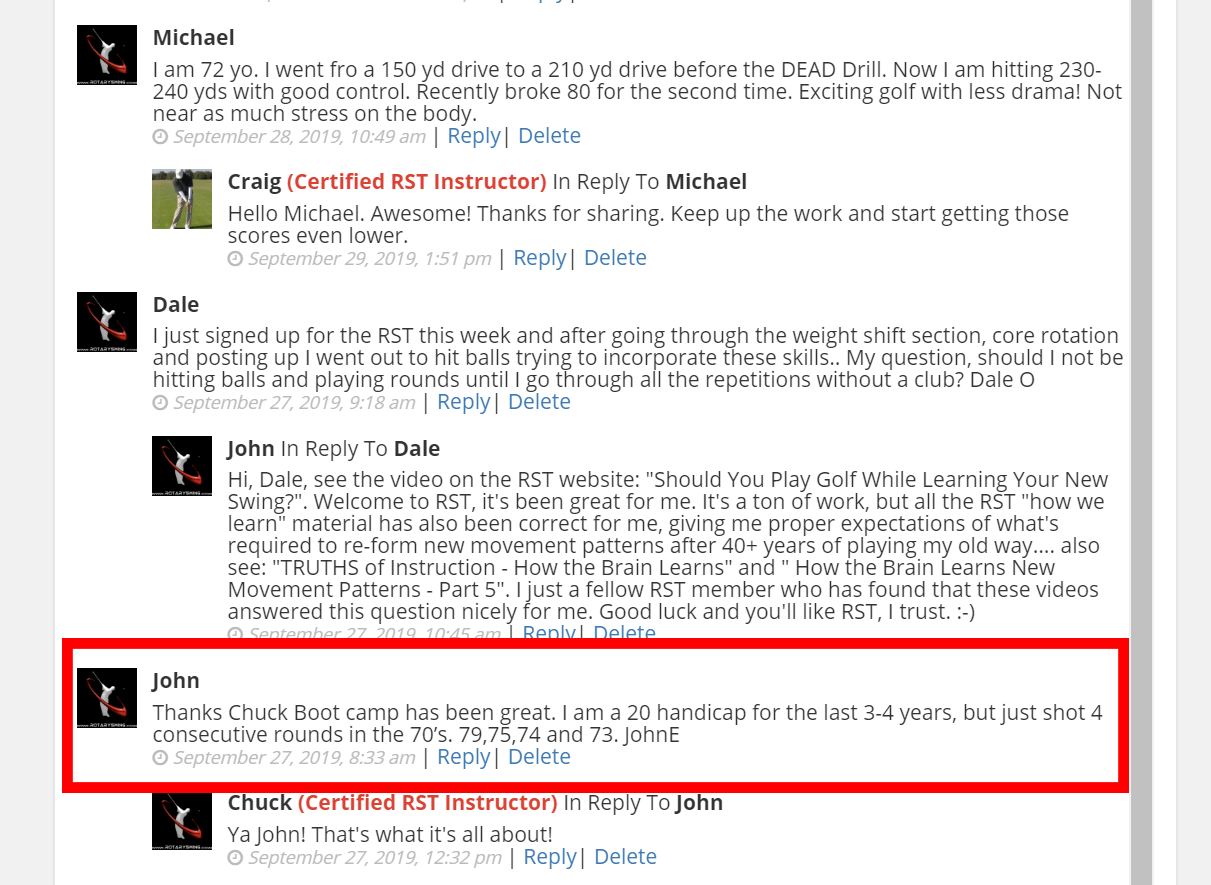
If you'd like to learn the ONE SIMPLE DRILL that will truly transform your swing, keep your head behind the ball and start shooting your lowest scores, enter your info above to watch my FREE video on the new DEAD Drill!
STEP 1: MAKE SURE YOU'RE SETUP CORRECTLY BEHIND THE GOLF BALL
What is the correct head position in the golf swing? Most golfers setup to the golf ball incorrectly to start with. That is that their head is both too far in front of the ball at setup and ends up even further ahead at impact. It is critical that your head position in the golf swing stay behind the ball throughout the entire swing and especially at impact. This is because we need our head behind the ball for maximum release at impact. If your head is in front of the golf ball at impact, you'll always be robbing yourself of club head speed and power.
In the swing sequence below, you can see just how this golfer demonstrates keeping his head behind the ball at impact. Hitting a 6 iron here, this golfer exhibits a perfect at address with the lead side of his head setup directly on the back of the ball.
At impact, his head stays well behind the ball and he is in a great impact position.
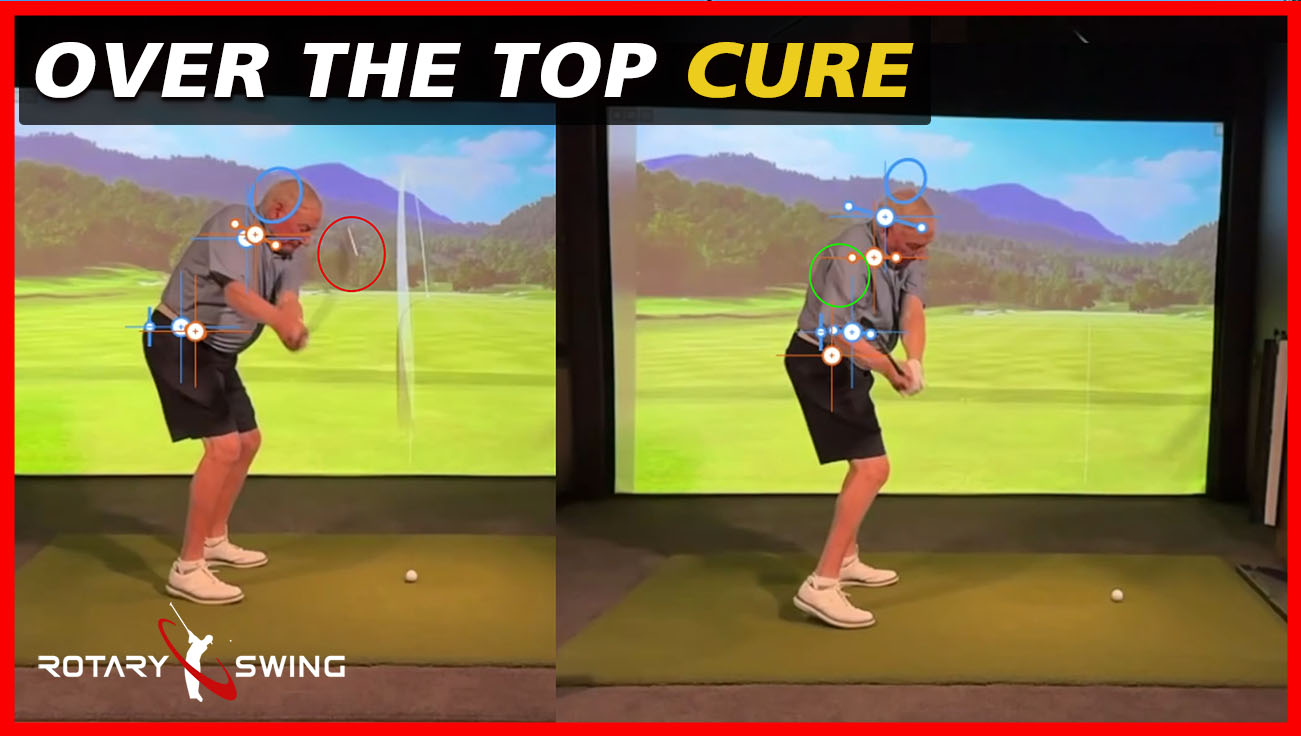
Now, contrast that with an amateur's golf swing who exhibits the "flip" discussed in the video. Can you spot the differences?
The amateur golfer sets up with the golf ball too far back in his stance in relation to his head. This incorrect head position in the golf swing leads to other common golf swing flaws as well. In his effort to "stay centered" over the ball, he never gets behind the ball at the top of his backswing. This is a common "phobia" for most golfers as they fear "swaying" off the ball. By trying to incorrectly prevent the sway, they end up with a reverse pivot and a weak golf swing.
During the golf swing transition, his head naturally moves forward with the to the lead side and his head gets further out in front of the ball by the time he arrives at impact. This forces him to early just to make contact.
It's critical that you setup with your lead ear on the back of the golf ball at address and that you have a proper amount of . Axis tilt actually is one of the main setup traits that determines . Without axis tilt, you're almost certain to reverse pivot and swing over the top.
STEP 2: DON'T PUSH FROM THE TRAIL SIDE

This is where most golfers go severely off path with their golf swings and end up with their heads well out in front of the ball at impact, and even end up with hip pain in the golf swing. The feeling of pushing off the trail leg aggressively or "pushing" from the trail side of the torso are very powerful feelings that take work to overcome, but it is critical that you learn not to be overly dominant with the trail side of the body. The challenge of the game of golf is that it is a predominantly lead-side dominated movement and most golfers are very trail-hand dominant. I spend much of my time with my students teaching them to move their body and lead arm correctly in the swing.
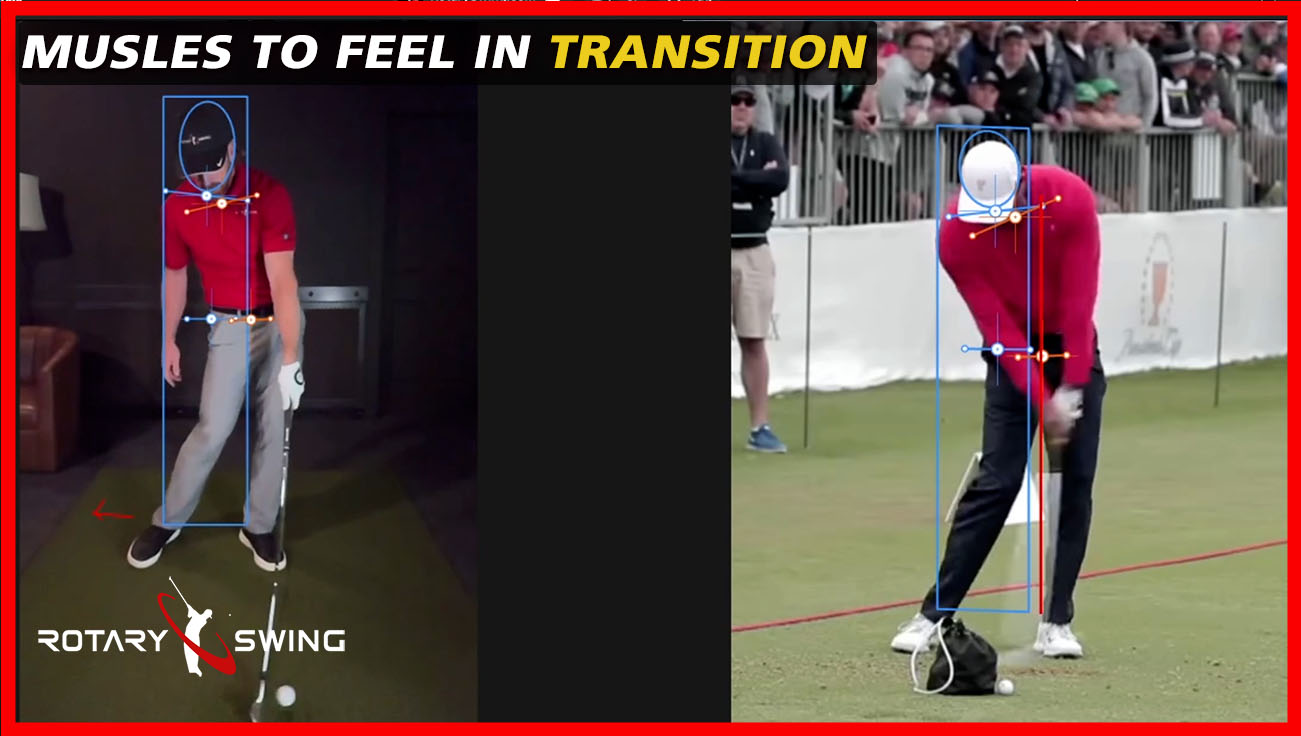
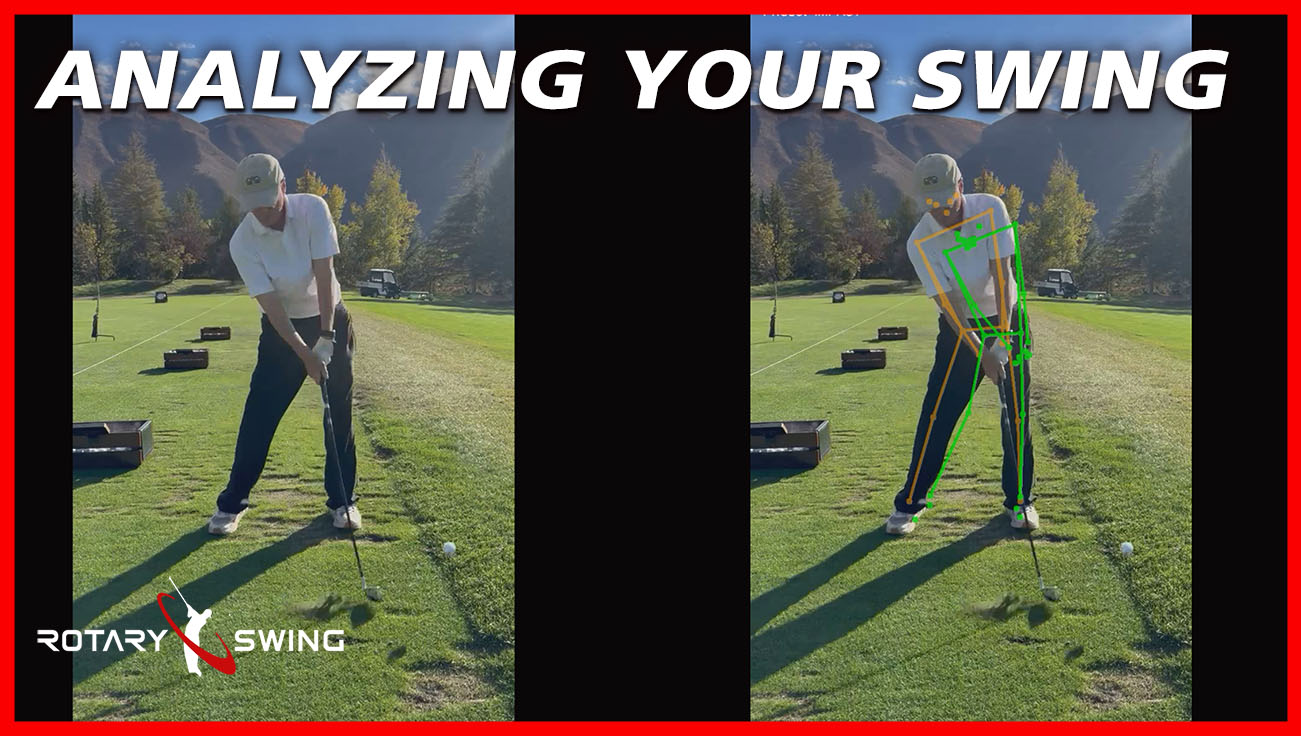
Learning how to rotate correctly and stay centered in the golf swing starts right from the takeaway. If you want to keep your head behind the ball at impact and have the correct head position in the golf swing, you need to learn how to use the correct muscles that keep you centered during the takeaway. Elite players like those measured by the AI swing analyzer demonstrate how the head stays behind the ball throughout the backswing. You can also see the axis tilt at address and how it is maintained to the top of the golf backswing — this is critical for learning how to keep your head behind the ball in the golf swing.

Note how Tiger's head stays centered due to the pulling motion created by the right side of torso and the rotary motion of the obliques during the backswing. If Tiger were to push his left shoulder under his chin, it would lead to his head moving off the ball.
The head of elite players doesn't move an inch in quality swing sequences like this. Why do most golfers' heads move off the ball during the backswing? Because they push from the lead side. If you don't understand this concept, check out the push vs. pull video here. The concept of pushing vs. pulling is one of the most important golf swing fundamentals that you'll ever learn and it will change your golf swing for the better, I promise! It's truly ground-breaking!
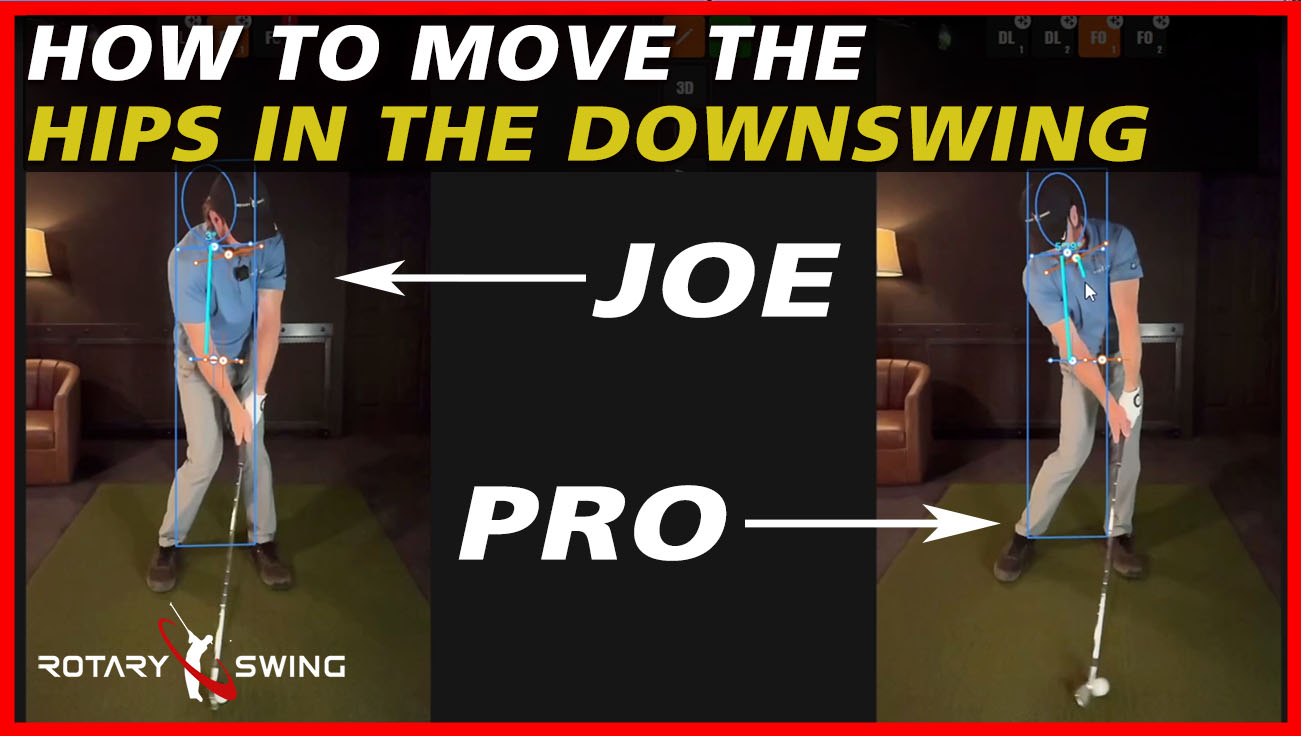
Now, as the golf downswing begins, you have to reverse the process to unwind while keeping your head behind the ball. The main reason golfers move their heads in front of the ball at impact is pushing from the trail side. They do this in an effort to try and get too much power from the body because they don't have enough lag or don't know how to use lag properly for club head speed.
The trick of the golf swing is, when it's done correctly, it will feel like there is virtually zero effort involved. However, if you're like the 99% of amateur golfers out there that push from the trail side, every shot feels like a herculean effort and it will take time for your mind to adjust to the fact that you simply don't have to work that hard in a proper golf swing. The GOAT Drill system is specifically designed to train this effortless, centered movement pattern from the ground up.

STEP 3: USE THE TRAIL ARM TO KEEP THE HEAD BEHIND THE BALL

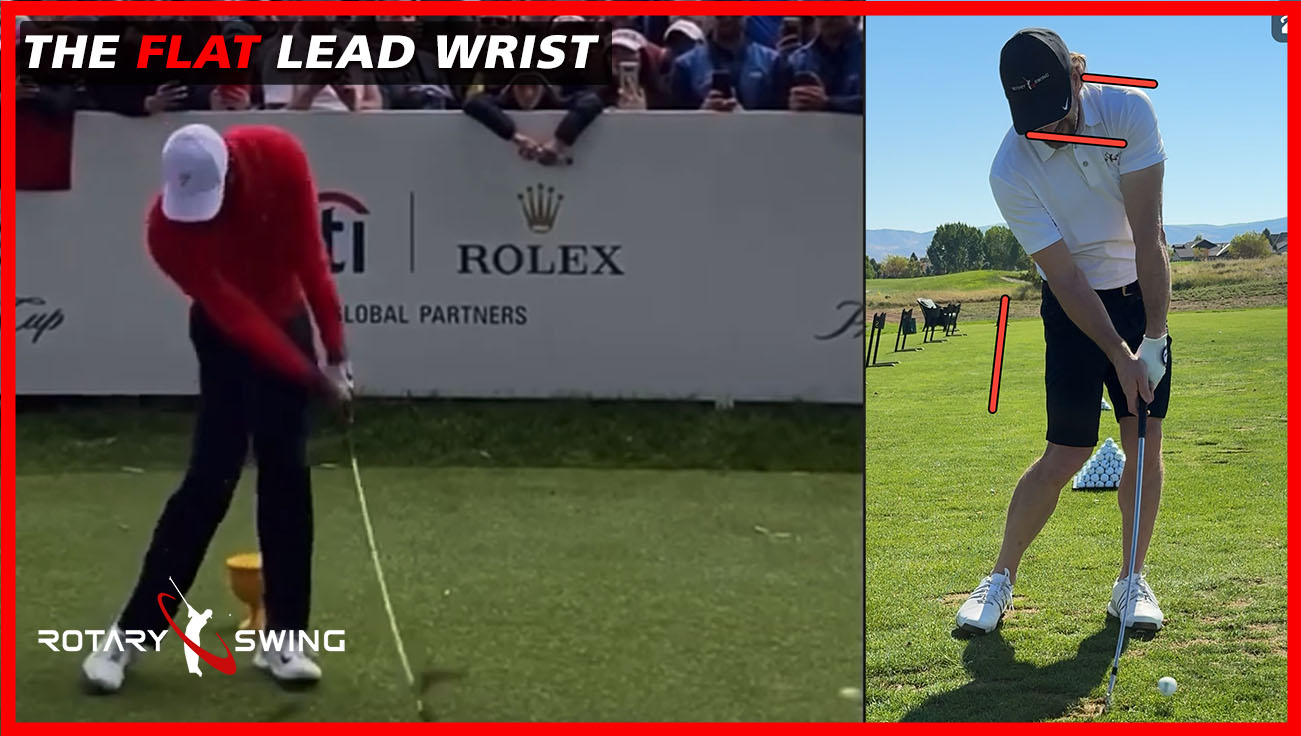
At impact, ' head is still behind the golf ball.
It may seem strange to focus on the trail arm while discussing keeping your head behind the ball, but it is part of the formula to help get the arms back in front of the chest at impact. Elite players in high-level golf swing analysis consistently demonstrate staying centered and showing the correct head position in golf. If you're pushing from the trail leg or trail side of the body, it will be nearly impossible for you to keep your head positioned behind the golf ball. However, you can use the extension of the trail arm to help deliver the golf club back to the ball. When combined with the proper movements of the lead arm in the golf swing, you'll have a picture perfect impact position just like you see in these sequences.
DOES THE HEAD EVER MOVE IN FRONT OF THE BALL?
One tiny detail that shouldn't be overlooked is the head position of elite players during the downswing. You should note that the head has in fact moved slightly in front of the line it was on at address. This is actually an important fundamental of the golf swing — your head DOES move in front of the ball, but then it moves back as you begin to release the golf club.
The head position should change and move forward during the weight shift phase of the golf swing. If it doesn't and you just move your hips forward, your head will fall away from that line and create a lot of secondary axis tilt. This tends to shift the horizontal swing plane to the trail side, and leads to big blocks and hooks; not to mention a very sore back and lead hip.
You will note, however, that as elite players begin to fire the trail arm after the weight has shifted, the head moves back to the exact same position it was at address. I discuss this further in the golf instruction video at the top of this article.
WHERE CLUB HEAD SPEED COMES FROM
You may not realize that over 60% of the club head speed in the golf swing actually comes from the release of the wrists. In fact, the golf club accelerates from around 25 mph to over 90 mph with a mid-iron in better golfers' swings in only the last three feet of the golf swing. Clearly, your body is not speeding the golf club up that much in such a short span of time and so late in the downswing. In fact, most professional golfers' bodies are actually slowing down during this phase in the swing.
This isn't always the case with amateurs because they lack lag in the downswing. So, they must try and make up for the speed somewhere with the body and pushing from the dominant trail side is usually the place they seek power. The professional knows he only needs to focus on releasing the wrists correctly and he won't have the need to overuse the body for power. He will be able to use his trail arm and wrist which will allow him to stay behind the ball at impact. This is the key differentiator between professional and amateur golfers and why pros look so effortless when they swing the club.

As you use lag in your golf swing to build club head speed, you can easily keep your head behind the ball like you see here.
If you want to know how to use lag in the golf swing to help you stay behind the golf ball, check out this article. Otherwise, click the link below to watch this video on how to keep your head behind the ball.
Video Transcription: Keeping Your Head Behind the Ball
The movement of the head, or lack thereof, in the one plane swing is something that's really misunderstood.

The left side of head is on the back of the ball
Nine times out of 10, what I see in a golfer is for them to line up — I'm going to draw a line here, straight up and down from the back of the ball — 9 times out of 10, the average amateur golfer that I work with sets up with their head either on this line, or even in front of it, so the ball is played really far back in their stance and their head is set really on top of the ball.
What happens when they do this is that as the swing goes back, their head actually gets farther in front of this line during the downswing. It's part of the dynamics of the golf swing. There's going to be a little bit of lateral head movement in most every golf swing. If you want your head to stay behind the golf ball in the swing, it should seem obvious that it should start there!
When we're talking about keeping the head centered it's a visual, that you don't let your head sway or shift a great deal off the ball. You want to feel like you're just turning around your spine in the golf swing.
You can do this literally — many golfers do it — but what's important is that, no matter what, you set up correctly and you always keep your head behind this line and understand that it's ok for your head to move a little off the ball during the golf backswing. I give my golf students a margin of about 1.5" of lateral movement. Any more than that and things get tricky in the downswing.
This line that I've drawn, I'm going to change the color of it, make it a little easier to see. This red line is drawn up directly from the back of the ball and is the correct head position in the golf swing. You should always set up with the lead side of your head either on this line, or behind it, on all your golf shots.
Now, as the ball moves farther up in the stance with the driver, you'll see in a minute that you can set up farther behind this, but your head should never, ever, ever be in front of that line.

The head is still close to the line
I'm going to work this swing back. You can see the line drawn straight up. The golfer has his head just on the lead side of that ball. I'll zoom in here a little bit so you can see that.
As he swings back, note how he keeps his head very close to that line and he stayed very centered, but his head had a tiny amount of lateral movement. There's nothing wrong with the amount of movement off the ball here. It's part of the dynamics. This swing is still very Rotary in nature. He's staying very centered. You haven't seen a big shift off the ball, but his head is definitely behind the ball.
Now watch as he comes down. His head moves back on that line. He stays on that line and never gets in front of it. During this part of the golf downswing, as part of the dynamics that we talked about in the Dynamic Swing video, his head is actually going to move backwards. This moves his head back behind the golf ball in the swing into the correct head position.
You can see that his head stays behind that ball. At this point here there's no better golf impact position that you're going to see in anybody in golf than what this is right here. This is as good as it gets on the impact and release. Using an AI swing analyzer can help you verify that your own head position matches this elite benchmark.
He's only able to have this type of impact, where his hands are leading the club, well ahead of the club, able to strike down on the ball, get a lot of forward shaft lean at impact — he hits his irons a very, very long ways — and get this kind of release, because his head staying behind the ball.

His head gets back on line (left) and stays behind the ball through impact (right)
If you move aggressively in front of that line, or your head moves in front of that line, you're going to be blocking it and flipping it all day. If you have trouble missing shots both ways, I can almost assure you that you're not keeping your head behind the ball in the golf swing and pushing hard off your trail side. You're also likely not rotating correctly.
You're not rotating your hips and your shoulders and your core out of the way. You're sliding your body in front of that line and getting in front of the ball, then your club is coming in late. It's too far behind you, and at that point you have to save the shot either by flipping it with your hands or just blocking it out to the trail side.
This is a good example of how well a golfer should stay behind that line, never get in front of that line, and stay behind the ball and hit it solidly.

Tiger's golf ball (red line) is well in front of his stance
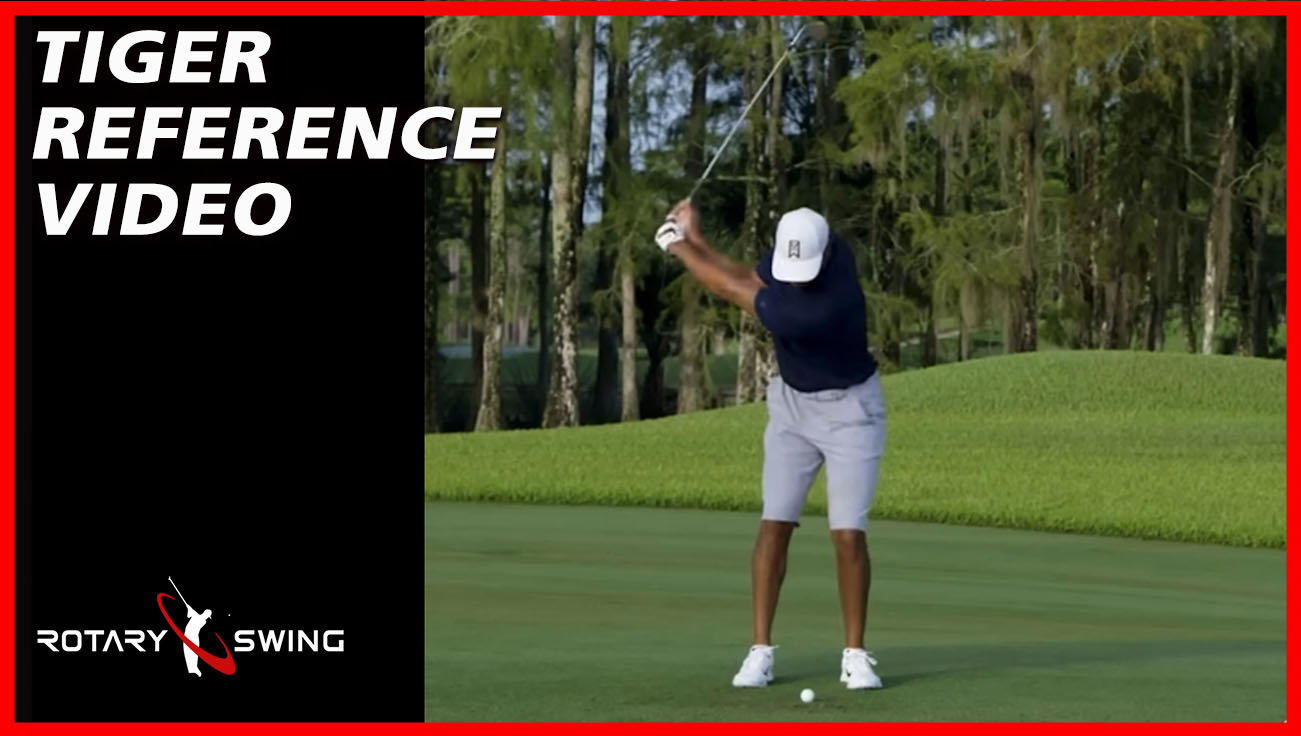
Let's take another look at a golfer here. We'll look at an elite player with a driver, and the reason I pull this up is because he hits the ball very much on the upswing, so he's got the ball well out in front of his stance.
I'm not actually going to use that line, at the back of the ball. What we're going to do is draw a line directly down from the lead side of his head — this yellow line here. The red line represents the back of the ball; the yellow line represents his head.
As we take the club back, notice how his head stays behind that line, but actually very close to it. You can see how well the head stays centered. When we're talking about keeping the head centered and behind the golf ball, this is actually ideal.
He has no lateral shift off the golf ball, and we can prove that if we draw another line here on the outside of his hip. You will see very little movement past that line, so at the top of his golf swing he's right on that line where he was at address.
This is a very powerful position, to have this leg angled in here and not have it shift off the ball dramatically.
What we want to note is, as he comes down, focus on this yellow line. His head gets back on that line during the golf downswing, then his head actually moves back. This is the dynamics that we talked about earlier.

The right hip stays very close to the line through the backswing
He's getting his hands to lead that club head on the way down, maintaining his angle, and as he comes down into impact his head is still behind that line. You never see any good golfer get out in front of that line. You're always working to keep your head behind the golf ball.
When we talk about staying behind the ball, this is exactly what we're referring to. That head never slides out in front of the line that it was at address. You can see this in any good golfer's swing. It's really, really important.
We'll take a look at another swing here, with a driver, with Adrian so you can see the same thing, but with a different club and a different golfer.

The head is slightly off the line at the top (left), returns to it quickly (center), then moves off again at impact (right)
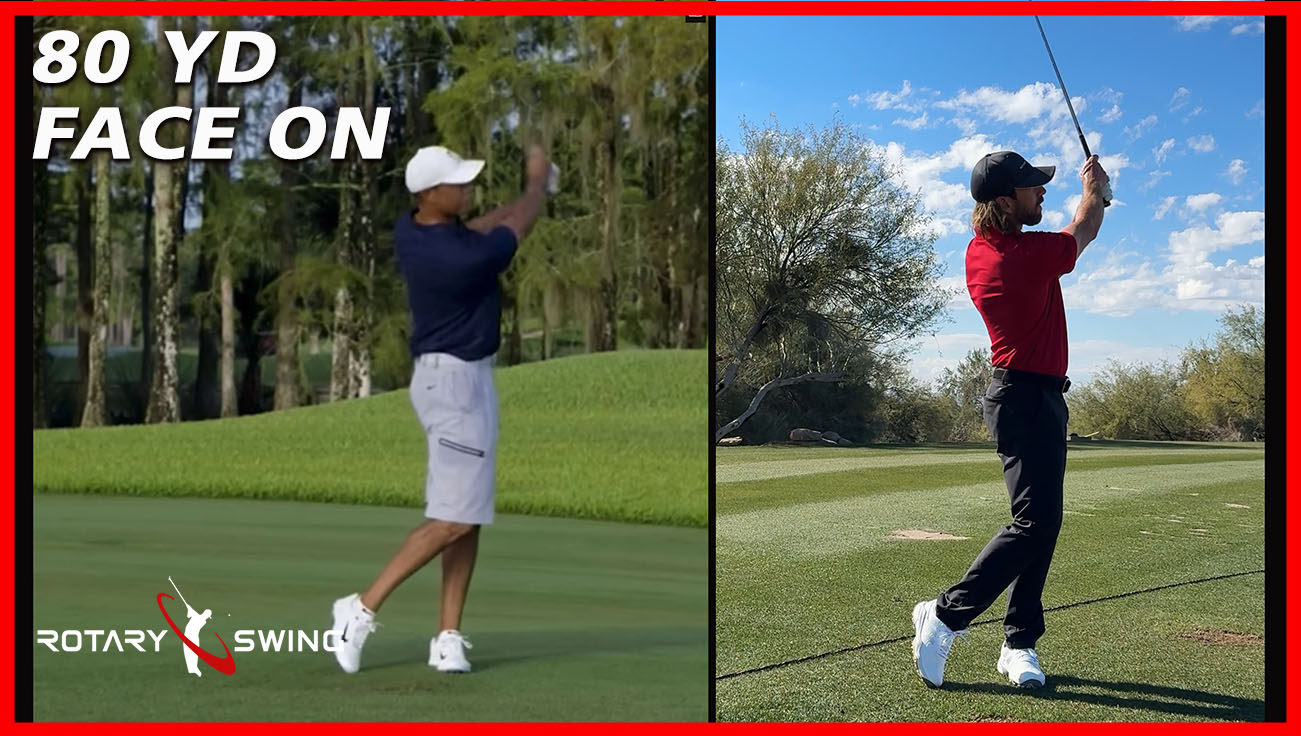
Now, Adrian doesn't play the ball nearly as far forward in his stance as our elite reference player does. You can see his head's a little bit closer to that line at address. This is because he hits slightly down on the golf ball with his driver for more control.
As we move the club — the camera angle moves a little bit here — but notice how well, coming into impact, he stays behind that ball. He never, ever gets in front of that ball and keeps his head in the correct position throughout the golf swing.
It's a Rotary movement. If he didn't rotate — if he started to slide from the top — he'd lose his tush line. I talk about losing the tush line in this online golf instruction video.
He would lose his tush line and he would slide. His head would get out in front of that golf ball. He would move laterally forward and he wouldn't be able to stay behind the ball to hit with the full force of his body here, to get into this proper release position.
It's very important that you learn how to stay behind the ball throughout the golf swing, and to avoid getting in front of the ball and avoid flipping it and blocking it.

Adrian: Head position at address and impact
The best thing you can do to learn this is to actually have a person — if you have a helper or somebody — go out to the range with you and put a shaft on the lead side of your head, and make certain that your head never forcefully bumps into that shaft until the ball is long gone. Combining this drill with the structured rep tracking in the GOAT Drill system gives you objective feedback on whether your head is truly staying centered across every single rep.
You can see that Adrian's head, where it was at the top of the swing here, is never going to move forward of that line until well into his follow through. It's not until this point here that the head starts to move. It's pulled around simply by the force of the club releasing there.
It's not something where you're driving your body into it. It's a very, very important concept so practice this in the mirror. Video tape yourself if you can.

Adrian Wadey: Head position through impact and release
This is one of the really important things that's really hard to see unless you look at it on video tape. Work on rotation. Work on turning your body back and turning your body through, without having a lateral slide or shift on the downswing.
Imagine that there's a wall or a shaft — somebody's got a shaft next to the lead side of your head — and you don't want to bump into that on the way down. You'll start to feel that you're staying behind the ball a lot more. A lot of you are going to feel like you're going to do one of two things.
You're going to feel like you're going to hit the ball straight up in the air because in order to get into this position you're going to have to move the ball up more in your stance than where you're used to playing it with an iron. That's totally OK. The golf ball should be played off the lead side of the head in most cases, which is roughly the logo of your shirt.
A lot of you may have that ball back pretty far in your stance. It's totally normal for you to have to move it up and feel like you're going to hit the ball very high, but if you stay behind the ball and keep rotating through, it won't happen.
You've got to get into a proper impact position. This is one of the keys to getting in that proper impact position.
Watch part 2 now to see how you're moving your body in the opposite direction of the pros!