Determining whether you are right or left hand dominant in your putting stroke is one of the most important — and most overlooked — aspects of rolling the ball like a professional.
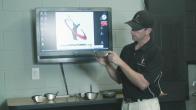
In this video, Chuck Quinton explains the critical importance of monitoring the putter face angle through impact with your dominant hand so you can consistently start your putts on the intended target line.
Is this the fault costing you strokes?
Film one swing on your phone. In about a minute GOATY measures it and names the single biggest thing costing you strokes — free, no card.
Analyze My Swing Free
Related: Golf swing lag — why AI coaching fixes it faster →
Android users: Download GOATY on Google Play — free AI golf coaching on your Android phone. →
This concept is absolutely essential when trying to convert those pressure-filled 8- and 10-foot putts for par — the kind of putts where tour professionals excel. The greatest putters in history have all understood how their dominant hand monitors and controls the putter through the strike zone.
Stop reading about it — feel it in your swing today
GOATY watches your swing live and coaches you between every rep. Free. No signup.
Start Your FREE Live Lesson →
Elite putters have always relied on understanding the precise relationship between the putter face and the ball at impact — and how to use their dominant hand to maintain that control under pressure. Without this awareness, consistently converting clutch 6-footers is virtually impossible.
As you'll discover in this video, the ball leaves the putter face at nearly exactly 90 degrees to the face angle at impact. On a 10-foot putt, being off by just 2 degrees is enough to miss the hole entirely.
Because the putting stroke travels on a slight arc, the putter face should technically be marginally open and working its way closed through impact — but this rotation amounts to a very subtle movement of only 1 degree or less.
Learning which hand is dominant in your putting stroke allows you to monitor the face angle throughout the motion, ensuring that you're square — or very nearly so — at impact. This single awareness can get you rolling the ball on your intended target line within just a few minutes of focused practice.
Once you use the simple drill in this video to identify your dominant hand, you may need to make setup adjustments that allow you to better control the putter face throughout the entire stroke.
Your address position will differ depending on whether you're right or left hand dominant. The table below breaks down the key traits for each:

If you are left hand dominant, are you putting with the proper setup and grip?
| Left Hand Dominant |
Right Hand Dominant |
| Key aspect: Left arm alignment |
Key Aspect: Right arm alignment |
| Options: Left Hand Low or Straight Left arm |
Options: Conventional Putter Grip |
| Setup: Vertical Axis if Left Hand Low or with Conventional Grip |
Setup: Vertical Axis |
| |
|
Video Transcription: Hand Dominance in Putting
Putting is one of the simplest mechanical strokes we make during a round of golf, yet it's the area where most golfers feel the least confident. They don't fully understand how to release the putter, or how the putter is fundamentally designed to work.
That's unfortunate, because there's no other area of the game where you can save more strokes off your handicap than with the putter. It's the great equalizer. You don't need to crush 300-yard drives. You can hit it 220 off the tee and still get up and down for par more often than not — if you understand what it takes to become a truly great putter.

The club face is perpendicular to the target
In this comprehensive Putting series, we're going to cover the key fundamentals that will make you a dramatically better, more consistent putter. You're going to start looking at those 20- and 30-footers with genuine excitement rather than dread — because you'll know you have a legitimate chance of holing them.
The key topic today is: which hand is dominant in your putting stroke? That might sound surprising because, as an instructor, I consistently emphasize that the hands shouldn't be overly involved in the stroke. I want them to remain passive — and that hasn't changed.
What does change is your perception of the putting stroke — how you think about rolling the ball, how you monitor the putter, and how you'll start converting more putts.
Here's what we're going to do today: grab a putter and a ball, because you're going to hit some putts and run through a simple diagnostic test right now.

Make some short putts with the left hand only
We're going to identify which hand is dominant for you. Now, you already know that I want the stroke controlled primarily by the big muscles — the shoulders. We want a smooth, relaxed rocking motion of the shoulders, back and through.
But here's the crucial insight: the most important aspect for amateurs to master in the putting stroke is not speed — though speed is certainly important — but rather controlling the putter face angle.
What I mean by that is straightforward. When you look at the putter face, it sits perpendicular to the target. Your objective is to align it at exactly 90 degrees — directly face-on — to the intended starting line of the putt.
Here's why face angle matters more in putting than in full swings: with iron shots, your target is a green that's 20–30 yards wide. Precision doesn't need to be nearly as extreme. But when you're trying to drop a ball into a 4.5-inch cup, every fraction of a degree counts.
There's another factor at play with full iron shots: the ball compresses against the face at impact. That compression creates a small margin for error — the ball comes off close to 90 degrees to the club face, but not exactly. You get a slight cushion of forgiveness.
With the putter, the ball doesn't compress on the face because you're not striking it hard enough to generate significant compression. The ball leaves at almost precisely 90 degrees to the putter face angle at impact. There's essentially no forgiveness.

Now putt with the right hand only
You might have a mechanically sound stroke. Your path might be excellent. But if that putter face is closed just a degree or two at impact, the ball will start left of the target — and on a 10-foot putt, that means a miss. Controlling the face angle is paramount.
Your stroke path can be slightly imperfect and you'll still make putts. But the face angle must be as precise as you can achieve on a consistent basis.
Here's how you identify your dominant hand. As you know, we're using a putting grip that neutralizes the hands — we're not dominating the stroke with wrist action. When we talk about being left or right hand dominant, we're not talking about which wrist you flip through the stroke.
You're still using your big muscles. You're still connected. You're still rocking your shoulders back and through. But as you execute the stroke, the putter face angle is being monitored by one hand or the other. Understanding which one is critical.
Here's the test: take your putter and hit 10–15 putts with just your left hand from about 5–10 feet. Pay attention to which hand gives you the most consistent roll in terms of accuracy. Which hand starts the ball on line most reliably? Which hand gives you the best feel for speed and direction?
Hit 10–15 putts with your left hand and note the results.

Left hand low
Then switch and hit 10–15 putts with your right hand only. Same grip, same stroke — just the opposite hand.
Most golfers discover they hit better putts with the right hand because most people are right-handed. If you turn out to be left hand dominant, that doesn't indicate a flawed stroke — it simply means you need to make specific setup adjustments.
If your left hand rolled the ball more consistently, there are two approaches to consider. My top recommendation is to putt left hand low — placing your left hand below the right so that your left arm achieves better straight-line alignment.
Your right arm will now bend slightly, and you'll naturally monitor the putter face more with your left hand and left arm. The stroke will feel more left-side dominant as you guide the face through impact.
Remember, the putter face must be square — or very nearly square — at impact on a consistent basis.
If you don't prefer putting left hand low because you struggle with speed control in that configuration, you can still putt with a conventional grip while being left hand dominant. The key is achieving proper alignment of that left arm.

Left arm alignment
By "proper alignment," I mean a straight line extending from the shoulder down through the hand — no bends at the elbow or wrist.
In a conventional grip, your left elbow and left wrist will naturally have some bend. As a left hand dominant putter, we want to minimize that. We need the left arm aligned as straight as possible because it's easier to control and prevents those joints from breaking down under pressure.
To fix this, tilt your spine — your axis — slightly behind the ball.
This shifts your left hand slightly forward, creating a much cleaner line from your left shoulder through the forearm, wrist, and shaft. Now it's natural to feel like you're controlling the stroke with your left hand rather than your right.
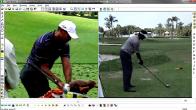
Phil Mickelson is a great example of this concept in reverse. He's a left-handed putter who controls the face with his right hand because that's his dominant hand. He sets up his alignments accordingly — two different paths to the same goal.

Axis tilt helps keep left wrist straight
If you're right hand dominant — which most golfers will be — the process is even simpler. Take your normal putting grip, the same one you used during the one-handed test.
Now simply bring your left hand onto the club and you've got the identical setup you had before. If you can putt effectively with just the right hand, all you need to do is add the left hand without losing that control.
Take the time to identify which hand gives you the most confidence and consistency — right or left. Then make the appropriate adjustments to your setup and stroke so that you're monitoring the putter face angle with your dominant hand throughout the entire motion.
This will give you more coordination, more confidence that you're starting the ball on your target line, and the assurance that you can send every putt exactly where you aim.

Standard putting grip
I'm not telling you to manipulate the club with your hands. I'm telling you to monitor the putter face with your dominant hand — and I guarantee you'll start making more putts. For the same kind of precision analysis on your full swing, try a free AI swing analysis that breaks down your mechanics in detail. To practice with real-time coaching feedback, check out a free AI golf lesson.
Watch part 2 now to see how you're moving your body in the opposite direction of the pros!






































































































































































 Rock the shoulders